We use cookies, including third-party cookies from Google to serve personalized ads through AdSense, to operate this site and understand how it is used. By continuing to browse, you accept this use. See our Privacy Policy and Terms of Use for details, including how to opt out of personalized advertising.
Accept
SmartData CollectiveSmartData Collective
  • Analytics
    AnalyticsShow More
    What Kind of Problem-Solving Distinguishes Data Analysts From Software Engineers -- AI-generated illustration
    What Kind of Problem-Solving Distinguishes Data Analysts From Software Engineers
    7 Min Read
    chatgpt image jul 21, 2026, 04 34 30 pm
    4 Core Benefits of Predictive Maintenance after Vibration Analysis
    10 Min Read
    How Does Data Mining Boost Customer Satisfaction in Logistics? Harnessing Analytics for Results -- AI-generated illustration
    How Does Data Mining Boost Customer Satisfaction in Logistics? Harnessing Analytics for Results
    11 Min Read
    chatgpt image jul 13, 2026, 04 23 45 pm
    How Data Analytics Helps Companies Improve User Engagement
    19 Min Read
    chatgpt image jul 13, 2026, 03 59 46 pm
    How Data Analytics Improves Multi-Location Search Strategies
    10 Min Read
  • Big Data
  • BI
  • Exclusive
  • IT
  • Marketing
  • Software
Search
© 2008-25 SmartData Collective. All Rights Reserved.
Reading: The Idea of Order in Data
Share
Notification
Font ResizerAa
SmartData CollectiveSmartData Collective
Font ResizerAa
Search
  • About
  • Help
  • Privacy
Follow US
© 2008-23 SmartData Collective. All Rights Reserved.
SmartData Collective > Big Data > Data Quality > The Idea of Order in Data
Data Quality

The Idea of Order in Data

JimHarris
JimHarris
6 Min Read
The Idea of Order in Data
Photo by cutekirin on Pixabay (https://pixabay.com/photos/in-turn-order-chinese-new-year-687186/)
SHARE

As I explained in my previous post, which used the existentialist philosophy of Jean-Paul Sartre to explain the existence of the data silos that each and every one of an organization’s business units rely on for maintaining their own version of the truth, I am almost as obsessive-compulsive about literature and philosophy as I am about data and data quality.

Contents
  • Wallace Stevens
  • The Idea of Order in Data

Therefore, since my previous post was inspired by philosophy, I decided that this blog post should be inspired by literature.

Wallace Stevens

Although he consistently received critical praise for his poetry, Wallace Stevens spent most of his life working as a lawyer in the insurance industry.  After winning the Pulitzer Prize for Poetry in 1955, he was offered a faculty position at his alma mater, Harvard University, but declined since it would have required his resignation from his then executive management position. 

Therefore, Wallace Stevens was somewhat unique in the sense he was successful both as an artist and as a business professional, which is one of the many reasons why he remains one of my favorite American poets.

More Read

BI Advice for Midsize Organizations: Keep It Simple
Challenges of Working with Big Data: Beyond the 3Vs
Big Data. New Physics.
Accuracy
The Data Is In: Finding Affordable Car Loans

Stevens believed that reality is the by-product of our imagination as we use it to shape the constantly changing world around us.  Since change is the only constant in the universe, reality must be acknowledged as an activity, whereby we are constantly trying to make sense of the world through our re-imagining of it—our endless quest to discover order and meaning amongst the chaos.

The Idea of Order in Data

This is an excerpt from The Idea of Order at Key West, one of my favorite Wallace Stevens poems, which provides an example of how our re-imagining of reality shapes the world around us, and allows us to discover order and meaning amongst the chaos.

“People cling to their personal data sets,” explained James Standen of Datamartist in his comment on my previous post.

Even though their business unit’s data silos are “insulated from all those wrong ideas” created and maintained by the data silos of other business units, as Standen wisely points out, all data silos are often considered “not personal enough for the individual.”

“Microsoft Excel lets people create micro-data silos,” Standen continued.  These micro-data silos (i.e., their personal spreadsheets) are “complete (for them), accurate (for them, or at least, they can pretend they are) and constant (in that no matter how much the data in the source system or other people’s spreadsheets change, their spreadsheet will be comfortingly static).  It doesn’t matter what the truth is, as long as they believe their version, and insulate themselves from dissenting views/data sets.”

This insidious pursuit truly becomes a Single Version of the Truth because it represents an individual’s version of the truth. 

The individual is the single artificer of the only world for them—the one that their own private data describes—thereby allowing them to discover their own personal order and meaning amongst the chaos of other, and often conflicting, versions of the truth. 

However, any single version of the truth will only discover a comfortingly static, and therefore false order, as well as an artificial, and therefore misleading meaning, amongst the chaos.

Data is a by-product of our re-imagining of reality.  Data is our abstract description of real-world entities (i.e., “master data”) and the real-world interactions (i.e., “transaction data”) among entities.  Our creation and maintenance of these abstract descriptions of reality shapes our perception of the constantly changing and rapidly evolving business world around us. 

Since change is the only constant, we must acknowledge that The Idea of Order in Data requires a constant activity, whereby we are constantly trying to make sense of the business world through our analysis of the data that describes it, which requires our endless quest to discover the business insight amongst the data chaos.

This quest is bigger than a single individual—or a single business unit.  This quest truly requires an enterprise-wide collaboration, a shared purpose that dissolves the barriers—data silos, politics, and any others—which separate business units and individuals.

The Idea of Order in Data is a quest for a Shared Version of the Truth.

TAGGED:data quality
Share This Article
Facebook Pinterest LinkedIn
Share

Follow us on Facebook

Latest News

Flat editorial illustration: The article's core relationship is workload-by-workload decision-making for cloud migration, where s
Which Workloads Should Move to the Cloud?
Cloud Computing Exclusive IT
Flat editorial illustration: The article positions data governance as a strategic board-level concern rather than a purely techni
Why Data Governance Is Becoming a Board-Level Business Priority
Big Data Exclusive Policy and Governance
Flat editorial illustration: The article argues that data annotation quality should be measured by inspectable gold sets, written
The Top Data Annotation Companies Are Separated by Proof of Quality, Not Headcount
Big Data Exclusive
Flat editorial illustration: The article's core relationship is the gap between raw bank-feed records and reliable subscription i
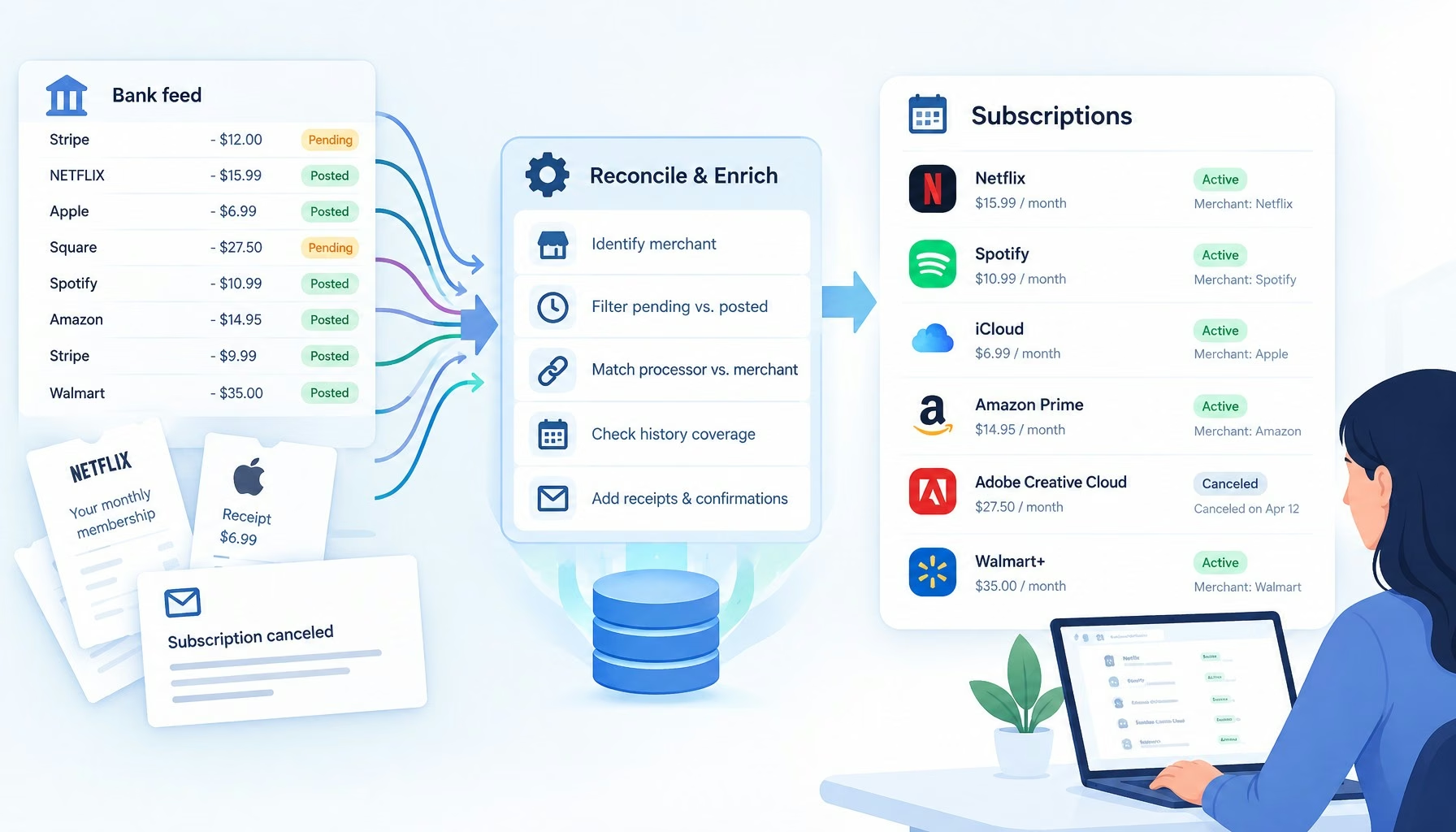
Subscription Trackers Have a Transaction Data Problem
Big Data Exclusive

Stay Connected

1.2KFollowersLike
33.7KFollowersFollow
222FollowersPin

You Might also Like

First Look – Dulles Research Carolina
Uncategorized

First Look – Dulles Research Carolina

6 Min Read
Open Source is Opening Data to Predictive Analytics
Predictive Analytics

Open Source is Opening Data to Predictive Analytics

7 Min Read
The Big Question In Big Data Is...What's The Question?
AnalyticsBest PracticesBig DataBusiness IntelligenceCollaborative DataData ManagementData MiningData QualityData VisualizationData WarehousingDecision ManagementPredictive AnalyticsSentiment AnalyticsSocial DataSocial Media AnalyticsSoftwareStatisticsText AnalyticsUnstructured DataWeb AnalyticsWorkforce AnalyticsWorkforce Data

The Big Question In Big Data Is…What’s The Question?

7 Min Read
The Three Musketeers of Data Quality
Uncategorized

The Three Musketeers of Data Quality

6 Min Read

SmartData Collective is one of the largest & trusted community covering technical content about Big Data, BI, Cloud, Analytics, Artificial Intelligence, IoT & more.

AI chatbots
AI Chatbots Can Help Retailers Convert Live Broadcast Viewers into Sales!
Chatbots
How To Get An Award Winning Giveaway Bot
Big Data Chatbots Exclusive

Quick Link

  • About
  • Contact
  • Privacy
Follow US
© 2008-26 SmartData Collective. All Rights Reserved.
Welcome Back!

Sign in to your account

Username or Email Address
Password

Lost your password?