We use cookies, including third-party cookies from Google to serve personalized ads through AdSense, to operate this site and understand how it is used. By continuing to browse, you accept this use. See our Privacy Policy and Terms of Use for details, including how to opt out of personalized advertising.
Accept
SmartData CollectiveSmartData Collective
  • Analytics
    AnalyticsShow More
    chatgpt image jul 21, 2026, 04 34 30 pm
    4 Core Benefits of Predictive Maintenance after Vibration Analysis
    10 Min Read
    How Does Data Mining Boost Customer Satisfaction in Logistics? Harnessing Analytics for Results -- AI-generated illustration
    How Does Data Mining Boost Customer Satisfaction in Logistics? Harnessing Analytics for Results
    11 Min Read
    chatgpt image jul 13, 2026, 04 23 45 pm
    How Data Analytics Helps Companies Improve User Engagement
    19 Min Read
    chatgpt image jul 13, 2026, 03 59 46 pm
    How Data Analytics Improves Multi-Location Search Strategies
    10 Min Read
    cybersecurity efforts
    How Behavioral Analytics and AI Are Redefining Cybersecurity for Boca Raton Businesses
    14 Min Read
  • Big Data
  • BI
  • Exclusive
  • IT
  • Marketing
  • Software
Search
© 2008-25 SmartData Collective. All Rights Reserved.
Reading: The true scope is unknowable, a priori
Share
Notification
Font ResizerAa
SmartData CollectiveSmartData Collective
Font ResizerAa
Search
  • About
  • Help
  • Privacy
Follow US
© 2008-23 SmartData Collective. All Rights Reserved.
SmartData Collective > Business Intelligence > CRM > The true scope is unknowable, a priori
CRM

The true scope is unknowable, a priori

Editor SDC
Editor SDC
6 Min Read
The true scope is unknowable, a priori
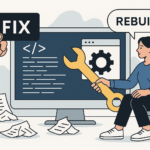
Illustration generated with FLUX.2 [klein 4B] via Cloudflare Workers AI.
SHARE

The best question asked this week: What, exactly, are you trying to prove?

Reg, nailing it as usual.

Hey, I am not blaming customers. They don’t know what they want because nobody really knows what the optimum finished software looks like before development begins. Not the Customer, not the Developers, and not even the “Architects,” “Product Managers,” “Business Analysts” or anybody else who think they are a requirements expert.

Software development is a process of discovery, for the customer, for management, and for development. As information is acquired—through inquiry, inspection, or experience gained from misadventure—our understanding of what we are trying to accomplish is refined. In that respect, every tool, be it a programming language, a development process, or a testing practice, must be judged for its contribution to the transformation of both the requirements and the software over time.

Yes. And that’s why processes designed around a priori assumptions about either the nature of the so-called “software development lifecycle”, or the knowability of scope, will probably never cease to make our lives miserable and fail to achieve their stated goals. The analogy to “building a bridge” (or a skyscraper, or whatever) — perhaps even the overall analogy linking the creation of software to engineering — seems flawed. The physical laws of the universe constrain a customer, requesting the design and construction of a physical object, from changing their mind about the scope very often, and they can almost never make fundamental changes (“Oh, but we want the skyscraper to have 20 more floors”) downstream. The physical laws of the universe get in the way. Software is thoughtstuff. Those same physical laws do not apply (at least not in the same way or to the same degree). Customers can, and do, change their minds on a near constant basis, including changes in the fundamental nature of the thing under construction. They get away with this because they can, and they know it. Many of the “process” ideas that have grown up to support the idea of “software engineering” can be seen, from this perspective, as attempts to constrain the design and construction of software in such a way that the situation becomes analogous to that of physical objects.

Are we supposed to be surprised that customers resist this? Whether they’ve bought into the software engineering analogy or not, they will still strive fiercely — almost instinctively — to exercise all options open to them to change their minds.

More Read

My 3 Wishes from the Marketing Genie
5 Ways Cloud Has Revolutionized Business Success
Human evolution is speeding up
Seeing through your customer’s eyes
Enable, Empower, Engage: Key to Social CRM Success

Can we make “the process of discovery” that Reg describes “rigorous”? Can we make software in such a way that we’re not simply making it up as we go along? Perhaps. But no process that fails to acknowledge the core aspects of its steps and participants can ever really be successful. Thus, it behooves us to find a way to make the malleability of software and the unknowability of scope (a priori) first class artifacts in our processes.

“Agile” has balkanized, and the individual cults have — in some cases — become religions that are just as bad as the things they intended to replace. But at the outset, the interesting thing about “agile” (the only interesting thing about it, in my opinion) was that it was an attempt to acknowledge this reality, to address it explicitly, to deal with it. That was a good idea. We should keep striving away at it.


Share This Article
Facebook Pinterest LinkedIn
Share

Follow us on Facebook

Latest News

Best VMware Alternatives in Thailand for Private Cloud and HCI Deployments -- AI-generated illustration
Best VMware Alternatives in Thailand for Private Cloud and HCI Deployments
Cloud Computing Exclusive IT
Using Safety Metrics and Incident Data to Reduce Construction Risk and Insurance Costs -- AI-generated illustration
Using Safety Metrics and Incident Data to Reduce Construction Risk and Insurance Costs
Big Data Exclusive
How Business Intelligence Can Help Small Businesses Build Better Decision Rules -- AI-generated illustration
How Business Intelligence Can Help Small Businesses Build Better Decision Rules
Business Intelligence Business Rules Exclusive
Stellar Repair for MS SQL Review: Can It Repair SQL Databases? -- AI-generated illustration
Stellar Repair for MS SQL Review: Can It Repair SQL Databases?
Exclusive Software SQL

Stay Connected

1.2KFollowersLike
33.7KFollowersFollow
222FollowersPin

You Might also Like

Surviving These Radical Times – A Must-see Webcast Series
Business IntelligenceCRMPredictive Analytics

Surviving These Radical Times – A Must-see Webcast Series

2 Min Read
Is the Data in Your CRM a Ticking Time Bomb?
CRM

Is the Data in Your CRM a Ticking Time Bomb?

8 Min Read
The 4 Es of Social Media Strategy
CRMPredictive Analytics

The 4 Es of Social Media Strategy

6 Min Read
The Social Web as a Customer Support Channel
CRMSocial Data

The Social Web as a Customer Support Channel

4 Min Read

SmartData Collective is one of the largest & trusted community covering technical content about Big Data, BI, Cloud, Analytics, Artificial Intelligence, IoT & more.

Chatbots and SEO: How Can Chatbots Improve Your SEO Ranking?
Artificial Intelligence Chatbots Exclusive
Artificial Intelligence for eCommerce: A Closer Look
Artificial Intelligence

Quick Link

  • About
  • Contact
  • Privacy
Follow US
© 2008-26 SmartData Collective. All Rights Reserved.
Welcome Back!

Sign in to your account

Username or Email Address
Password

Lost your password?