Businesses are investing millions of dollars into big data, betting that number crunching and algorithms will be the silver bullet that’ll change the industry forever.
Businesses are investing millions of dollars into big data, betting that number crunching and algorithms will be the silver bullet that’ll change the industry forever. While the ability of computers to make rapid analyses dwarfs the capacity of humans, will computers ever really replace human intuition when it comes to making decisions?
There is a strong case for yes. Experience is valuable, but there are problems that come with relying too heavily on gut instincts when decision-making. One of the major problems with our intuition is that it’s incredibly biased. Computers (for the moment) don’t have emotional dilemmas during analysis. But as humans, we can have any number of variables affect our emotions and cloud our judgement. Anything from political preferences to family history can distort the gut check. As a result, it becomes easy to confuse emotions with instincts without even realizing it.
That being said, intuition does have its place. As powerful as computers are, they perform better when guided by humans. Our computers are able to analyze data to find trends and patterns in seconds, but they still rely on humans to design the programs that process everything. Our minds and experiences are also key in helping identify business goals and connecting them with what the data says. Data is only as helpful as the inputs and their interpretation. That’s where our intuition comes in handy. Knowing which factors to consider and which variables should be accounted for stems from intuition. Algorithms help us make predictions, but those predictions are more likely to be true when overseen and analyzed by experienced leadership.
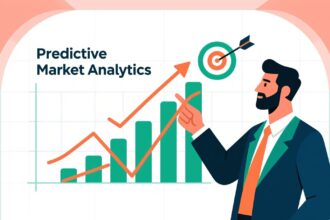
Another serious setback of predictive analysis, is its inability to help us prepare for something new. Big data is created by gathering historical information. We hope to find trends from the past to help identify key variables we can use to replicate (or avoid) outcomes in the future. But when that data isn’t available, we’re stuck. We can’t really rely on data from a television’s sales history to predict the success of brand new products, like tablets or smartwatches. While historical information may give us an idea of how people will react in certain seasons, or which features are most important, it’s hard to innovate relying solely on past information. Ultimately, it’ll be the instinct and experience of leaders that’ll determine the success or failure of a new venture, not algorithms and databases.
Steve Jobs, Apple’s brilliant founder, was a marketing genius. People often point to Jobs as the ideal example of why intuition trumps data. He didn’t focus on research or market trends and created some of the most influential devices of our time. Jobs was a genius, but he wasn’t infallible. There were a number of flops mixed in with his successes (see NeXT, Apple III or Power Mac G4 Cube). In fact, many of the great marketing minds had large failures. And while mistakes are found all along the path to success, it’s likely great thinkers like Jobs would’ve seen more successes, or at least avoided more disasters, if they had used real-time data to test ideas before going to market.
The future of successful marketing is one where big data is paired with marketing experience and intuition. Future programs and applications built to handle data will be more successful if they are designed for marketers and place humans at the center. Not to mention, with more companies adopting BYOD policies, and greater access to devices, more and more people will begin using data to influence their day-to-day decision making. Big data makes it easier to test concepts and avoid expensive flops, but data has a terrible imagination. That’s where experience is key. Thinking of the next big idea, then testing and perfecting it with the numbers before launch, will lead to more successes than simply relying on data or intuition alone.

![What Will The World Look Like When We Connect the Unconnected [INFOGRAPHIC]](https://www.smartdatacollective.com/wp-content/uploads/2013/09/world-look-like-when-connect-unconnected-infographic-1-330x220.jpg)