
The cybersecurity tools that most businesses relied on five years ago shared a foundational assumption: that threats could be identified by matching observable characteristics against a database of known malicious patterns. Signature databases, rule-based detection, and blocklist-driven filtering all operate on this principle. Know what bad looks like, and you can stop it when you see it.
- The Data Volume That Makes Behavioral Analytics Possible
- What Behavioral Baselines Reveal That Signatures Miss
- The Machine Learning Models That Power Modern Threat Detection
- Why Boca Raton’s Business Community Is the Right Environment for This Investment
- The Human Expertise Layer That Analytics Cannot Replace
- How Mindcore Technologies Delivers Analytics-Driven Cybersecurity in Boca Raton
- Conclusion
That assumption has not aged well.
The attack tools now being deployed against businesses in Boca Raton and across South Florida are specifically designed to avoid the signature-matching detection that most business security infrastructure depends on. AI-generated phishing that matches no known template. Credential theft using legitimate credentials that trigger no rule violations. Ransomware that enters through trusted channels and moves laterally before executing. Business email compromise that uses social engineering rather than technical malware to produce financial losses.
The security architecture that actually addresses these threats is built on a different assumption: that threats can be identified not by what they look like in isolation, but by how they behave in the context of the broader data environment they operate within. That is where behavioral analytics and machine learning have become central to cybersecurity effectiveness, and it is why the most forward-thinking cybersecurity programs in Boca Raton’s financial, healthcare, and professional services sectors are investing in analytics-driven security rather than continuing to rely on rule-based tools that were built for a threat landscape that no longer exists.
More Read

The Data Volume That Makes Behavioral Analytics Possible
Behavioral analytics as a cybersecurity approach was not practically available to most businesses ten years ago. The compute resources required to process and analyze the volume of security-relevant data generated by an enterprise network in real time exceeded what was economically viable for organizations below a certain scale. Security analytics was an enterprise-only capability.
Cloud infrastructure and the democratization of machine learning tooling have changed that equation fundamentally. The same analytical capabilities that required enterprise-scale computing resources to execute are now available through cloud-delivered security platforms at a cost and operational model accessible to the mid-market businesses that make up the majority of Boca Raton’s commercial landscape.
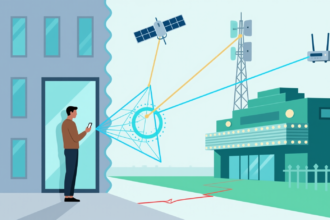
The data that behavioral analytics processes to detect threats is generated continuously by every component of the business technology environment. Network traffic logs that record the patterns of communication between systems. Authentication logs that document who is accessing what resources from where and when. Endpoint telemetry that captures the behavior of processes running on every device in the organization. Email metadata that reflects the communication patterns between the organization and its clients, vendors, and counterparties. Application logs that document how users are interacting with business-critical systems.
Individually, each of these data streams contains partial information about activity that may or may not be threatening. Collectively, processed and correlated by machine learning models that have established baseline behavioral profiles for the organization’s specific environment, they produce a rich signal from which anomalous patterns can be detected far earlier in the attack lifecycle than signature-based tools can identify.
What Behavioral Baselines Reveal That Signatures Miss
The core mechanism of behavioral analytics in cybersecurity is the establishment of a baseline that defines what normal looks like for a specific environment, and the continuous measurement of observed activity against that baseline to surface deviations that warrant investigation.
For a financial advisory firm in Boca Raton, the baseline for a client relationship manager might include the typical hours during which they access the client management platform, the geographic locations from which they authenticate, the specific data sets they regularly access, and the communication patterns they maintain with clients and internal colleagues. A deviation from that baseline, such as authentication from an unusual location at an unusual hour followed by access to data sets outside the normal pattern, produces a behavioral alert regardless of whether any signature was matched or any rule was triggered.
This baseline-deviation model is what makes behavioral analytics effective against the attack patterns that signature-based tools cannot catch. A compromised credential being used by an attacker does not look malicious to a signature scanner. It looks like a legitimate user authenticating with legitimate credentials. But to a behavioral analytics system that has established a detailed baseline for that credential’s normal usage patterns, the attacker’s behavior, accessing data at unusual times, moving toward higher-privilege resources, exfiltrating data in patterns inconsistent with normal work, produces anomaly signals that surface the threat before significant damage is done.
The Machine Learning Models That Power Modern Threat Detection
The machine learning models underlying behavioral analytics cybersecurity platforms are not monolithic systems applying a single algorithm to security data. They are ensembles of specialized models, each trained to identify specific categories of anomalous behavior, whose outputs are combined and weighted to produce prioritized alerts that reflect the confidence the overall system has in a given threat signal.
User and entity behavior analytics models establish individual behavioral profiles for every user account and system entity in the environment, detecting deviations from established patterns that suggest account compromise, insider threat activity, or privilege escalation. Network traffic analysis models identify communication patterns inconsistent with established network behavior baselines, surfacing command-and-control communications, lateral movement, and data exfiltration attempts that blend into normal traffic volumes. Threat intelligence integration models contextualize observed behaviors against continuously updated external threat intelligence, identifying when organizational patterns overlap with known attack campaign methodologies even when no direct signature match exists.
The output of these models is not a simple binary determination of malicious or benign. It is a risk-scored alert that tells the security team both what anomalous behavior was observed and how confident the system is that the behavior represents a genuine threat rather than a legitimate but unusual activity. This scoring capability is what allows security teams to prioritize their human investigation capacity toward the alerts most likely to represent real threats rather than chasing the volume of false positives that unsophisticated detection approaches produce.
Why Boca Raton’s Business Community Is the Right Environment for This Investment
The case for analytics-driven cybersecurity is stronger in some business environments than others, and Boca Raton’s concentration of financial services, healthcare, biotech, and professional services firms creates exactly the high-value, data-intensive, regulation-sensitive environment where the investment produces the highest return.
Financial advisory and wealth management firms in Boca Raton are managing data assets that represent significant value both to the clients whose financial information they contain and to the threat actors who could monetize that information through fraud, identity theft, or competitive intelligence. The behavioral analytics models most relevant to this sector are those that detect account takeover attempts, identify unusual access patterns to client data, and surface anomalous transaction activity that may indicate internal fraud or external account compromise.
Healthcare organizations in Boca Raton handle protected health information under HIPAA’s Security Rule, which requires technical safeguards that address access control, audit controls, and transmission security. Behavioral analytics implementations that monitor access to patient data, flag unusual access patterns that may indicate insider misuse or compromised credentials, and generate the audit logs that demonstrate compliance controls are operating as designed simultaneously address the clinical security requirement and the regulatory documentation obligation.
Real estate and title companies, which have been among the most heavily targeted sectors for wire fraud in South Florida, benefit from behavioral analytics monitoring of the transaction-adjacent communications and document workflows where business email compromise attacks most commonly insert fraudulent wire transfer instructions. An analytics system that identifies deviations from established transaction communication patterns can surface a BEC attempt in progress before the wire transfer it is designed to trigger is executed.
The Human Expertise Layer That Analytics Cannot Replace
Behavioral analytics and machine learning have transformed what is possible in cybersecurity detection, but they have not eliminated the role of human expertise in a high-performing security program. The relationship between analytics and human analysts is a collaborative one in which each provides what the other cannot.
Machine learning models process data at volumes and speeds that human analysts cannot match. They identify patterns that are statistically anomalous but not obviously threatening to a human reviewer examining a single data point in isolation. And they operate continuously without the attention degradation that affects human review of high-volume security data over extended periods.
Human analysts provide the contextual judgment that determines whether an anomaly identified by a behavioral analytics system represents a genuine threat or a legitimate but unusual activity that the model has not seen enough of to classify confidently. They bring domain knowledge about the specific business environment, the industries it operates in, and the threat actors most actively targeting those industries. And they make the response decisions that determine how a confirmed threat is contained and remediated.
The most effective cybersecurity programs in Boca Raton’s financial and healthcare sectors combine analytics-driven detection with human expertise that understands both the technical security landscape and the specific business context in which that expertise is being applied.
How Mindcore Technologies Delivers Analytics-Driven Cybersecurity in Boca Raton
Mindcore Technologies brings more than 30 years of cybersecurity and IT experience to Boca Raton businesses that need the combination of behavioral analytics capability and local market expertise that the current threat environment demands. Under the leadership of Matt Rosenthal, CEO of Mindcore Technologies, the company delivers cybersecurity services in Boca Raton that integrate behavioral analytics and AI-powered threat detection with the human security expertise and industry-specific knowledge that makes those tools most effective in the specific regulatory and threat environment Boca Raton businesses operate in.
Mindcore’s cybersecurity programs for Boca Raton financial services, healthcare, and professional services organizations are built around continuous monitoring, behavioral threat detection, and the compliance framework integration that regulated industries require. Their approach recognizes that effective cybersecurity in a data-rich business environment is not a product purchase. It is a program that combines the right analytical tools with the right expertise and the right ongoing governance to produce security outcomes that match the threat and regulatory reality of the specific business environment.
Conclusion
The cybersecurity challenge facing Boca Raton businesses in 2026 is fundamentally an analytics challenge. The attacks being deployed against financial services, healthcare, and professional services organizations in South Florida are evasive, AI-powered, and specifically designed to defeat the signature-based detection that most traditional security tools depend on. The security programs that address this challenge are built on behavioral analytics, machine learning, and the human expertise required to translate data-driven threat detection into effective security outcomes.
For Boca Raton businesses operating in data-intensive, regulation-sensitive environments, the investment in analytics-driven cybersecurity is not a technology upgrade. It is a fundamental alignment of security capability with the threat environment those businesses actually face. With Mindcore Technologies and more than 30 years of cybersecurity expertise, building that alignment in the Boca Raton market is a structured, expert-supported process rather than an experimental one.