High-demand social work roles prevent healthcare data breaches by embedding strict information governance into daily practice. Protecting vulnerable clients requires three core disciplines. These include using HIPAA-compliant encryption, refusing consumer AI tools for case notes, and securing explicit consent before sharing records. Clear digital boundaries keep sensitive files safe from hostile intrusion.
Social workers manage complex caseloads that increasingly depend on digital tools. While digital systems expand access to care, they also introduce significant security risks. Cyberattacks and data leaks happen every day, and they often threaten the most vulnerable people. That includes your clients as a social worker, and you must keep that in mind. Modern practitioners have had to rethink how they handle phone calls, emails, and case files.
Follow along as we highlight the information governance practices that high-demand social work roles require.
Use HIPAA-Compliant Encryption to Stop Breaches of Healthcare Data
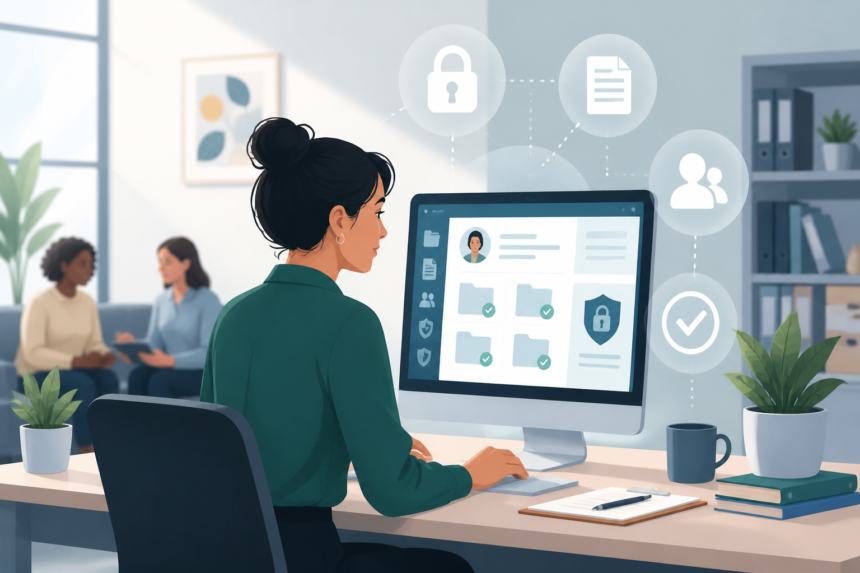
Anyone working in social work or healthcare must use safe, encrypted devices and connections. End-to-end encryption scrambles client intake files and psychotherapy data into unreadable ciphertext during transmission, which is critical because without AES-256 encryption across storage drives and messaging tools, even an unencrypted laptop left in a car can expose entire client histories.
More Read
The financial fallout from unprotected health records is severe: according to the IBM Cost of a Data Breach Report, healthcare suffered an average breach cost of $7.42 million in 2025, leading all industries for the twelfth straight year. Keep personal hardware separated from work systems. You should only access the email and programs you use for work on a computer with HIPAA-compliant connections. Even when you’re on vacation, you must consider whether or not you’re putting your client’s information at risk.
Don’t Use Public AI Programs
Public AI programs, such as ChatGPT, have taken the world by storm, but they have no place in social work. Consumer AI tools transmit user prompts to vendor servers where text is saved and reviewed, meaning that pasting intake summaries, psychiatric evaluations, or family names into an unvetted prompt bar violates federal privacy standards immediately. Never do it.
Entering client details into consumer software violates professional confidentiality. A national survey by the National Association of Social Workers (NASW) found that while practitioners increasingly explore automation for administrative drafts, the Code of Ethics demands zero disclosure of protected records to unauthorized external platforms. Organizations should adopt vetted cybersecurity practices for companies using AI, ensuring enterprise tools feature zero-retention agreements.
ChatGPT will save that information to your profile history, and hackers can easily access it. Employees at the company can also review your profile and the information you put into it. You can’t guarantee that those people are as ethical as you, and they have no business seeing the information.
Respect Their Digital Boundaries
Anyone can view social media profiles, at least when they’re public. That includes social workers, but ethical practice requires strict self-restraint. For example, as a social worker, you’re not supposed to lurk on a client’s social media page for no reason.
Standard 1.07 of the NASW Code of Ethics prohibits gathering client information electronically without informed consent, unless justified by an immediate emergency. Looking through a client’s private social posts risks biasing clinical assessments. It damages rapport. However, it would make sense to check a client or patient’s Facebook page if you hear they’re posting content related to self-harm. In that case, you have an ethical reason to visit the client’s profile and see if the content warrants a closer look.
That said, deceptive tactics, such as using a fake account to contact a client, are unethical. Most of this comes down to common sense, but it’s important to respect your client’s digital boundaries.
Request Consent Before Sharing Information
As a social worker, there are times when you may want to share your client or patient’s information. For example, you may want to share information with their family members. Doing so is ethical only when the affected person gives explicit consent.
Without documented consent, sharing records violates client privacy and destroys all the goodwill you built with them. However, you’re allowed to share information without consent if the person appears to be a threat to themselves or to others. Social workers are mandated reporters, so you can also share information without consent if you see signs of abuse and neglect. Those are extreme scenarios, but they are sadly common in the social work world.
International and state statutes reinforce these requirements. Under the UK Data Protection Act 2018, practitioners managing overseas cases must identify a defined lawful basis before handling sensitive personal information, meaning that across the broader data protection act framework, confidentiality remains the default rule unless clear statutory safety exemptions apply.
Inform the Client/Patient of Your Practices
Today, it’s easy for people to feel paranoid about their data. That’s especially true when dealing with sensitive information, which is often the case with social work. As a social worker, you must inform your clients or patients about your information governance practices.
Social workers can alleviate their clients’ stress by telling them about their information governance practices early, such as by providing a written privacy notice at the first intake session explaining how notes are stored and who has access. A clear disclaimer at the start of an appointment establishes trust immediately.
Request consent before sharing their information with family members or other agencies. Confirm their permissions in writing. Otherwise, you must ask before referring them to a doctor or another medical professional.
Safeguarding Information is Necessary in Social Work
As a modern social worker, you must assume that your clients or patients are vulnerable to data breaches and cyberattacks. A proactive security posture helps you approach every interaction and email with client safety in mind. By using encrypted servers and emails, you can remain HIPAA-compliant and protect your clients. It’s important to inform your clients about what you can share with others and request consent when needed.
The future of clinical social work will involve more automated systems, not fewer. Protecting people requires treating information security as a primary duty of care rather than an afterthought, ensuring that as care teams adopt new software, establishing rigid data governance standards prevents devastating data breaches in the healthcare sector while preserving human trust.