We use cookies, including third-party cookies from Google to serve personalized ads through AdSense, to operate this site and understand how it is used. By continuing to browse, you accept this use. See our Privacy Policy and Terms of Use for details, including how to opt out of personalized advertising.
Accept
SmartData CollectiveSmartData Collective
  • Analytics
    AnalyticsShow More
    chatgpt image jul 21, 2026, 04 34 30 pm
    4 Core Benefits of Predictive Maintenance after Vibration Analysis
    10 Min Read
    How Does Data Mining Boost Customer Satisfaction in Logistics? Harnessing Analytics for Results -- AI-generated illustration
    How Does Data Mining Boost Customer Satisfaction in Logistics? Harnessing Analytics for Results
    11 Min Read
    chatgpt image jul 13, 2026, 04 23 45 pm
    How Data Analytics Helps Companies Improve User Engagement
    19 Min Read
    chatgpt image jul 13, 2026, 03 59 46 pm
    How Data Analytics Improves Multi-Location Search Strategies
    10 Min Read
    cybersecurity efforts
    How Behavioral Analytics and AI Are Redefining Cybersecurity for Boca Raton Businesses
    14 Min Read
  • Big Data
  • BI
  • Exclusive
  • IT
  • Marketing
  • Software
Search
© 2008-25 SmartData Collective. All Rights Reserved.
Reading: Some Thoughts on Measuring Consumer Marketing’s Affect on the Path to Purchase
Share
Notification
Font ResizerAa
SmartData CollectiveSmartData Collective
Font ResizerAa
Search
  • About
  • Help
  • Privacy
Follow US
© 2008-23 SmartData Collective. All Rights Reserved.
SmartData Collective > Software > Marketing Automation > Some Thoughts on Measuring Consumer Marketing’s Affect on the Path to Purchase
AnalyticsMarketingMarketing Automation

Some Thoughts on Measuring Consumer Marketing’s Affect on the Path to Purchase

TeradataExperts
TeradataExperts
4 Min Read
Some Thoughts on Measuring Consumer Marketing’s Affect on the Path to Purchase
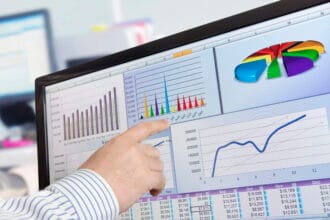
Photo by AlphaTradeZone on Pexels (https://www.pexels.com/photo/a-person-holding-digital-tablet-with-graphs-5833269/)
SHARE

For Consumer Goods companies it’s getting harder to argue with the value of knowing consumers and shoppers at an individual level. It’s simply best practice for any industry, but a relatively new idea in Consumer Goods where the historical emphasis has been brand marketing and trade promotions. Both of these very significant investments have been relied upon to drive sales absent direct relationships or detailed knowledge of individual consumers. That has to change, as noted in posts like this one.

The challenging part of the discussion begins with how difficult this visibility is to achieve given the lack of an existing consumer or shopper database that has a real person’s name at the center. Few Consumer Goods companies have complete visibility into the data generated across every agency, promotion, campaign, channel or brand. It’s a data integration and agency-process issue Teradata has worked hard to solve for some of the largest Consumer Goods manufacturers. The lens then focuses quickly on what consumer actions can be captured, measured, and improved upon to increase sales.

One idea to explore is mapping all consumer interactions to a “state-based” path to purchase which can be tested, validated then optimized. Consider all the ways both offline and digital marketing efforts have targeted consumers over the past several years and how these relate to different markers along the path.

  •  
    • Offline to online interactions out of store (television advertising, newspapers or magazines, presumably at or near home, featuring a call to action to register, scan or text).
    • Desktop web experience – register or log-in (presumed to be at or near home).
    • Email read on a desktop client (presumed to be at or near home).
    • Email read on a mobile device (“on the go”).
    • SMS text message interaction (“on the go”).
    • In-store interactions (QR code scan, unique SMS shortcode, unique email or mobile web, mobile application interaction data).

If you start with the assumption that certain interactions are inherently performed at-home, “on the go” or in the store environment you can begin to paint a picture of how digital marketing efforts affect the path to purchase. You start by asking relatively basic questions, such as:

More Read

A Quick Guide to Structured and Unstructured Data
Operational Analytics in a Recessionary Environment
Crazy Ways Phone Analytics Are Changing The Future of Marketing
Don’t think percentages, think real people
Growing Your User Base Using Mobile Analytics
  •  
    • How many consumers have you interacted with in these ways?
    • What consumers have interacted with you across these ways? A segmentation or profile emerges.
    • How have consumers interacted with you across these ways – the data provided and captured, the sequence and timing. Does an observable path emerge?
    • What patterns exist among the interactions that are especially insightful – in terms of moving a consumer through a hypothetical “buy pipeline” or along the path? What campaigns, incentives or creative ideas were responsible?

And that’s just the beginning. All interactions can be related to geographies, markets and individual retail locations to begin gauging a more direct impact consumer marketing has on sales than ever before possible.

How else might Consumer Goods marketers leverage consumer data to understand and shape the path to purchase in their favor?


Gib Bassett 

Share This Article
Facebook Pinterest LinkedIn
Share

Follow us on Facebook

Latest News

8 MCP Tools for Market and Consumer Intelligence Workflows -- AI-generated illustration
8 MCP Tools for Market and Consumer Intelligence Workflows
Artificial Intelligence Exclusive
How Local Service Businesses Can Map Which Neighborhoods Generate the Most Revenue -- AI-generated illustration
How Local Service Businesses Can Map Which Neighborhoods Generate the Most Revenue
Business Intelligence
Best VMware Alternatives in Thailand for Private Cloud and HCI Deployments -- AI-generated illustration
Best VMware Alternatives in Thailand for Private Cloud and HCI Deployments
Cloud Computing Exclusive IT
Using Safety Metrics and Incident Data to Reduce Construction Risk and Insurance Costs -- AI-generated illustration
Using Safety Metrics and Incident Data to Reduce Construction Risk and Insurance Costs
Big Data Exclusive

Stay Connected

1.2KFollowersLike
33.7KFollowersFollow
222FollowersPin

You Might also Like

First Look – JMP Pro: Exploratory Data and Visualization
Data MiningData VisualizationModelingNew Products

First Look – JMP Pro: Exploratory Data and Visualization

6 Min Read
Five Reasons to NEVER Design a Survey without a Comment Field
AnalyticsSocial Data

Five Reasons to NEVER Design a Survey without a Comment Field

7 Min Read
Counteracting Our Obsession with Speed
AnalyticsCommentaryData Warehousing

Counteracting Our Obsession with Speed

4 Min Read
Using Big Data Intelligently: Four Types of Discovery Technology
AnalyticsBest PracticesBig DataBusiness IntelligenceData ManagementData Visualization

Using Big Data Intelligently: Four Types of Discovery Technology

16 Min Read

SmartData Collective is one of the largest & trusted community covering technical content about Big Data, BI, Cloud, Analytics, Artificial Intelligence, IoT & more.

AI chatbots
AI Chatbots Can Help Retailers Convert Live Broadcast Viewers into Sales!
Chatbots
ai chatbot
How AI Website Chatbots Improve Customer Support and Lead Generation
Chatbots Exclusive

Quick Link

  • About
  • Contact
  • Privacy
Follow US
© 2008-26 SmartData Collective. All Rights Reserved.
Welcome Back!

Sign in to your account

Username or Email Address
Password

Lost your password?