Cookies help us display personalized product recommendations and ensure you have great shopping experience.

By using this site, you agree to the Privacy Policy and Terms of Use.
Accept
SmartData CollectiveSmartData Collective
  • Analytics
    AnalyticsShow More
    predictive analytics risk management
    How Predictive Analytics Is Redefining Risk Management Across Industries
    7 Min Read
    data analytics and gold trading
    Data Analytics and the New Era of Gold Trading
    9 Min Read
    composable analytics
    How Composable Analytics Unlocks Modular Agility for Data Teams
    9 Min Read
    data mining to find the right poly bag makers
    Using Data Analytics to Choose the Best Poly Mailer Bags
    12 Min Read
    data analytics for pharmacy trends
    How Data Analytics Is Tracking Trends in the Pharmacy Industry
    5 Min Read
  • Big Data
  • BI
  • Exclusive
  • IT
  • Marketing
  • Software
Search
© 2008-25 SmartData Collective. All Rights Reserved.
Reading: Facing Environmental Crisis, Data Is Reshaping Waste Management
Share
Notification
Font ResizerAa
SmartData CollectiveSmartData Collective
Font ResizerAa
Search
  • About
  • Help
  • Privacy
Follow US
© 2008-23 SmartData Collective. All Rights Reserved.
SmartData Collective > Big Data > Facing Environmental Crisis, Data Is Reshaping Waste Management
Big Data

Facing Environmental Crisis, Data Is Reshaping Waste Management

Larry Alton
Larry Alton
4 Min Read
Facing Environmental Crisis, Data Is Reshaping Waste Management
SHARE

Waste is a major practical and political concern, and it’s also an increasingly public issue as news outlets publish pieces about pollution, plastics in the ocean, and whales killed by car parts. From a professional perspective, though, the waste needs to go somewhere and developing a zero-waste system requires an operational shift. By embracing big data, however, businesses can streamline their disposal practices where it really matters.

Addressing Outdated Vehicles

Though the average car has a lifespan of 10 years or 200,000 miles, despite the fact that many used cars stay on the road much longer, Americans bought 17.6 million new cars in 2016. This raises the question: where do all the obsolete cars go? Well, a lot of places.

After natural disasters, like hurricanes and floods, thousands of damaged vehicles are totaled out. Others go through a slower process, broken down for parts with recalled components removed. Situations like this can be difficult for scrap yards and auction lots to handle, though, because they can’t accommodate such an influx of vehicles.

More Read

AI and big data
3 Industries Adapting to Major AI Advances in 2020
Its new 4,000-strong Business Analytics & Optimization…
QR Codes and Social Media
The Apocalypse of Abundance: 5 Steps to End the Insanity of Information Overload
What to look for in a new data warehouse

By using data to identify trends in disaster-related car abandonment and merging that information with recalls databases and normal obsolescence, scrap and salvage centers and auction sites can develop a streamlined system for handling vehicles exiting the system. This enables salvage businesses to maximize payouts to owners, improve distribution of parts, and keep the flow of totaled out cars moving so that they aren’t abandoned to the ocean or the dump.

Rethinking Recycling

Unlike scrap and salvage, recycling is viewed as the responsible way of dealing with waste – and in most ways, it is. Unfortunately, most modern recycling programs are highly inefficient and recycling and waste management programs could both benefit from significant technological improvements.

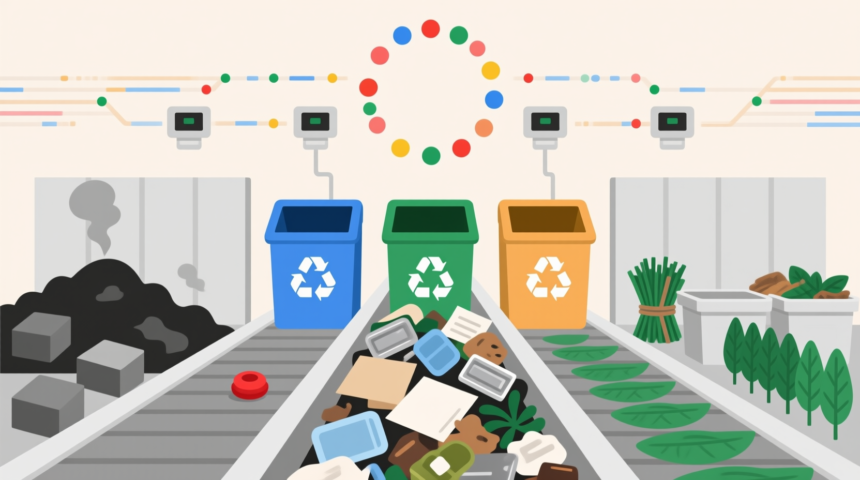
One of the main reasons recycling is operating sub-optimally is because people don’t understand the rules, and loads of recycling arrive at the plant contaminated and unable to be used. New smart systems that track recycling pick-ups can link contaminated recycling to specific routes, thereby identifying which users may be responsible. With this information, waste management specialists can provide targeted education and reduce waste within the recycling system.

Startups are also breaking into the waste management space, with companies like Rubicon Global that optimize data to increase waste diversion from landfills through smarter use of a network of independently owned trucks. Drawing on the fact that much of landfill waste is actually recyclable, such a system has the ability to use data in a proactive manner, rather than passively piling up waste in overstuffed landfills.

Data For A Greener Future

Data systems, from wearable air pollution monitors to smart garbage trucks and satellite data for oceanic monitoring, all play a role in moving the U.S. towards being a zero waste system; one in which we rely on multiple recycling and composting interventions to circumvent traditional extraction and landfilling practices. This may seem a long way off, but when we account for the wide variety of materials we can make from renewable sources today, it’s obvious that zero-waste is attainable. We have the technology to change our standard of operations, but the motivation is lacking. It’s time to make a change.

Share This Article
Facebook Pinterest LinkedIn
Share
ByLarry Alton
Follow:
Larry is an independent business consultant specializing in tech, social media trends, business, and entrepreneurship. Follow him on Twitter and LinkedIn.

Follow us on Facebook

Latest News

street address database
Why Data-Driven Companies Rely on Accurate Street Address Databases
Big Data Exclusive
predictive analytics risk management
How Predictive Analytics Is Redefining Risk Management Across Industries
Analytics Exclusive Predictive Analytics
data analytics and gold trading
Data Analytics and the New Era of Gold Trading
Analytics Big Data Exclusive
student learning AI
Advanced Degrees Still Matter in an AI-Driven Job Market
Artificial Intelligence Exclusive

Stay Connected

1.2kFollowersLike
33.7kFollowersFollow
222FollowersPin

You Might also Like

MPI Cluster with Python and Amazon EC2 (part 2 of 3)

1 Min Read

“Data Science”: what’s in a name?

3 Min Read
big data analytics
Analytics

Small Businesses Use Data Analytics Tools to Cut Costs as Inflation Rises

6 Min Read
big data and business intelligence
AnalyticsBig DataBusiness Intelligence

Can Business Intelligence Answer the Questions Asked of it Without Big Data?

6 Min Read

SmartData Collective is one of the largest & trusted community covering technical content about Big Data, BI, Cloud, Analytics, Artificial Intelligence, IoT & more.

giveaway chatbots
How To Get An Award Winning Giveaway Bot
Big Data Chatbots Exclusive
AI and chatbots
Chatbots and SEO: How Can Chatbots Improve Your SEO Ranking?
Artificial Intelligence Chatbots Exclusive

Quick Link

  • About
  • Contact
  • Privacy
Follow US
© 2008-25 SmartData Collective. All Rights Reserved.
Go to mobile version
Welcome Back!

Sign in to your account

Username or Email Address
Password

Lost your password?