
We use cookies, including third-party cookies from Google to serve personalized ads through AdSense, to operate this site and understand how it is used. By continuing to browse, you accept this use. See our Privacy Policy and Terms of Use for details, including how to opt out of personalized advertising.
Accept
SmartData CollectiveSmartData Collective
  • Analytics
    AnalyticsShow More
    What Kind of Problem-Solving Distinguishes Data Analysts From Software Engineers -- AI-generated illustration
    What Kind of Problem-Solving Distinguishes Data Analysts From Software Engineers
    7 Min Read
    chatgpt image jul 21, 2026, 04 34 30 pm
    4 Core Benefits of Predictive Maintenance after Vibration Analysis
    10 Min Read
    How Does Data Mining Boost Customer Satisfaction in Logistics? Harnessing Analytics for Results -- AI-generated illustration
    How Does Data Mining Boost Customer Satisfaction in Logistics? Harnessing Analytics for Results
    11 Min Read
    chatgpt image jul 13, 2026, 04 23 45 pm
    How Data Analytics Helps Companies Improve User Engagement
    19 Min Read
    chatgpt image jul 13, 2026, 03 59 46 pm
    How Data Analytics Improves Multi-Location Search Strategies
    10 Min Read
  • Big Data
  • BI
  • Exclusive
  • IT
  • Marketing
  • Software
Search
© 2008-25 SmartData Collective. All Rights Reserved.
Reading: People, Process and Politics – We All Hate Data Silos, So Why do They Happen?
Share
Notification
Font ResizerAa
SmartData CollectiveSmartData Collective
Font ResizerAa
Search
  • About
  • Help
  • Privacy
Follow US
© 2008-23 SmartData Collective. All Rights Reserved.
SmartData Collective > Big Data > Data Warehousing > People, Process and Politics – We All Hate Data Silos, So Why do They Happen?
Data Warehousing

People, Process and Politics – We All Hate Data Silos, So Why do They Happen?

RickSherman
RickSherman
5 Min Read
People, Process and Politics - We All Hate Data Silos, So Why do They Happen?
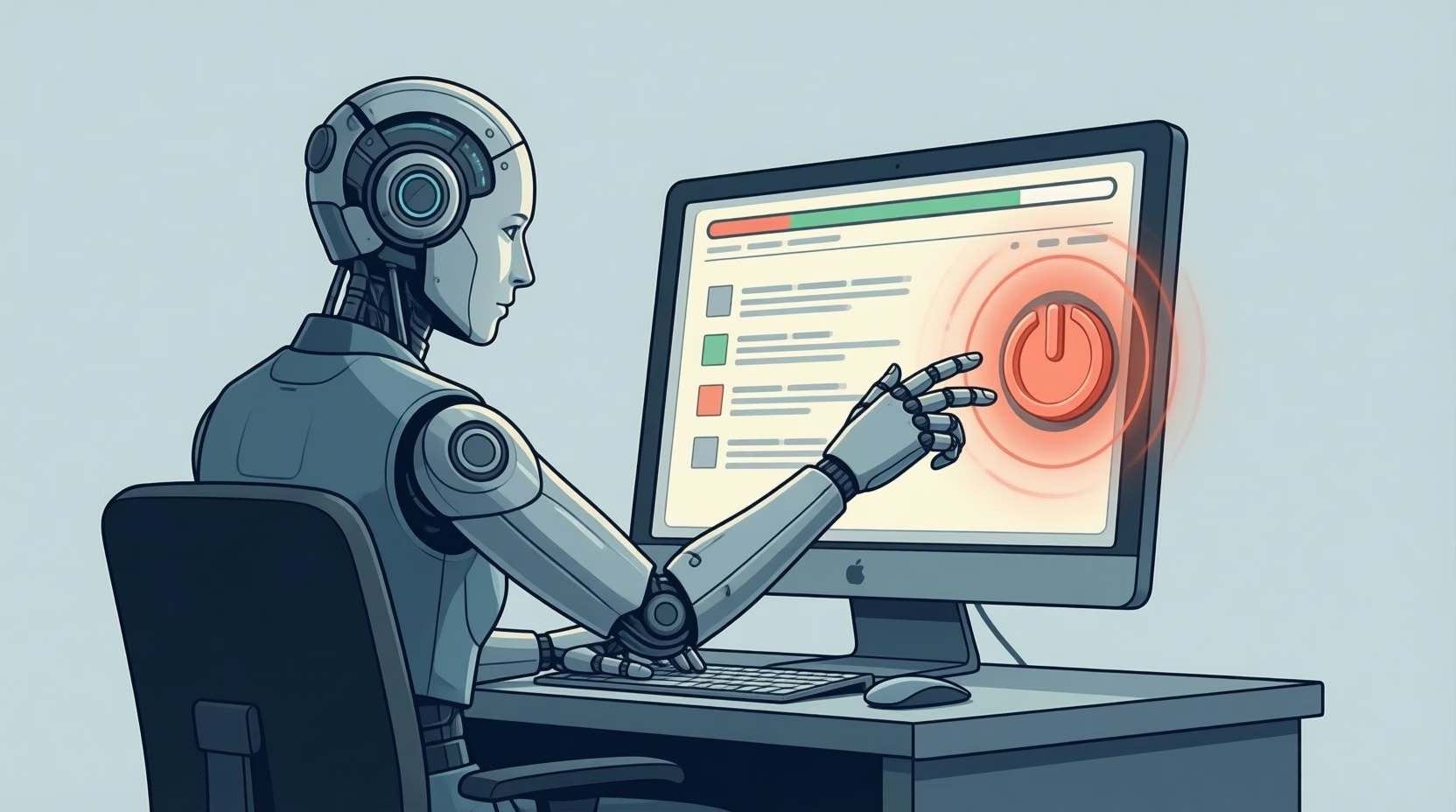
Illustration generated with Qwen Image.
SHARE

Why are data silos so prevalent when we really ought to know better? We know that it’s risky to have inconsistent data. We strive for the “single version of the truth” along with our IT and high tech vendors.

So, with all this awareness, why does almost every company end up with data silos?

There are two causes that I’ve seen in my consulting work. First, companies typically organize BI and DW related projects on a tactical and project-by-project basis. This makes data silos very, very likely. Second, these tactical projects are designed without an overall information architecture blueprint. This absolutely, positively guarantees a silo. You “can’t get there from here” if you don’t know where you are trying to go.

There are several reasons why otherwise smart people create projects on a tactical basis without an overall architecture:

More Read

A Taleo Tale: Oracle Reaches for Cloud Credibility
BI and a different type of outsourcing
Google and Apache Hadoop: A Match Made in the Cloud
TDWI World Conference Chicago 2009
Highlights from Teradata Partners 2010

Funding – Projects are funded by a group representing an organization or business process. These groups are focused mainly on their own information needs and delivering business value in the context of those needs. Building an enterprise-wide solution is not in their minds nor in their charter.

Confusion – Industry jargon creates the impression that things are different, when they’re actually similar. There are many similarities between CRM (customer relationship management), SCM (supply chain management), budgeting and forecasting, performance management and balanced scorecards. Many people do not see that each has data, data integration and business intelligence that can be shared across projects.

Technology – People tend to treat different technologies as different projects and applications. ETL (extract, transform and load), SOA (service oriented architecture), EAI (enterprise application integration) and data virtualization are considered different and treated as separate entities rather than different methods to implement data integration.

Disconnects – Data warehousing and enterprise applications are treated as separate worlds. Even though the business person may need reporting from operational applications and the DW, different projects are created to implement reporting from each of these data sources. And often IT splits its ERP and DW people into separate groups, further perpetuating silos.

No Architecture  – Finally, without an information architectural blueprint how is anyone to know that these projects should be connected? If you split up building a house amongst various contractors and specialists such as electricians and plumbers without a blueprint and without these groups talking to each other it is unlikely the house gets built correctly. It’s the same with a DW or BI project. You need the blueprint (information architecture) – especially if the projects are set up tactically and on a project-by-project basis. This is called accidental architecture and it creates data silos.

Data silos result in poor quality data that is often inconsistent, wastes resources and time on overlapping and redundant projects, costs more money to build and maintain, and ultimately results in the business not getting information in a consistent, comprehensive and current manner. Data silos also encourage the creation of data shadow systems or spreadmarts, further exacerbating the problems.

How do we get out of this? Stay tuned for more posts in the People, Process and Politics series.
Share This Article
Facebook Pinterest LinkedIn
Share

Follow us on Facebook

Latest News

Technical architecture diagram and decision framework for the trouble with ai that won’t leave a job unfinished
The Trouble With AI That Won’t Leave a Job Unfinished
Artificial Intelligence News
Technical architecture diagram and decision framework for ai-powered logo generation: design.com vs looka
AI-Powered Logo Generation: Design.com vs Looka
Artificial Intelligence Exclusive
Retailers Should Stop Treating Every Stockout as Equal -- AI-generated illustration
Retailers Should Stop Treating Every Stockout as Equal
Business Intelligence Exclusive
Best Vibe Coding Cleanup Specialists in the USA: Fix or Rebuild? -- AI-generated illustration
Best Vibe Coding Cleanup Specialists in the USA: Fix or Rebuild?
Development Exclusive

Stay Connected

1.2KFollowersLike
33.7KFollowersFollow
222FollowersPin

You Might also Like

Big Data Fights Crime: The FBI’s Next Generation Identification
AnalyticsData MiningData WarehousingSecurity

Big Data Fights Crime: The FBI’s Next Generation Identification

4 Min Read
Double Dutch - Greenplum and Teradata
Data Warehousing

Double Dutch – Greenplum and Teradata

21 Min Read
What If We Could Feel the Big Data Sugar Rush Faster?
Big DataData ManagementData MiningData QualityData VisualizationData WarehousingKnowledge ManagementSocial DataUnstructured DataWorkforce Data

What If We Could Feel the Big Data Sugar Rush Faster?

5 Min Read
Data Warehouse “as a Service” – A Good Pick for Mid-Sized Companies
Cloud ComputingData Warehousing

Data Warehouse “as a Service” – A Good Pick for Mid-Sized Companies

6 Min Read

SmartData Collective is one of the largest & trusted community covering technical content about Big Data, BI, Cloud, Analytics, Artificial Intelligence, IoT & more.

How To Get An Award Winning Giveaway Bot
Big Data Chatbots Exclusive
From Bolts to Bots: How AI Is Fortifying the Automotive Industry
Artificial Intelligence

Quick Link

  • About
  • Contact
  • Privacy
Follow US
© 2008-26 SmartData Collective. All Rights Reserved.
Welcome Back!

Sign in to your account

Username or Email Address
Password

Lost your password?