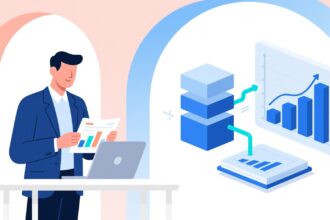
It’s our modern day struggle trying to figure out how to keep our data in our own hands. In truth, it is our generation’s battle to fight, not unlike the diversity or democracy battles fought by our forefathers. To give up all control or to maintain some say in the matter — these are our choices, and in as little time as a few years, the choice will be made for us if we don’t do anything about it now.
Because big data is only getting bigger, and big names want to make big money in the industry. Soon, you won’t hear about the NSA’s improper collection and use of data. Soon, you won’t know about Target’s massive data breach. Soon, a Heartbleed bug will be hidden from your newsfeed. All of this because soon, if we do nothing, big data will go the way of anything worth it’s weight in gold: to the wrong hands.
Transparency and Security
In the big data field, transparency and security are the “play it safe” words used by every organization looking to get a foot in door. However, what those words mean offline are honesty and integrity. And as we all know, staying true to those core values are much harder, always, than ever expected.
Transparency requires a level of foresight into potentially necessary data usages that most organizations don’t currently have. Security requires a level of hacking, storage and pure brain power that the Heartbleed bug proved will simply not always exist.
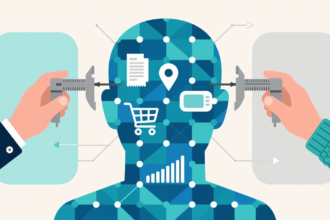
On the surface, these are good measures by which to judge the good and the bad in the industry. Who is doing data right? Who is making sure the big data revolution is one not just for ROI, but for actual humans, too? Who, indeed.
Every swipe of your credit card, every login to social media, every quick routing use on your phone’s GPS and you’ve been spotted. Your information has been gathered, and the only question left is who is going to use it — and for what reasons? Luckily, at least thus far, big data usage by companies hasn’t been too superfluous.
Target’s Predictive Model
Target, for instance, can predict your pregnancy — often before you even tell anyone about it — simply based on a switch from soda to water, hair dye to facial masks, and your new found love for massive amounts of lotion.
How do they do it? Based on millions of data points throughout the Target customer purchase history, these small, but significant, touch points more often than not mean one thing: you’re going to be having a baby. And you’ll be seeing a lot more baby-product ads from Target than you were previously, because that’s how they utilize their big data — for marketing.
And that’s not really a breach of any type of transparency or security. After all, it’s just marketing and you’ll probably need a few of the things they’re advertising. No harm, no foul.
Online Anonymity, or Lack Thereof
But, what if you wanted to get off that grid, to escape from the targeted ads and the big business who might know just a little too much about you?
This is just what Janet Vertesi, assistant professor of sociology at Princeton University, did. For the past nine months, Vertesi attempted to hide her pregnancy from the world of big data — and it wasn’t easy.
“My story is about big data, but from the bottom up,” she said to the audience at the Theorizing the Web conference in Brooklyn. “From a very personal perspective of what it takes to avoid being collected, being tracked and being placed into databases.”
Over the course of her pregnancy, Vertesi made no mention of her condition on social media, even defriending an uncle who sent her a congratulatory Facebook message. She paid in cash for all pregnancy related items so that her credit card information could not be tracked. For items she did purchase online, she used an account linked to an email address on a personal server and had all packages delivered to a local locker.
Tor, the software infamous for Bitcoin trading and buying drugs online, was a huge help in remaining untraceable online.
“I really couldn’t have done it without Tor, because Tor was really the only way to manage totally untraceable browsing. I know it’s gotten a bad reputation for Bitcoin trading and buying drugs online, but I used it for BabyCenter.com,” said Vertesi.
And while Vertesi was successful for the most part, turns out that when you buy expensive items with large amounts of cash (you know, like strollers) you get tagged as suspicious in store systems.
“Those kinds of activities, when you take them in the aggregate … are exactly the kinds of things that tag you as likely engaging in criminal activity, as opposed to just having a baby,” she said.
Trading Data Over Cash
In all, we’ve reached a tipping point where big data seems safer than cash — and while that sounds frightening, it doesn’t have to be. The Internet has evolved and transparency and security are quickly becoming it’s cornerstones. Not unlike the honesty and integrity we attempt to achieve in the offline world, transparency and security won’t always be easy coming, but they will be necessary. Laws will one day protect these digital valuables, and in the mean time, data rights management platforms will fill the void, and will even help direct those future laws.
Is it possible to stay anonymous on the web? Sure — if you put in the work. The better question is this: is it possible to maintain data rights in accordance with what is moral, what is transparent and what is secure?