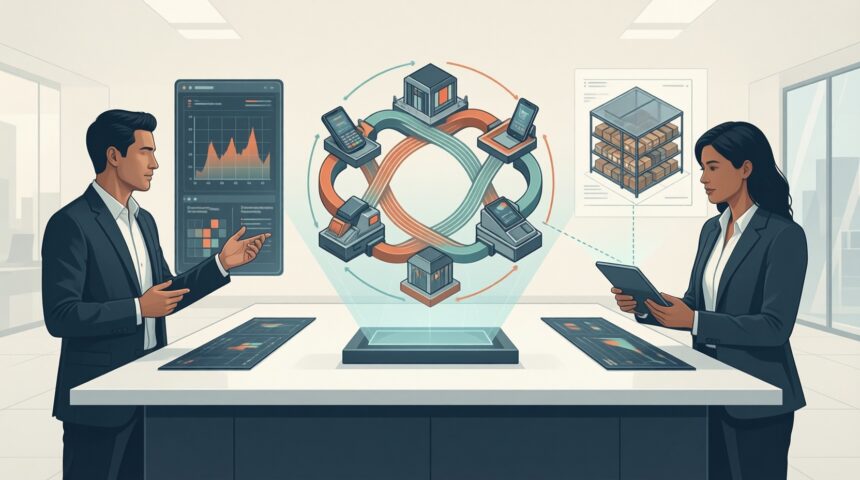
Retail data projects usually start with big promises about unified commerce, but the hardest work happens where software meets physical store floors. Tracking customer interest online is relatively straightforward because every page load, click, and cart addition creates a timestamped server log. In a brick-and-mortar store, customer actions are messy. Shoppers carry items into fitting rooms, put clothes back on random shelves, or compare prices on their phones while standing in an aisle. Making retail data useful requires connecting those physical actions to real inventory availability, checkout records, and fulfillment systems.
- Where Retail Analytics Creates Operational Value
- 13 Retail Companies and What Their Data Pilots Taught the Industry
- 1. Nordstrom
- 2. Rebecca Minkoff
- 3. Bonobos’ GuideShops
- 4. TopShop
- 5. Warby Parker
- 6. Shiseido
- 7. IKEA
- 8. Walgreens
- 9. SportChek
- 10. Target
- 11. Neiman Marcus
- 12. Kate Spade
- 13. Sephora
- Retail Data Modernization: 13 Pilot Deployments Compared
- Key Lessons from Ten Years of In-Store Retail Experiments
- Frequently Asked Questions
Where Retail Analytics Creates Operational Value
Store analytics generally breaks down into four operational areas: assortment planning, localized pricing, inventory accuracy, and fraud prevention. Each area depends on different data sources. An RFID sensor on a coat rack reveals browsing interest, but a web reservation requires an exact SKU and warehouse location. When retailers mix up browsing signals with transactional holds, online shoppers see out-of-stock notices on items that are still hanging on store hangers.
Pricing tests require similar discipline. Testing a discount in one city can lift register sales, but the test only proves profitable after calculating return rates and shipping costs for returns. Store systems need to track transactions through the entire return window instead of declaring victory at the cash register. The real test for any retail analytics project is simple: does the data improve an actual purchasing or restocking decision?
The most successful retail deployments treat data as an operational asset on the sales floor instead of an executive reporting dashboard. When store associates receive actionable stock alerts in real time, customer conversion follows naturally.
Heather Holding, Chief Risk Officer, Best Egg, in Statista Retail Technology Report, 202413 Retail Companies and What Their Data Pilots Taught the Industry
1. Nordstrom
Nordstrom started putting red tags on store items in 2013 to match what people were pinning on Pinterest. If a handbag got pinned thousands of times online, store workers put a tag on it so people walking into the store would see it first. The problem was stock. A handbag would go viral online, but a store in Denver might only have one of them in the back. Customers came looking for the bag and left empty-handed when it was already gone. Associates also hated it because they had to change the displays every week based on website numbers, and they didn’t get any credit if someone looked at the bag in the store and bought it online later. Nordstrom ended the program a couple of years later and focused on their own app instead.
2. Rebecca Minkoff
In 2014, Rebecca Minkoff put touchscreen mirrors inside the dressing rooms at her SoHo store. RFID antennas hidden in the walls picked up the tags on every dress and blouse a shopper carried in, pulling up alternate sizes and colors right on the mirror glass. Shoppers could tap the glass to ask an associate for another size or request a free glass of champagne. The setup gave the brand great numbers on which clothes were tried on versus actually bought, but keeping the hardware clean was tough. Fingerprints smudged the mirrors constantly, and store clerks spent half their shifts wiping down the glass between customers. As shoppers got used to using their own phones, the brand quietly shifted toward letting people scan tags on their mobile screens instead.
3. Bonobos’ GuideShops
Bonobos built its physical store strategy around zero carried inventory. Customers scheduled appointments at Guideshop locations to try on tailored suits and chinos with a stylist, but they left the store without any shopping bags. Associates placed the order through the central warehouse, and purchases arrived at the customer’s home within two days. This model eliminated the markdown losses typical of traditional clothing stores, which often have to discount unpopular sizes. The data collected during fitting appointments gave Bonobos accurate sizing profiles for their customers, driving high repeat purchase rates online.
4. TopShop
During London Fashion Week in 2014, TopShop set up virtual reality headsets at their Oxford Street store, letting shoppers experience a 360-degree view of the runway show. While the campaign generated significant press coverage and long lines outside the flagship, it exposed the limits of experiential store technology. The headsets were bulky, required dedicated staff to sanitize between users, and did not connect directly to product purchasing. TopShop demonstrated that novelty displays attract foot traffic, but sustainable retail technology must directly support product discovery and purchasing convenience.
5. Warby Parker
Warby Parker started as an online direct-to-consumer eyewear brand before expanding into physical retail stores. The company used home try-on data to determine where to open stores, selecting neighborhood locations based on high concentrations of online customers. In their stores, point-of-sale systems pull up a customer’s online favorites and prescription history immediately. By combining facial dimension data from their mobile app with in-person optician fittings, Warby Parker maintains low return rates on prescription lenses while keeping frame production closely aligned with real demand.

6. Shiseido
Cosmetics brand Shiseido introduced digital makeup mirrors in department store counters to help customers test lipstick, eyeshadow, and foundation shades virtually. Shoppers sat in front of a camera that applied digital color simulations over their live reflection. Early versions struggled with store lighting variations, as harsh fluorescent tubes distorted color accuracy compared to natural daylight. Shiseido updated the counters with calibrated LED light rings, making the shade simulations reliable. The tool helped beauty consultants test multiple looks in minutes without having to wipe off physical makeup repeatedly.
7. IKEA
IKEA tackled the classic furniture return problem using augmented reality. Shoppers often struggle to visualize whether a sofa or dining table will fit through their doorway and complement their living room layout. The IKEA Place app used spatial tracking to render 3D furniture models into a customer’s room with millimeter accuracy. By encouraging shoppers to verify dimensions and scale before traveling to suburban warehouse stores, IKEA reduced return rates on bulky furniture. The app also provided the design team with data on which product colors and styles customers tested most frequently in their homes.
8. Walgreens
Walgreens tested Bluetooth shelf sensors across thousands of retail pharmacies to send localized coupons to shoppers walking down specific aisles. The sensors faced major real-world friction: shoppers rarely kept Bluetooth and location tracking enabled while grabbing household items, and push notifications felt intrusive. Walgreens found far greater success by focusing their app on functional utility. Adding a quick barcode scanner that let customers refill prescriptions by scanning pill bottles drove massive mobile engagement, turning the app into a reliable daily health tool.
9. SportChek
Canadian sporting goods retailer SportChek built a technology-heavy laboratory store in Toronto featuring hundreds of digital screens, RFID shoe fitting tables, and biometric gait-analysis tracks. When a customer picked up a running shoe, nearby displays automatically showed video reviews and technical specifications for that model. While operating hundreds of commercial screens required substantial power and IT maintenance, the interactive kiosks solved a persistent floor challenge. Customers could check stock across different regional stores independently, freeing store associates to handle specialized equipment adjustments.
10. Target
Target transformed its physical store network into localized fulfillment hubs. Instead of shipping online grocery and household orders exclusively from centralized distribution centers, Target’s algorithms route pickup orders directly to nearby stores. Floor workers use handheld terminals to pick orders from aisles before customers arrive. Target’s Drive Up service, which lets customers park and have bags loaded into their trunks in minutes, became a multi-billion dollar channel because it eliminated last-mile delivery fees while preserving store foot traffic.
11. Neiman Marcus
Luxury department store Neiman Marcus introduced visual search in its mobile app, letting customers take a photo of a handbag or dress on the street to find identical or similar items in the catalog. Early computer vision models struggled with patterned fabrics or distorted angles, but the tool performed well for leather goods and footwear. Sales associates also used tablets equipped with customer purchase histories to provide personalized recommendations when high-value clients visited private dressing suites.
12. Kate Spade
In 2013, Kate Spade launched 24-hour interactive storefronts in Manhattan to support its Saturday line. Shoppers could walk up to store window touchscreens on the sidewalk at night, browse accessories, and place an order delivered by courier within an hour. The project generated strong foot traffic, but conversion data showed that shoppers rarely bought high-ticket apparel through a sidewalk glass display without trying garments on first. The pilot helped the brand realize that window touchscreens work better for small accessories and gift items instead of core ready-to-wear collections.
13. Sephora
Sephora solved a notorious retail pain point with its Color IQ system. Matching foundation to skin tone under varied department store lighting usually leads to high return rates. Sephora equipped beauty advisors with handheld spectrophotometers that scan the skin surface, assigning an objective color code. The system matches that code against hundreds of foundation formulas in real time. Because the tool eliminated subjective guesswork and dramatically reduced product returns, Color IQ transitioned from an experimental pilot into a permanent worldwide store fixture.
Retail Data Modernization: 13 Pilot Deployments Compared
| Retailer | Data Mechanism | Channel Integration | Primary Use Case | Tested Outcome |
|---|---|---|---|---|
| Nordstrom | Co-shopping history and saved boards | Floor associate app to store inventory | Assisted personalization | Assisted purchase rates after returns |
| Rebecca Minkoff | RFID antennas and connected mirrors | Fitting-room displays to catalog stock | Fitting-room styling | Higher request-to-purchase conversion |
| Bonobos | Custom sizing profiles from GuideShops | Physical showroom to central distribution | Fit consultations and zero-stock floor | High repeat order rates online |
| TopShop | Virtual 360-degree event streams | Event display to catalog discovery | Experiential brand engagement | Elevated foot traffic during fashion events |
| Warby Parker | Facial dimension scans and home try-on history | Mobile app to brick-and-mortar opticians | Store site selection and prescription validation | Lower prescription return rates |
| Shiseido | Spectral color sensors and digital mirrors | Physical counters to simulated product trial | Personalized beauty consultations | Fast shade matching without repeat wipes |
| IKEA | Spatial tracking and 3D room rendering | Mobile AR app to home room scans | Pre-purchase furniture scale verification | Reduced return rates on bulky furniture |
| Walgreens | Mobile barcode scanning and prescription refills | Mobile app to pharmacy dispensing systems | On-the-go utility and medication reorders | High daily mobile engagement |
| SportChek | Interactive RFID tables and gait analysis | In-store kiosks to regional warehouse stock | Product guidance for sporting equipment | Higher featured-model store sales |
| Target | Point-of-sale records and localized picking algorithms | Mobile app to localized store fulfillment | Drive Up curbside grocery and household pickup | Multi-billion dollar low-friction channel |
| Neiman Marcus | Tablet-assisted clienteling and visual search | Mobile app snapshots to luxury sales associates | High-touch wardrobe recommendations | Retained private-suite customer sales |
| Kate Spade | Interactive window touchscreens | Sidewalk screens to local courier delivery | After-hours accessory ordering | Validated small gifts over high-ticket apparel |
| Sephora | Handheld spectrophotometers (Color IQ) | Skin tone scans to foundation formulation database | Objective cosmetic shade matching | Measurable reduction in cosmetic return rates |
The dividing line between successful store technology and expensive museum pieces comes down to employee workflows. If an in-store digital tool saves an associate three minutes of inventory checking or prevents a customer return, it becomes permanent. If it only creates PR impressions, stores quietly unplug it within eighteen months.
AJ Thompson, Chief Commercial Officer, Northdoor, in McKinsey Omnichannel Retail Benchmark, 2024Key Lessons from Ten Years of In-Store Retail Experiments
A decade of digital store pilots makes several patterns clear. First, customer convenience consistently beats theatrical hardware. Interactive mirrors, virtual reality headsets, and sidewalk touchscreens often generate substantial launch publicity, but maintenance overhead and customer hesitation limit long-term adoption. Shoppers prefer using their own smartphones instead of touching public store displays.
Second, inventory accuracy remains the foundation of retail data. Adding advanced recommendations or social media trends to a store floor creates frustration if local stock counts are unreliable. Retailers that succeed with omnichannel operations focus on keeping store inventory counts accurate in real time, making buy-online-pickup-in-store services dependable for everyday shoppers.
Frequently Asked Questions
How do retailers prevent phantom inventory between store shelves and online order pickup?
Retailers avoid phantom inventory by establishing safety-stock buffers and isolating walk-in browsing signals from transactional reservations. When a customer reserves an item online for store pickup, store inventory management software places a real-time hard hold on that specific SKU. Leading chains route store pickup orders directly to handheld associate devices, verifying physical shelf presence before marking units available for customer trunk delivery.
Why did retailers shift away from in-store interactive touchscreens toward customer mobile apps?
Early retail pilots using sidewalk touchscreens, fitting-room smart mirrors, and public kiosks suffered from high maintenance costs, smudged screens, and customer hesitation. As smartphone adoption grew, retailers found that shoppers strongly prefer using their personal mobile devices. Mobile apps allow customers to scan barcodes, access loyalty discounts, and view inventory without requiring stores to maintain specialized display hardware.
What data sources are required to connect in-store browsing with digital marketing?
Connecting physical browsing with digital campaigns requires unifying point-of-sale records, loyalty identifiers, and mobile app interactions within a central customer data platform. Instead of relying on inaccurate location pings, modern retailers use opt-in mobile app sessions, digital receipts, and barcode scans. This transactional linkage gives merchants clean conversion data without violating customer privacy or creating data synchronization lag.