Cookies help us display personalized product recommendations and ensure you have great shopping experience.

By using this site, you agree to the Privacy Policy and Terms of Use.
Accept
SmartData CollectiveSmartData Collective
  • Analytics
    AnalyticsShow More
    warehouse accidents
    Data Analytics and the Future of Warehouse Safety
    10 Min Read
    stock investing and data analytics
    How Data Analytics Supports Smarter Stock Trading Strategies
    4 Min Read
    predictive analytics risk management
    How Predictive Analytics Is Redefining Risk Management Across Industries
    7 Min Read
    data analytics and gold trading
    Data Analytics and the New Era of Gold Trading
    9 Min Read
    composable analytics
    How Composable Analytics Unlocks Modular Agility for Data Teams
    9 Min Read
  • Big Data
  • BI
  • Exclusive
  • IT
  • Marketing
  • Software
Search
© 2008-25 SmartData Collective. All Rights Reserved.
Reading: How listening to our cars will improve the driving experience
Share
Notification
Font ResizerAa
SmartData CollectiveSmartData Collective
Font ResizerAa
Search
  • About
  • Help
  • Privacy
Follow US
© 2008-23 SmartData Collective. All Rights Reserved.
SmartData Collective > IT > Cloud Computing > How listening to our cars will improve the driving experience
AnalyticsBig DataCloud ComputingCollaborative DataData ManagementMarketing AutomationMobilityNew ProductsNewsSecuritySoftware

How listening to our cars will improve the driving experience

Mahbubul
Mahbubul
4 Min Read
driving experience
SHARE

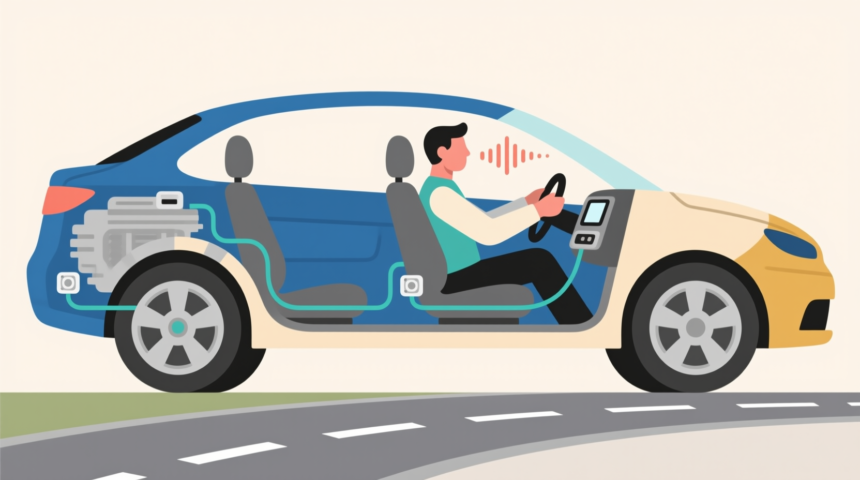
Smart technology is already being used in cars, but we’re just at the very beginning.  It’s a given that Over-the-Air  (OTA) software updates for both drivers and automotive OEMs will be an integral part of new cars. The total vehicles predicted to have OTA map updates for example will exceed 32 million by 2022.  New code and upgrades will be conveniently sent from the cloud to a car’s systems rather than demanding a drive to the dealer for needed updates.  As the OTA leader,  at Movimento we understand that there’s another aspect to this wireless technology that opens up an exciting new realm of benefits to the industry.  It’s called bi-directional data flow.

With this data, car makers can react in real time to their customers to make vehicles better serve drivers. Examining this diagnostic info, manufacturers  can see how their cars are being used, which can feed a continual improvement process to develop new features that customers want such as parking information or traffic updates.

Just like application updates do today, automotive software updates can fix areas of continual complaint, fix recalls, add newly requested options and most importantly, create happy, satisfied customers.  Bi-directional data flow is similar to the system that  Waze uses, which takes information from drivers about traffic congestion  or accidents and feeds it back into the app to give users near real-time updates on what’s happening on the ground.

But, it does not make sense to gather all the data that a car could give us.  In 2015, only 20% of cars have connectivity and according to Hitachi, connected cars will send twenty-five gigabytes of data back to the cloud every hour.  Just think how much data we will have when all cars are connected!  We don’t need and can’t handle this amount of data and besides, it’s costly.  Valuable diagnostic and gathering tools will be needed to gather data and select the most relevant information and channel it in the right direction.  It may give one OEM an opportunity to improve fuel efficiency through the latest and greatest releases, while information about user patterns and driving may give insurers more accurate insurance pricing.

More Read

altcoins
Predictive Analytics Made Last Summer The Season Of Altcoins
Advanced Analytics Solution: To Build or Buy
Pizza Delivery Businesses Turn to Big Data Analytics for Record Growth
From “The Farm” to FarmVille
10 Reasons People Cringe at Big Data, But Shouldn’t

In the future, data will go back to the cloud and give car manufacturers and app makers a world of information they can use judiciously and then feed it back to give drivers a superior driving and owning experience. The learnings from this information will feed back into cars giving us e.g. better braking systems, more options on music or infotainment.

Rather than the one-size-fits-all approach to consumer vehicles of the past, the software-defined car will give drivers a more personalized, functional automobile whose value is never static, but has the potential for process and product improvements into the future in a continuous loop.

 

Share This Article
Facebook Pinterest LinkedIn
Share

Follow us on Facebook

Latest News

macro intelligence and ai
How Permutable AI is Advancing Macro Intelligence for Complex Global Markets
Artificial Intelligence Exclusive
warehouse accidents
Data Analytics and the Future of Warehouse Safety
Analytics Commentary Exclusive
stock investing and data analytics
How Data Analytics Supports Smarter Stock Trading Strategies
Analytics Exclusive
qr codes for data-driven marketing
Role of QR Codes in Data-Driven Marketing
Big Data Exclusive

Stay Connected

1.2KFollowersLike
33.7KFollowersFollow
222FollowersPin

You Might also Like

What Big Data Can Do for the Legal Industry [VIDEO]

1 Min Read

A Free Modeling Tool for Valentine’s

2 Min Read

Data Mining Research Awards 2010

5 Min Read
big data sleep medicine
Big Data

The Potential of Big Data in Sleep Medicine

5 Min Read

SmartData Collective is one of the largest & trusted community covering technical content about Big Data, BI, Cloud, Analytics, Artificial Intelligence, IoT & more.

ai is improving the safety of cars
From Bolts to Bots: How AI Is Fortifying the Automotive Industry
Artificial Intelligence
ai chatbot
The Art of Conversation: Enhancing Chatbots with Advanced AI Prompts
Chatbots

Quick Link

  • About
  • Contact
  • Privacy
Follow US
© 2008-25 SmartData Collective. All Rights Reserved.
Go to mobile version
Welcome Back!

Sign in to your account

Username or Email Address
Password

Lost your password?