



Personal data has always been a valuable part of our lives, from counting calories to Nielson surveys, but in the past collecting data was more labor intensive. Families filled out careful charts to return to Nielson, people attended community focus groups, and companies undertook elaborate studies to determine what their customers wanted. We can’t advance and grow without data, but today our personal experiences and activities are recorded and utilized almost without our knowledge.
Where does all of today’s data come from and, more importantly, what are we doing with it? Though the sources are diverse, our personal experiences are the foundation of knowledge and socially transformational.
More Read

From Failure to Focus
Two of the most basic ways that we take our personal experiences and turn them into data are through old school focus groups and through trial and error. Though focus groups are not as popular as they used to be, you’re still likely to encounter them online through programs like Shopper’s Voice.
In the past, focus groups were less scientific in their data creation because they relied heavily on descriptive feedback that was hard to quantify. Because many focus groups today are often managed using online surveys, however, it’s easier to turn user experiences into actionable data.
As individuals, we also act as our own kind of personal focus group. We try something and if it doesn’t work, we reflect on what we’ve learned and we try again. At first, this may not seem like data, but do it enough times and you may find you have some hard facts. That’s how Sam Ovens came to develop his consulting business – he took what he learned through several failed businesses and turned it into usable data that was ultimately wildly profitable.
Social Media and Social Learning
If we can learn a lot – and develop a lot of knowledge – from descriptive information, social media is doing incredible work quantifying our actions. We see it every day when Facebook adapts our advertisements based on Google searches and Amazon purchases. For those not well versed in data science, however, it can seem as though there are some simple, direct mechanisms at work here – that perhaps these ads are a direct transfer from the other site or from a friend’s page. In truth, there are complex algorithms at work behind each of these moments.
It can be harder to develop algorithms for other kinds of social media activity, such as what types of news articles we want to see, which is why Facebook recently made the move to purchase CrowdTangle, a startup used to track social data. A large number of well-regarded publishers, including the BBC and Vox, already use CrowdTangle to track article performance, but by joining with Facebook’s deep roots in the social sector, it’s likely to become an even more powerful tool.
Input From The Internet Of Things
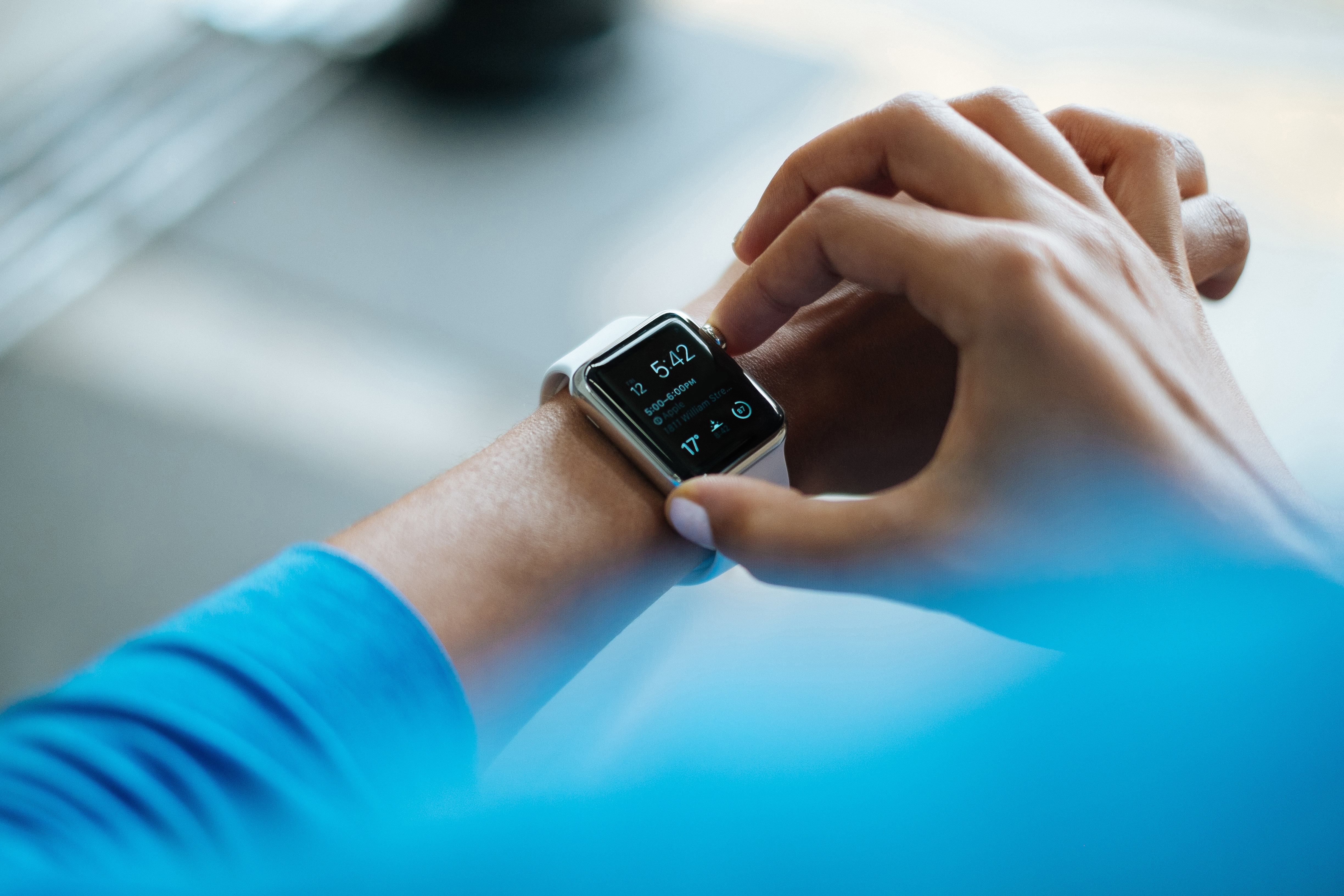
One of the newest and most revolutionary factors when it comes to turning personal experience into data is the Internet of Things (IoT) – but most know this sector through big name products like Fitbits and Nest thermostats. At its core, IoT technologies are the little data collectors that live inside everyday objects, tapping into our surroundings and actions to improve our daily lives. In many cases, they’re also feeding that information back to companies, cities, or other institutions that are learning from our data.
There are numerous IoT devices for the health and fitness sector and they tap into everything from steps taken and calories burned to variations in glucose level throughout the day. These tools are helping us live healthier lives and normalizing activities like step counting that used to automatically signal that someone was trying to lose weight.
Our homes are also monitoring our behavior these days, and doing so in ways that are altering our experiences as much as drawing on them. In the past, you adjusted your thermostat when the temperature dropped too low; today, your thermostat not only knows that your home is cold, but it tracks your habits and knows when you’re likely to be coming home so that it can turn the temperature up at the right time (and will turn itself back down if you don’t come home when expected). This is a complete change in our relationship with data production and application.
Our personal experiences of the world shape our interactions with it and in the past, we’ve offered up those experiences so that professionals could turn them into useable data. Today, data appears before we even have time to process our experiences, and in the next few years, we can expect the IoT and advanced neural networks to offer even more predictive technology.
With these tools, big data has turned the unremarkable into the incredible, one experience at a time.



-scaled.jpg &description=Day+To+Day+Data%3A+How+To+Build+Knowledge+From+Daily+Life)