We use cookies, including third-party cookies from Google to serve personalized ads through AdSense, to operate this site and understand how it is used. By continuing to browse, you accept this use. See our Privacy Policy and Terms of Use for details, including how to opt out of personalized advertising.
Accept
SmartData CollectiveSmartData Collective
  • Analytics
    AnalyticsShow More
    chatgpt image jul 21, 2026, 04 34 30 pm
    4 Core Benefits of Predictive Maintenance after Vibration Analysis
    10 Min Read
    How Does Data Mining Boost Customer Satisfaction in Logistics? Harnessing Analytics for Results -- AI-generated illustration
    How Does Data Mining Boost Customer Satisfaction in Logistics? Harnessing Analytics for Results
    11 Min Read
    chatgpt image jul 13, 2026, 04 23 45 pm
    How Data Analytics Helps Companies Improve User Engagement
    19 Min Read
    chatgpt image jul 13, 2026, 03 59 46 pm
    How Data Analytics Improves Multi-Location Search Strategies
    10 Min Read
    cybersecurity efforts
    How Behavioral Analytics and AI Are Redefining Cybersecurity for Boca Raton Businesses
    14 Min Read
  • Big Data
  • BI
  • Exclusive
  • IT
  • Marketing
  • Software
Search
© 2008-25 SmartData Collective. All Rights Reserved.
Reading: Text Mining and Pronouns
Share
Notification
Font ResizerAa
SmartData CollectiveSmartData Collective
Font ResizerAa
Search
  • About
  • Help
  • Privacy
Follow US
© 2008-23 SmartData Collective. All Rights Reserved.
SmartData Collective > Analytics > Text Analytics > Text Mining and Pronouns
Text Analytics

Text Mining and Pronouns

mekkin
mekkin
5 Min Read
Text Mining and Pronouns
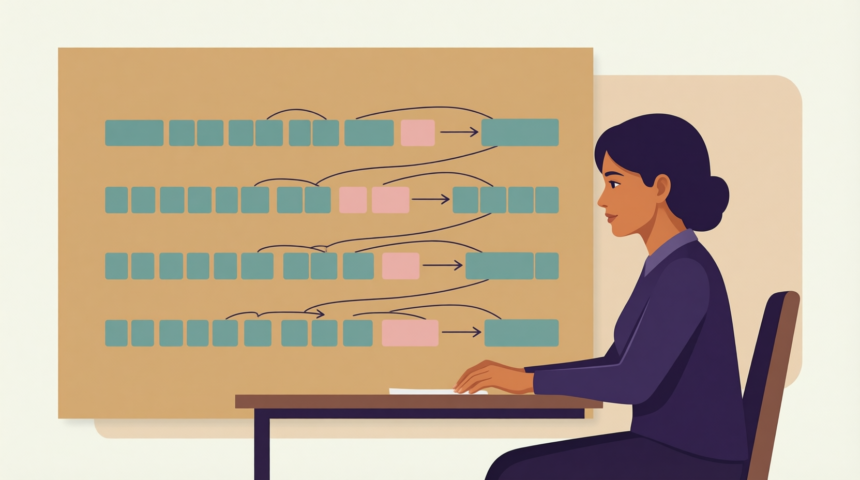
Illustration generated with Qwen Image.
SHARE

If there’s one piece of advice I can offer you, both for better text mining and better writing, it is this: please, please, please with a cherry on top, be clear with your pronouns.

There’s nothing that makes me more sad than a lost, lonely pronoun separated from its antecedent, or the noun to which the pronoun is referring. The process of determining pronoun ownership, and thereby determining who or what is being spoken about in a particular phrase, is something we call anaphora resolution, and it’s something we’ve been working on for a long time. If we were to say “Jenny wanted to try something new, so she went to yoga class”, anaphora resolution would be identifying the pronoun “she” as referring to Jenny.

Text mining engines have varying degrees of success depending on the pronouns involved. Most of these engines have a general model used to look at two qualities to determine pronoun ownership:

1. How far apart are the pronoun and referring noun?

More Read

Cambridge Semantics Makes Intelligent Use of Information
When Performance Metrics Attack: Complete, Agile BI Requires Going Beyond Just the Numbers
Never Stop Expecting More from Your Unstructured Data
Osama Bin Laden Letters Analyzed
Notes from Tableau Roadshow: Every Picture Tells a (Data) Story

2. Do the pronoun and the referring noun look alike?

Distance is a good way to track the referring entities. Good writers, like good pet owners, keep their pronouns on a short leash. If the pronoun is “she”, for example, in all likelihood, the person being referred to will be the last woman introduced by name, and will be in the previous sentence, or at least in the same paragraph. Ex. “Jenny met a guy in yoga class. She is going on a date tonight.” This is obviously easier to figure out if the woman in question has what is traditionally understood as a female name like Jenny, which brings us to our second strategy for anaphora resolution.

If pronouns and nouns “look alike”, they’ll share a certain quality that allows us to rule out other antecedents. As in the instance above, the pronoun “she” is most likely attached to a woman’s name. Ex. “Jenny and Dave went on a date, but she faked food poisoning to get out early.” In this instance, “she” is probably not referring to Dave, because Dave is a traditionally male name. 

The same principle holds true for nominal pronouns. Nominal pronouns are the kind of pronoun we employ when we write “the company” in an article when we are referring to, say, Google. We know which company is being referred to, because it is the topic of discussion, but we aren’t using the proper noun. In this case the look-alike strategy works very well. For example, Lexalytics’ text mining engine Salience knows Google is a company, and so can easily attach it to the nominal pronoun “the company”. 

Salience also looks for other qualities to ensure the best anaphora resolution possible. For instance, it looks for quotation marks in conjunction with the use of the pronoun “I”, so that it doesn’t confuse the author with someone else who is being quoted. For example, “‘I’ll have to find a new yoga class,’ says Jenny”. The “I” is in quotations so it belongs to Jenny, the speaker. However, when I use “I” without quotations, the pronoun belongs to me, Mekkin, the author.

But it’s not all fun and games. Not when it comes to the unfathomable “it”. With its lack of defining characteristics, it can cause text mining mayham. For that reason, most text mining engines choose to ignore it altogether.

That’s all for today. Please remember to be a responsible writer: spay and neuter your expletives, and keep your pronouns close to home.

Share This Article
Facebook Pinterest LinkedIn
Share

Follow us on Facebook

Latest News

Flat editorial illustration: The article's core relationship is the alignment between customer behavioral data (visit frequency,
Data-Driven Loyalty: How Restaurants Use Behavioral Analytics to Optimize Revenue
Exclusive
Flat editorial illustration: The article's core relationship is that reliable eCommerce attribution depends on a unified, well-st
How eCommerce Data Teams Can Build Attribution That Holds Up
Big Data Exclusive
Flat editorial illustration: The article's core relationship is the contrast between fragmented inherited data infrastructure (wh
Data Stack Consolidation as a Data Quality and Governance Strategy for Mid-Market Teams
Big Data Exclusive
Emergency responder and nurse reviewing tablet with data dashboards
Evaluating Workforce Assessment Tools: Looking Beneath the Dashboard at Psychometric Data
Exclusive Software

Stay Connected

1.2KFollowersLike
33.7KFollowersFollow
222FollowersPin

You Might also Like

Yo-Yo Ma,  Social Scientist
AnalyticsBig DataCollaborative DataCommentaryCulture/LeadershipMarketingMarketing AutomationPredictive AnalyticsSentiment AnalyticsSocial Media AnalyticsText AnalyticsWeb Analytics

Yo-Yo Ma, Social Scientist

5 Min Read
The Science of Crisis Communication
Data MiningModelingPredictive AnalyticsText Analytics

The Science of Crisis Communication

7 Min Read
Data Mining Fundamentals: Terms You Must Know
AnalyticsData MiningPredictive AnalyticsStatisticsText AnalyticsWeb Analytics

Data Mining Fundamentals: Terms You Must Know

7 Min Read
Think Mid Data, and Triangulate: Tom H.C. Anderson on Next Generation Research Methods
Big DataMarket ResearchSentiment AnalyticsSocial Media AnalyticsText Analytics

Think Mid Data, and Triangulate: Tom H.C. Anderson on Next Generation Research Methods

8 Min Read

SmartData Collective is one of the largest & trusted community covering technical content about Big Data, BI, Cloud, Analytics, Artificial Intelligence, IoT & more.

5 Great Tips for Using Data Analytics for Website UX
Big Data
Chatbots and SEO: How Can Chatbots Improve Your SEO Ranking?
Artificial Intelligence Chatbots Exclusive

Quick Link

  • About
  • Contact
  • Privacy
Follow US
© 2008-26 SmartData Collective. All Rights Reserved.
Welcome Back!

Sign in to your account

Username or Email Address
Password

Lost your password?