We use cookies, including third-party cookies from Google to serve personalized ads through AdSense, to operate this site and understand how it is used. By continuing to browse, you accept this use. See our Privacy Policy and Terms of Use for details, including how to opt out of personalized advertising.
Accept
SmartData CollectiveSmartData Collective
  • Analytics
    AnalyticsShow More
    What Kind of Problem-Solving Distinguishes Data Analysts From Software Engineers -- AI-generated illustration
    What Kind of Problem-Solving Distinguishes Data Analysts From Software Engineers
    7 Min Read
    chatgpt image jul 21, 2026, 04 34 30 pm
    4 Core Benefits of Predictive Maintenance after Vibration Analysis
    10 Min Read
    How Does Data Mining Boost Customer Satisfaction in Logistics? Harnessing Analytics for Results -- AI-generated illustration
    How Does Data Mining Boost Customer Satisfaction in Logistics? Harnessing Analytics for Results
    11 Min Read
    chatgpt image jul 13, 2026, 04 23 45 pm
    How Data Analytics Helps Companies Improve User Engagement
    19 Min Read
    chatgpt image jul 13, 2026, 03 59 46 pm
    How Data Analytics Improves Multi-Location Search Strategies
    10 Min Read
  • Big Data
  • BI
  • Exclusive
  • IT
  • Marketing
  • Software
Search
© 2008-25 SmartData Collective. All Rights Reserved.
Reading: What to Know Before Recruiting an Analyst to Handle Company Data
Share
Notification
Font ResizerAa
SmartData CollectiveSmartData Collective
Font ResizerAa
Search
  • About
  • Help
  • Privacy
Follow US
© 2008-23 SmartData Collective. All Rights Reserved.
SmartData Collective > Analytics > What to Know Before Recruiting an Analyst to Handle Company Data
AnalyticsBig DataData CollectionExclusive

What to Know Before Recruiting an Analyst to Handle Company Data

Looking for an analyst to handle your company's data? Learn what you need to consider before recruiting, including qualifications, experience and cost.

Ryan Ayers
Ryan Ayers
6 Min Read
What to Know Before Recruiting an Analyst to Handle Company Data
Illustration generated with Qwen Image.
SHARE

The rate of growth at which world economies are growing and developing thanks to new technologies in information data and analysis means that companies are needing to prepare accordingly. As a result of the benefits of business analytics, the demand for Data analysts is growing quickly.

Contents
  • The Role of an Effective Analyst
  • Three Different Analysts
    • Data Scientist
    • Data Engineer
    • Data Analysts
    • Skills Sets to Look For

The Bureau of Labor Statistics reports that the role of research and data analysts is projected to grow as much as 23% in the next 8 years. That is a staggering increase in comparison to most other industries. As the world and its technologies changes, so will the needs as dictated by the demands of businesses and their adoption of new technologies and techniques.

With these changes comes the challenge of understanding how to gather, manage, and make sense of the data collected in various markets. With the introduction and use of machine learning, AI tech is enabling greater efficiencies with respect to data and the insights embedded in the information.

With so much of a demand for data analysis and those skilled and experienced enough to effectively make sense of it all that means certain caliber workers are going to be in short supply.

Here is a brief list of suggestions to inform the hiring for that role.

More Read

Private Clouds Are Here to Stay—Especially for Data Warehousing
Why Artificial Intelligence Will Be Analog
Best Approach to Risk Management for Data Migration in Data-Driven Businesses
Analytics: Frequency Distribution & Bell Curves
What to Look for in a Data-Savvy Fintech Marketing Agency

The Role of an Effective Analyst

Data analysts are responsible for the harvesting, management, analysis, and interpretation of big data gathered. They do this to help provide companies with valuable insights into how to make decisions by deciphering trends that emerge from internal and external forces in a company.

Analysts accomplish this through the use of a variety of tools, mostly computer systems aided by AI, to automate that harvesting and interpretation. Data analysts are in demand in nearly every industry nowadays, from sales, marketing, and even healthcare.

As a business, every customer interaction with that service creates markers and patterns that, when combined, tell a story into how that business, its customers, products, and systems work together and affect each other and the health of the organization.

While there are software systems that can do the job of an analyst in part, the insights that a keen and experienced mind can identify suggestions of what to do with the information rather than just seeing a set of data. Before moving into the hiring process though, it would be helpful to narrow down what type of data your business is managing.

Three Different Analysts

Data analysis as a whole is a very broad concept which can and should be broken down into three separate, more specific categories: Data Scientist, Data Engineer, and Data Analyst. Here are the differences, generally speaking.

Data Scientist

These employees are programmers and analysts combined. This type of analyst should have a broad skill set but one that has a grounding in mathematics, analytical skills and is able to combine those into helpful conclusions. Typically, this role will connect with other positions so teamwork and presentation skills would be great things to look for.

Data Engineer

These people specialize in programming. They use a myriad of IT tools to design and build the databases which store and support the analytical solutions while working in cooperation with management in departments that go beyond the IT roles.

Data Analysts

A combination of the last two roles in some ways but with an emphasis on the analysis, synthesis and presentation of the insights gathered from that data collection.

Skills Sets to Look For

When entering into the hiring process for a data analyst there are a few skills that are recommended to look for when narrowing down the pool of options.

  • Data modeling will result in how, in part, a business will set standards. Thus, an individual who understands how to present those findings accurately and clearly in actionable ways is important. The ability to artfully represent and explain how the data collected communicates a businesses effectiveness should be a standard skill.
  • A data analyst will need to be able to effectively utilize many different systems and software programs in order to gather and analyze that data into meaningful actions. Confidence in those softwares which are industry leading, and standards is key.
  • An intermediate understanding of Structured Query Language (SQL), a standard language among database systems like Oracle, Microsoft SQL, and My SQL, is a minimum requirement for data analysts.

While there are many other skill sets that would be helpful and useful in combination, that list should be more tailored to the company, the employees already in service, and the potential holes that need to be filled. Further research will help to formulate a deeper clarification of what and where to find the right person for the job.


TAGGED:big databig data analyticsdata analyticsdata collection
Share This Article
Facebook Pinterest LinkedIn
Share
ByRyan Ayers
Follow:
Ryan Ayers has consulted a number of Fortune 500 companies within multiple industries including information technology and big data. After earning his MBA in 2010, Ayers also began working with start-up companies and aspiring entrepreneurs, with a keen focus on data collection and analysis.

Follow us on Facebook

Latest News

Retailers Should Stop Treating Every Stockout as Equal -- AI-generated illustration
Retailers Should Stop Treating Every Stockout as Equal
Business Intelligence Exclusive
Best Vibe Coding Cleanup Specialists in the USA: Fix or Rebuild? -- AI-generated illustration
Best Vibe Coding Cleanup Specialists in the USA: Fix or Rebuild?
Development Exclusive
Using Warehouse, Transportation and Order Data to Plan Distribution-Center Capacity -- AI-generated illustration
Using Warehouse, Transportation and Order Data to Plan Distribution-Center Capacity
Big Data Exclusive
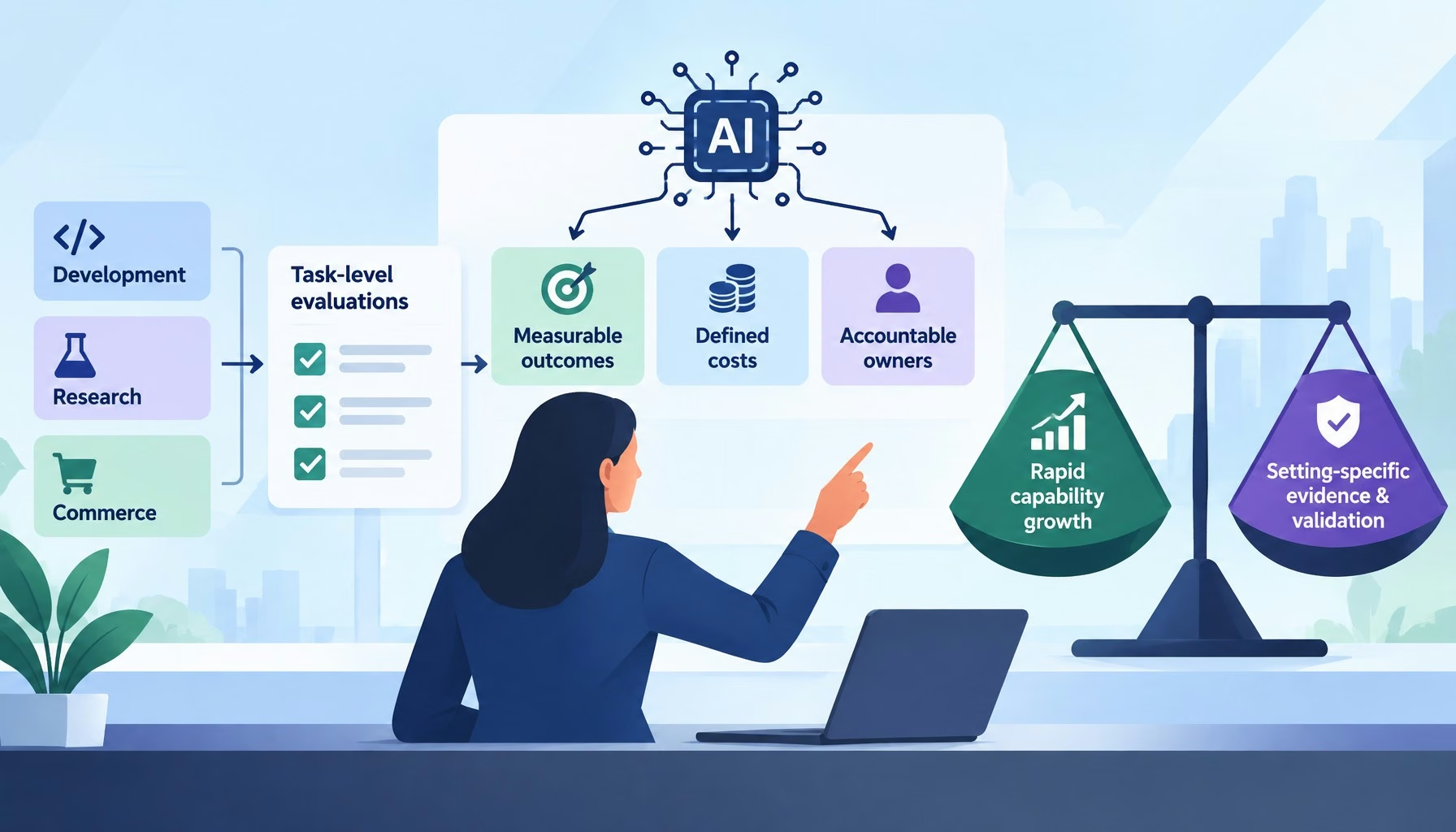
Flat editorial illustration: The article centers on AI budget discipline for 2027 business planning, linking AI spending to measu
10 AI Trends That Should Shape Your 2027 Business Plan
Artificial Intelligence Exclusive

Stay Connected

1.2KFollowersLike
33.7KFollowersFollow
222FollowersPin

You Might also Like

How To Use Data To Increase Customer Engagement On Your Website
Business IntelligenceData CollectionData ManagementWeb Analytics

How To Use Data To Increase Customer Engagement On Your Website

7 Min Read
Will Hackers Eventually Use Big Data and AI Against Us?
Artificial IntelligenceBig DataExclusiveITSecurity

Will Hackers Eventually Use Big Data and AI Against Us?

6 Min Read
Data Analytics Shows How COVID 19 Impacted Search and User Behavior Online
Analytics

Data Analytics Shows How COVID 19 Impacted Search and User Behavior Online

8 Min Read
From BI to Enterprise IT Integration
Business IntelligenceDecision Management

From BI to Enterprise IT Integration

5 Min Read

SmartData Collective is one of the largest & trusted community covering technical content about Big Data, BI, Cloud, Analytics, Artificial Intelligence, IoT & more.

5 Great Tips for Using Data Analytics for Website UX
Big Data
How To Get An Award Winning Giveaway Bot
Big Data Chatbots Exclusive

Quick Link

  • About
  • Contact
  • Privacy
Follow US
© 2008-26 SmartData Collective. All Rights Reserved.
Welcome Back!

Sign in to your account

Username or Email Address
Password

Lost your password?