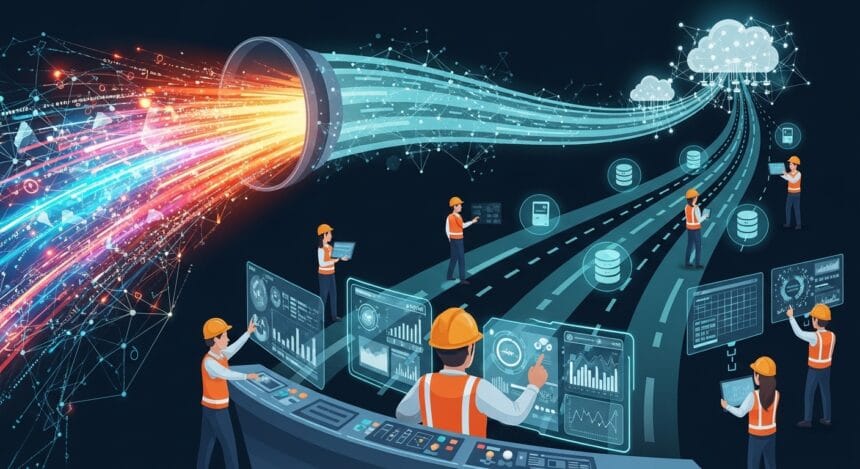
The rapid growth of smart meters and always-on telemetry places cloud-based meter data analysts at the center of modern grid intelligence initiatives. Continuous connectivity has shifted operations toward uninterrupted streams of interval and event-driven data flowing into cloud environments. As endpoints transmit usage and grid signals simultaneously, utilities increasingly confront an “IoT firehose” problem defined by overwhelming data volume and complexity.
- Why Smart Meter Data Overwhelms Traditional Architectures
- What Cloud Dataops Looks Like in Modern Utilities
- Designing Scalable Pipelines for Smart Meter Data
- How Cloud-Based Meter Data Analysts and Machine Learning Engineers Benefit
- Governance and Reliability at Utility Scale
- Case Studies of Companies Helping Utilities Scale Smart Meter DataOps
- Methodology for Choosing the Best Partners to Scale Cloud DataOps
- FAQs About Cloud DataOps for Smart Metering
Cloud DataOps is a structured approach that helps organizations ingest and operationalize data while maintaining reliability and scalability. Through automated pipelines and standardized workflows, raw telemetry becomes usable intelligence. Scalable architectures enable data scientists and machine learning teams to access analytics-ready data faster, supporting more responsive grid operations.
Why Smart Meter Data Overwhelms Traditional Architectures
Massive increases in data volume and device diversity have changed how utilities approach smart meter data analysis. These increases introduce technical challenges stemming from the sheer volume and velocity of telemetry produced by modern metering infrastructure. Continuous data generation demands robust computational resources and processing architectures capable of handling daily measurements without disruption.
On-premises platforms also struggle to keep pace, which creates bottlenecks that delay ingestion and limit analytical responsiveness. As pipelines fall behind, data latency and inconsistent data quality begin to affect forecasting accuracy and operational decision-making. These pressures coincide with a growing expectation for real-time insights across grid operations.
What Cloud Dataops Looks Like in Modern Utilities
Applying DataOps principles within energy and utility environments enables organizations to manage smart meter data analysis with greater consistency and operational alignment. Automation and continuous data delivery allow utilities to reliably move data from ingestion to analytics without manual intervention.
Cross-functional collaboration between data engineers and operations teams prevents organizational silos and fosters a shared understanding of business needs. This allows technical decisions to align with grid reliability and customer outcomes. A coordinated approach transforms data pipelines into shared operational assets, which enable utilities to scale analytics initiatives alongside dynamic infrastructure demands.
Designing Scalable Pipelines for Smart Meter Data
Event-driven ingestion and streaming architectures form the backbone of modern smart metering platforms, especially as utilities reconsider how often smart meters transmit data and adjust pipeline capacity accordingly. Data normalization becomes essential when integrating telemetry from multiple meter vendors and proprietary formats, ensuring consistent schemas for downstream analytics.
Utilities must carefully balance real-time processing for outage detection and load monitoring with historical analytics used for forecasting. Cost-aware cloud architecture strategies help control expenses while maintaining performance as data volumes grow.
How Cloud-Based Meter Data Analysts and Machine Learning Engineers Benefit
Cloud DataOps environments affect how cloud-based meter data analysts work by removing delays traditionally caused by fragmented data preparation and unreliable datasets. Reliable ingestion and validation pipelines provide faster access to trusted data and allow analysts to focus on modeling and interpretation rather than cleanup tasks.
Continuous data streams enable analytics teams to respond to changing grid conditions as they occur. Automated retraining and monitoring workflows further strengthen performance by ensuring models evolve with shifting consumption patterns. As experimentation connects more directly with production systems, teams experience less friction when operationalizing insights.
Governance and Reliability at Utility Scale
As utilities move smart meter platforms into the cloud, securing critical infrastructure data becomes essential to maintaining operational resilience and customer confidence. Cloud environment data breaches continue to rise, with several high-profile incidents exposing millions of consumer records and eroding public trust. Regulatory compliance requirements demand audit-ready data lineage to trace how information flows through ingestion and transformation pipelines.
The challenge intensifies as teams account for how often smart meters transmit data, since frequent interval readings increase system dependency and potential exposure if pipelines fail or are compromised. Continuous monitoring of pipeline health ensures analytics remain reliable even under heavy ingestion loads. Strong governance and observability practices allow operational teams to rely on consistent and validated insights.
Case Studies of Companies Helping Utilities Scale Smart Meter DataOps
The following companies demonstrate how technology providers and consulting firms help utilities operationalize cloud DataOps and turn expanding telemetry streams into actionable intelligence.
1. TRC
TRC implemented a cloud-based meter data management system delivered as a managed software-as-a-service solution to support Snohomish County Public Utility District’s advanced metering infrastructure modernization efforts. The deployment replaced legacy systems with a cloud-hosted environment to scale with growing volumes of smart meter data and reduce operational complexity.
The platform enables efficient ingestion and processing of large volumes of meter data generated across the utility’s service territory. Centralizing data management and automating workflows improves data availability for analytics while supporting more responsive operational decision-making. The modernization effort also helps the utility reduce infrastructure maintenance demands and transition toward a more flexible, data-driven operating model aligned with evolving grid intelligence requirements.
2. Bidgely
Hydro One partnered with Bidgely to apply artificial intelligence-driven analytics to smart meter datasets. The platform helps anticipate the adoption of electric vehicles (EVs) and heat pumps without relying solely on customer surveys or projections. Machine learning models identify EV charging behavior and consumption signatures, which allows the utility to generate detailed insights into when and where new loads emerge across the network.
These analytics help Hydro One prioritize upgrades and allocate resources efficiently as electrification accelerates across its service territory. They also enable more targeted customer engagement programs by identifying households most likely to benefit from electrification incentives. Continuous data analysis strengthens forecasting accuracy and supports long-term grid modernization planning.
3. Siemens
Siemens and Mescada are deploying one of Australia’s largest cloud-based supervisory control and data acquisition systems for Global Power Generation Australia (GPGA). The partnership marks a significant step toward centralized and scalable operational monitoring. The system gives operators a consistent interface and standardized visibility across geographically distributed sites. By consolidating telemetry and control data within a cloud environment, the deployment improves coordination and operational responsiveness.
The cloud-based architecture is designed for horizontal scalability, which allows the platform to expand seamlessly as GPGA adds new generation assets and increases data volumes. This scalable foundation supports long-term growth while enabling more efficient data management and analytics across the organization’s energy portfolio.
4. Landis+Gyr
Landis+Gyr partnered with the Tokyo Electric Power Company to connect more than 28 million meters. This collaboration is part of a large-scale smart grid modernization initiative, which included deploying a Head-End System and a Meter Data Management System. The platform integrates data from diverse network devices and multiple meter manufacturers. This created a unified operational view across the utility’s extensive smart grid infrastructure.
Automated processes significantly reduce manual intervention while improving accuracy and operational efficiency. Standardizing how telemetry flows through the system enables more reliable analytics. It also supports scalable management of one of the world’s largest advanced metering environments. The modernization effort also allows operational teams to make faster, data-driven decisions supported by continuously updated information.
5. Itron
The Sacramento Municipal Utility District (SMUD) leverages 200,000 Itron Gen 5 Riva meters to extend visibility and operational control to the grid edge. Through deployment of advanced smart endpoints and Itron’s distributed intelligence platform, the utility gains enhanced visibility into distributed energy resources operating throughout its service territory.
The system enables real-time connectivity and data analysis that disaggregates rooftop solar generation and behind-the-meter battery activity. By capturing granular operational data directly at the edge, SMUD improves situational awareness and supports more responsive grid management strategies. This expanded visibility helps operators better balance supply and demand while preparing the network for increasing levels of distributed energy adoption.
6. Oracle Utilities
Northern Ireland Electricity (NIE) Networks upgraded its Oracle Utilities Network Management System in response to the rapid growth of independently owned renewable power generation connecting to the grid. The modernization introduced a single, integrated platform that supports outage management and real-time grid operations, allowing operators to monitor system conditions through a unified interface.
Consolidating operational visibility and automating key workflows improves coordination during disruptions and strengthens overall network situational awareness. The upgrade has improved reliability and reduced outage restoration times. It enabled NIE Networks to meet stringent performance targets while adapting to a more distributed and dynamic energy landscape.
Methodology for Choosing the Best Partners to Scale Cloud DataOps
Providers were evaluated based on technical depth, industry experience and their ability to support long-term Cloud DataOps maturity.
- Domain expertise: Demonstrated experience with advanced metering infrastructure and smart meter data workflows
- Scalable data architecture: Proven ability to design ingestion pipelines that handle high-frequency telemetry and growing device volumes
- Cloud-native capabilities: Support for elastic compute and integration across major cloud platforms and hybrid environments
- Interoperability: Ability to integrate data from multiple meter vendors and existing utility applications through open standards
- DataOps automation: Built-in orchestration and pipeline observability that ensure reliable data delivery
FAQs About Cloud DataOps for Smart Metering
The following answers address common concerns around architecture, data management and practical implementation strategies.
What challenges do utilities face when scaling smart meter data platforms?
Common challenges include managing massive data volumes, maintaining data quality and aligning operational technology systems with modern analytics environments.
Is cloud DataOps only relevant for large utilities?
No. Smaller utilities also benefit from cloud-based architectures because managed services reduce infrastructure overhead while enabling advanced analytics capabilities previously limited to large organizations.
How do utilities maintain security when moving meter data to the cloud?
Utilities implement encryption and continuous monitoring to protect sensitive infrastructure and customer consumption data while meeting regulatory requirements.
Turning Smart Meter Data Into Grid Intelligence
Cloud DataOps enables cloud-based meter data analysts to work with reliable, continuously updated datasets. Scalable pipelines support faster analytics while strengthening operational resilience across complex grid environments. Utilities adopting DataOps position themselves for more intelligent, data-informed grid modernization.