We use cookies, including third-party cookies from Google to serve personalized ads through AdSense, to operate this site and understand how it is used. By continuing to browse, you accept this use. See our Privacy Policy and Terms of Use for details, including how to opt out of personalized advertising.
Accept
SmartData CollectiveSmartData Collective
  • Analytics
    AnalyticsShow More
    What Kind of Problem-Solving Distinguishes Data Analysts From Software Engineers -- AI-generated illustration
    What Kind of Problem-Solving Distinguishes Data Analysts From Software Engineers
    7 Min Read
    chatgpt image jul 21, 2026, 04 34 30 pm
    4 Core Benefits of Predictive Maintenance after Vibration Analysis
    10 Min Read
    How Does Data Mining Boost Customer Satisfaction in Logistics? Harnessing Analytics for Results -- AI-generated illustration
    How Does Data Mining Boost Customer Satisfaction in Logistics? Harnessing Analytics for Results
    11 Min Read
    chatgpt image jul 13, 2026, 04 23 45 pm
    How Data Analytics Helps Companies Improve User Engagement
    19 Min Read
    chatgpt image jul 13, 2026, 03 59 46 pm
    How Data Analytics Improves Multi-Location Search Strategies
    10 Min Read
  • Big Data
  • BI
  • Exclusive
  • IT
  • Marketing
  • Software
Search
© 2008-25 SmartData Collective. All Rights Reserved.
Reading: Don’t Fine Tune Your Forecast!
Share
Notification
Font ResizerAa
SmartData CollectiveSmartData Collective
Font ResizerAa
Search
  • About
  • Help
  • Privacy
Follow US
© 2008-23 SmartData Collective. All Rights Reserved.
SmartData Collective > Big Data > Don’t Fine Tune Your Forecast!
Big Data

Don’t Fine Tune Your Forecast!

mvgilliland
mvgilliland
5 Min Read
Don't Fine Tune Your Forecast!
Illustration generated with FLUX.2 [klein 4B] via Cloudflare Workers AI.
SHARE

Does your forecast look like a radio? No? Then don’t treat it like one.

Contents
  • Two Things Can Happen — And One of Them is Bad
  • Can’t Small Adjustments Make a Big Improvement in Accuracy?

A radio’s tuning knob serves a valid purpose. It lets you make fine adjustments, improving reception of the incoming signal, resulting in a clearer and more enjoyable listening experience.

Does your forecast look like a radio? No? Then don’t treat it like one.

A radio’s tuning knob serves a valid purpose. It lets you make fine adjustments, improving reception of the incoming signal, resulting in a clearer and more enjoyable listening experience.

More Read

Flipboard Harnesses Social Data to Individualize Online Media
Solve Data Issues with Cloud Database Management Systems
Predictive Analytics, Present and Future: Interview with Dr. Eric Siegel
ggplot2 for Big Data
Relying on Data Can Lead to the Wrong Decisions Says CFO.com

But just because you can make fine adjustments to your forecast, doesn’t mean you should. In fact, you shouldn’t.

Two Things Can Happen — And One of Them is Bad

Famed college football coach Woody Hayes (fired unceremoniously in 1978 for punching an opposing player) was know for powerful teams that ran the ball, eschewing the forward pass. Of the latter, he is credited with saying “When you pass the ball three things can happen, and two of them are bad.” [For those unfamiliar with American football, the good thing is a pass completion, and the bad things are an incompletion or an interception by the opposing team.]

Whenever you adjust a forecast two things can happen — you can improve the accuracy of the forecast, or make it worse.

Obviously, if you make the adjustment in the wrong direction (e.g., lowering the forecast when actuals turn out to be higher), a bad thing has happened — you’ve made the forecast worse. But you can also make overly aggressive adjustments in the right direction and overshoot, making the forecast worse. (For example, initial forecast of 100, adjusted forecast of 110, actual turns out to be 104.)

When you make just a small adjustment, there is little chance of overshooting. So as long as you are directionally correct, you have improved the forecast. But even if we assume every small adjustment is directionally correct, is that reason enough to spend time making small adjustments?

No. And here’s why not:

First recognize that “small adjustment” means small as a percentage of the original forecast. So changing a forecast from 100 to 101 is a “small” adjustment, just 1%. Likewise, changing 1,256,315 to 1,250,000 would be considered a small adjustment (0.5%) even though the change is over 6300 units.

Another way to characterize adjustments is their relevance — whether they are significant enough to cause changes in decisions and plans.

On this criterion, small adjustments are mostly irrelevant. An organization is probably not going to grind to a halt, scuttle existing plans, and suddenly change direction just because of a 1% adjustment in a forecast.

[Note that even “large” forecast adjustments may be irrelevant, when they don’t require any change in plans. This could happen for very low value items, such as 1/4″ galvanized washers sold at a hardware store. Such items are usually managed via simple replenishment rules, like a two-bin inventory control system. Unless the forecast change is so large that current bin sizes are deemed inappropriate, no action will be taken.]

Can’t Small Adjustments Make a Big Improvement in Accuracy?

It’s true that even a small adjustment can make a big improvement in forecast accuracy. Changing the forecast from 100 to 101, when actuals turn out to be 102, means you cut the error in half! (On the other hand, if actuals turned out to be 200, then you only reduced forecast error by 1%.)

But the purpose of forecasting is to help managers make better decisions, devise better plans, and run a more effective and profitable organization. Improved forecast accuracy, in itself, has no value unless it results in improved organizational performance.

So if a small forecast adjustment does not change any of the behavior (or resulting outcomes) of the organization — why bother??? Making small adjustments takes effort and resources, but is simply a waste of time.

TAGGED:forecasting
Share This Article
Facebook Pinterest LinkedIn
Share

Follow us on Facebook

Latest News

Technical architecture diagram and decision framework for choosing an integration partner for data pipelines: service bus, brokers, and azure-native middleware compared
Choosing an Integration Partner for Data Pipelines: Service Bus, Brokers, and Azure-Native Middleware Compared
Development Exclusive
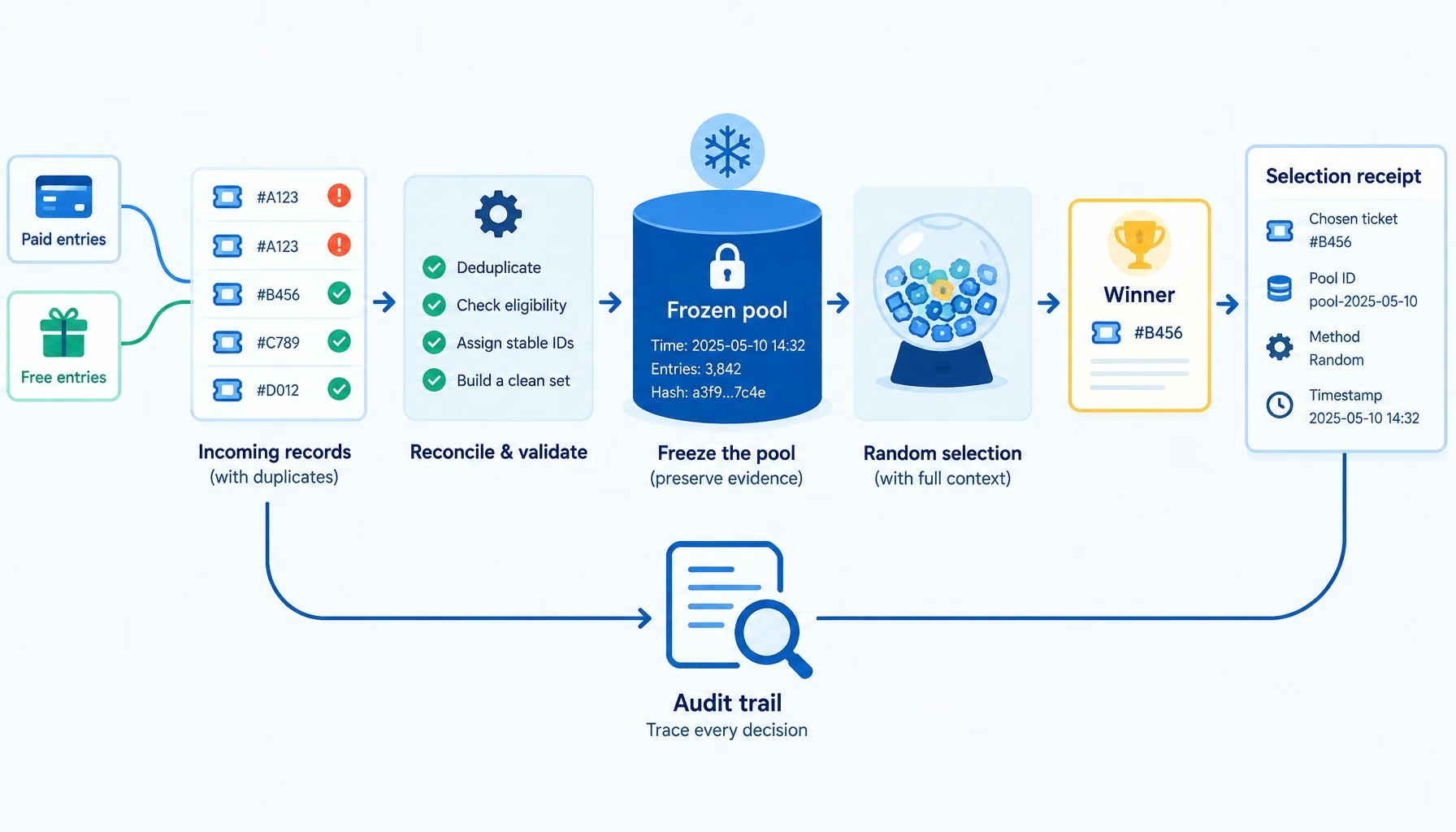
Technical architecture diagram and decision framework for data engineering for prize draws: building an audit trail
Data Engineering for Prize Draws: Building an Audit Trail
Big Data
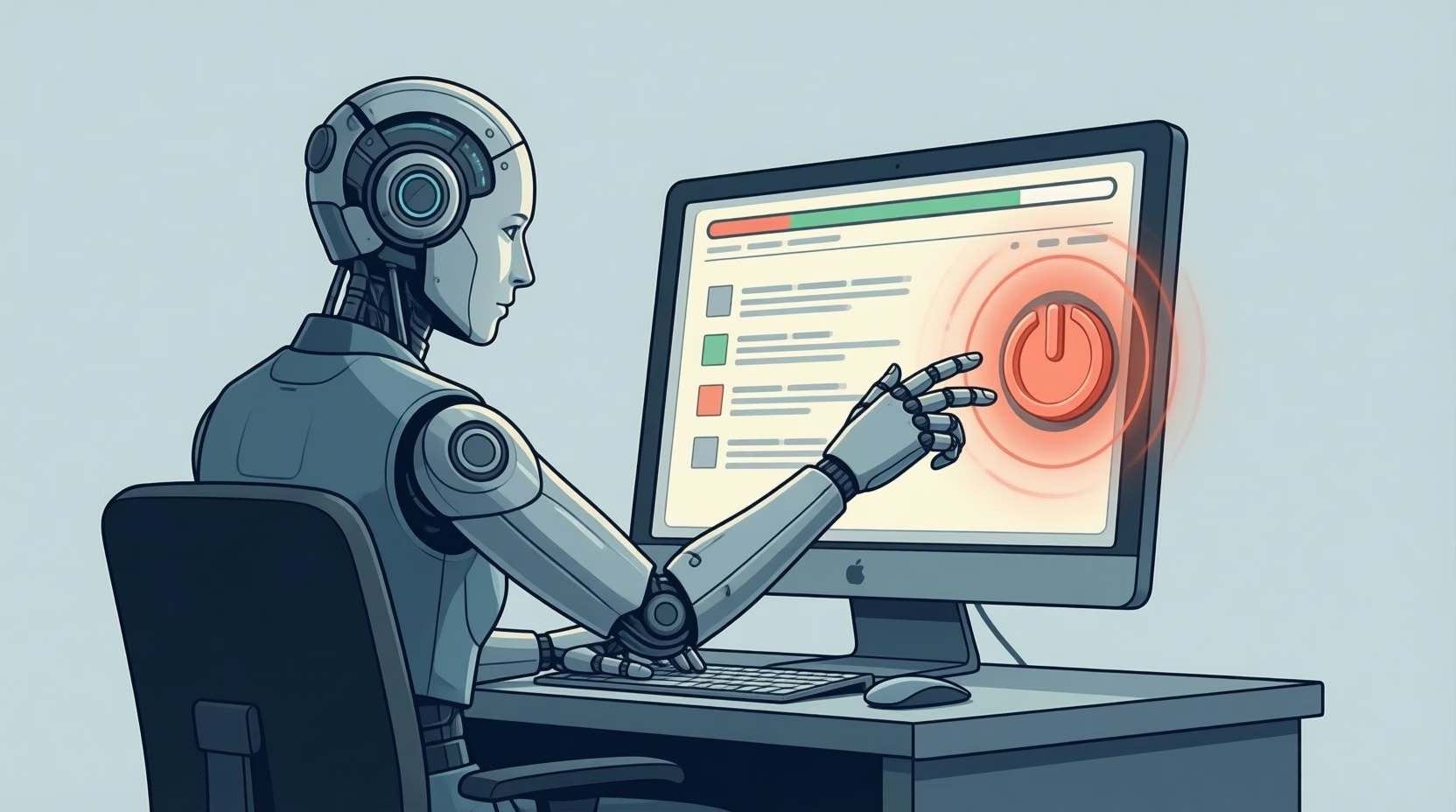
Technical architecture diagram and decision framework for the trouble with ai that won’t leave a job unfinished
The Trouble With AI That Won’t Leave a Job Unfinished
Artificial Intelligence News
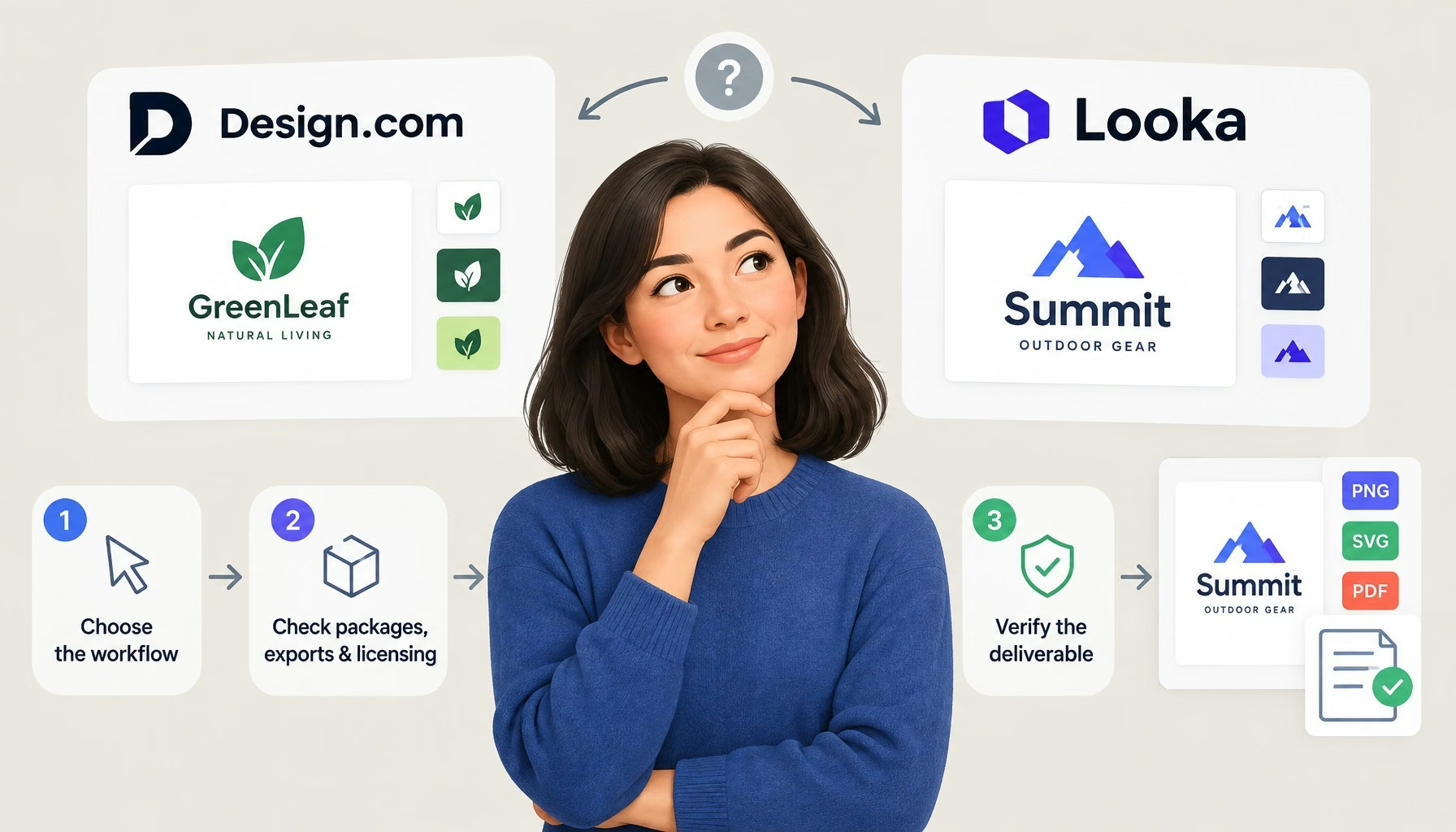
Technical architecture diagram and decision framework for ai-powered logo generation: design.com vs looka
AI-Powered Logo Generation: Design.com vs Looka
Artificial Intelligence Exclusive

Stay Connected

1.2KFollowersLike
33.7KFollowersFollow
222FollowersPin

You Might also Like

Black Swans Causing a Rethink on Global Supply Chains?
AnalyticsBusiness IntelligenceDecision ManagementExclusiveModelingPredictive AnalyticsRisk Management

Black Swans Causing a Rethink on Global Supply Chains?

4 Min Read
Exploring Technological Horizons with Recorded Future
AnalyticsPredictive Analytics

Exploring Technological Horizons with Recorded Future

4 Min Read
Gaming the Forecast
Best PracticesBusiness Intelligence

Gaming the Forecast

4 Min Read
Alfred Hitchcock and a Classic Forecasting Scam
Predictive Analytics

Alfred Hitchcock and a Classic Forecasting Scam

5 Min Read

SmartData Collective is one of the largest & trusted community covering technical content about Big Data, BI, Cloud, Analytics, Artificial Intelligence, IoT & more.

ai chatbot
How AI Website Chatbots Improve Customer Support and Lead Generation
Chatbots Exclusive
The Art of Conversation: Enhancing Chatbots with Advanced AI Prompts
Chatbots

Quick Link

  • About
  • Contact
  • Privacy
Follow US
© 2008-26 SmartData Collective. All Rights Reserved.
Welcome Back!

Sign in to your account

Username or Email Address
Password

Lost your password?