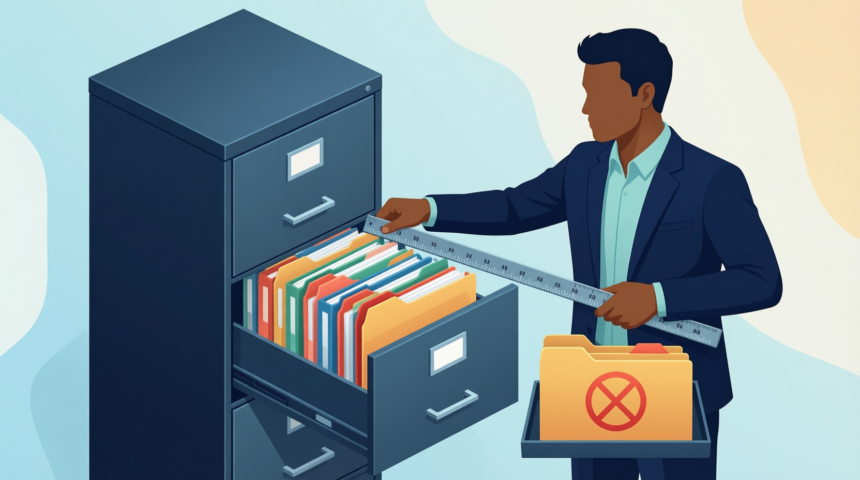
Fresh data is usually pristine. It’s data in it’s clearest, most accurate form – straight from the customer or client. If you’ve put measures in place to cut back on data input errors, such as form validation, you can be reasonably sure that the newest records in your CRM are the “latest and greatest”.
If your CRM has been active for some time, you’ll have a number of older records that have accrued. These records are the ones your sales and marketing teams will rely on when it’s time to approach existing customers and sell to them again. Chances are, the quality of these records will be fairly good, but it will have fallen since they were first collected. As data quality slips, data goes from “great”, to “good”, to decidedly “bad”.
Waste and Cost
Data management is a huge cost to businesses, but it’s the bad data that is the real drain. According to Gartner, the average business wastes as much as $13.5 million sorting out data quality problems every year.
Poor management is rife. Because data is stored electronically, many businesses leave its management to the IT department. Yet there is no role within IT that is adept at managing data, and no role that traditionally takes ownership of it. People expect data to retain its accuracy when stored, yet the exact opposite is true. Data ages, decays and loses all of its value.
More Read
Enter the Chief Data Officer.
One job role cannot be a panacea for poor data management. And in itself, the role isn’t a data quality cure-all. But the Chief Data Officer can take ownership of a potential pain point, and they can make sure that the business’ most valuable asset is not allowed to depreciate over time.
What a CDO Can Do
The role of Chief Data Officer is relatively new, yet it’s a role that is well overdue in tens of thousands of businesses. We’re all harvesting more data about our customers, and that calls for investment in people who can nurture and manage that data. The Chief Data Officer is tasked with making order from chaos, and with protecting the investment with the digital contents of some of the most important storage silos the company has.
Take the customer relationship management system, for example. As CRMs begin to age, the data within them is the tell-tale sign of trouble ahead. Once ‘great’ data is now simply ‘good’ data. If left unchecked, this data will turn ‘bad’ pretty quickly.
Once in post, the Chief Data Officer can migrate data management responsibilities to the business as a whole, taking it away from IT (or marketing, or whichever function is currently responsible for it). This puts data quality at the core of the business’ operations, making it a central point of discussion when new business processes are developed. It should also result in data quality receiving adequate resources.
The Chief Data Officer can also keep track of data assets: where they’re stored, who’s got access, and how often they are cleansed and checked. They can put data quality processes in place to better manage the purity of critical business data, and they can make sure the business is not paying to store duplicated, old, unverified or corrupted data.
The end result is a cleaner, clearer dataset for everyone in the business, and a more secure, timely and effective management of data for the customer or client.
What a CDO Can’t Do
It sounds as though the Chief Data Officer will wave their magic wand and solve the business’ data quality problems. But let’s be clear: one person cannot be solely responsible for managing data in any business.
There must be a broader strategic aim to treat data as an asset, care for it while it’s at rest, and use it responsibly when it’s needed. This is something the Chief Data Officer can oversee, but with support and buy-in from the boardroom.
This isn’t a solo mission, and this is why the Chief Data Officer is expected to take a senior role in the company, according to Gartner’s paper.
From medical records to loyalty cards, there are myriad rules around how personal data can be used and stored. It’s the Chief Data Officer’s responsibility to oversee this. Yet other staff using the data will still be expected to understand compliance, and must handle data responsibly according to those regulations.
Moving Forward With Data
Businesses are capturing more and more data from an increasing range of sources. Customer data, such as names and addresses, represent the core of most CRM systems. As we become better at capturing data, we’re certainly going to acquire more of it, more quickly than ever before.
From the Internet of Things to increasingly sophisticated web analytics, businesses are going to need to be more selective about data, and store only the data that really matters to them. This increasing resource will need ongoing management to ensure it does not go from ‘great’, to ‘good’, to ‘bad’ – or even ‘useless’.
And as our data silos grow, they become more appealing to hackers who will try their best to gain access by stealth. Often, by a time a breach has been discovered, the data has been sold on multiple times, and the business is powerless to do anything about it.
This is the unfortunate end result of data being badly managed, or not managed at all.
By 2017, Gartner says that 25 per cent of organisations will have a Chief Data Officer. In industries where regulatory compliance is key, the figure is expected to be much higher; perhaps even 50 per cent. If your business collects data, stores it and uses it to determine strategy, a Chief Data Officer could be the key person who will commit to high data quality across the business.
Watch our up coming webinar on 15.04.15 on “How to Make the Leap from Good to Great Data”
The webinar will take place twice, choose your suitable time:
2:00-2:30 GMT Click to register
2:00-2:30 EDT-5 Click to register