We use cookies, including third-party cookies from Google to serve personalized ads through AdSense, to operate this site and understand how it is used. By continuing to browse, you accept this use. See our Privacy Policy and Terms of Use for details, including how to opt out of personalized advertising.
Accept
SmartData CollectiveSmartData Collective
  • Analytics
    AnalyticsShow More
    chatgpt image jul 21, 2026, 04 34 30 pm
    4 Core Benefits of Predictive Maintenance after Vibration Analysis
    10 Min Read
    How Does Data Mining Boost Customer Satisfaction in Logistics? Harnessing Analytics for Results -- AI-generated illustration
    How Does Data Mining Boost Customer Satisfaction in Logistics? Harnessing Analytics for Results
    11 Min Read
    chatgpt image jul 13, 2026, 04 23 45 pm
    How Data Analytics Helps Companies Improve User Engagement
    19 Min Read
    chatgpt image jul 13, 2026, 03 59 46 pm
    How Data Analytics Improves Multi-Location Search Strategies
    10 Min Read
    cybersecurity efforts
    How Behavioral Analytics and AI Are Redefining Cybersecurity for Boca Raton Businesses
    14 Min Read
  • Big Data
  • BI
  • Exclusive
  • IT
  • Marketing
  • Software
Search
© 2008-25 SmartData Collective. All Rights Reserved.
Reading: Data Analytics Solutions To HIPAA Compliance During Quarantine
Share
Notification
Font ResizerAa
SmartData CollectiveSmartData Collective
Font ResizerAa
Search
  • About
  • Help
  • Privacy
Follow US
© 2008-23 SmartData Collective. All Rights Reserved.
SmartData Collective > Data Management > Privacy > Data Analytics Solutions To HIPAA Compliance During Quarantine
AnalyticsBig DataData ManagementPrivacy

Data Analytics Solutions To HIPAA Compliance During Quarantine

With so many providers switching to telemedicine during the COVID19 pandemic, you need to ensure HIPAA compliance during quarantine. Thankfully, data analytics tools are here to help you make it happen.

Annie Qureshi
Annie Qureshi
6 Min Read
Data Analytics Solutions To HIPAA Compliance During Quarantine
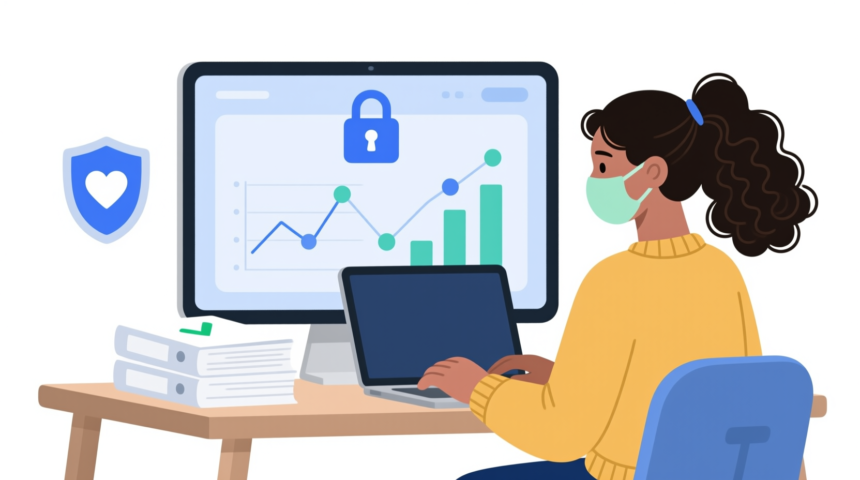
Illustration generated with Qwen Image.
SHARE

Data analytics has created new opportunities for employers and workers around the world. However, a growing emphasis on data has also created a slew of challenges as well.

Contents
  • Use Virtual Private Networks
  • Monitor Computer Usage
  • Install Security Protocols
  • Cybersecurity Training
    • Make Patient Data Privacy a Priority

One of the biggest issues in healthcare is patient privacy. You can learn some insights from the study Patient Privacy in the Era of Big Data.

Allowing employees to work remotely helps them set their own schedules and work from home. Though some assume that this isn’t possible in the health care industry due to HIPAA regulations, it is possible. Established in 1996, HIPAA ensures that the confidential information of patients remains private. This is more important during the era of big data, since patient information is more vulnerable in a digital format.

HIPPA prevents health care professionals from talking about their patients or sharing their records with those outside of the industry. As you hire new employees and allow staff to work remotely, you need to know how to stay compliant with HIPAA guidelines, especially with a large data infrastructure.

More Read

The Analytic Entrepreneur Series: Dr. Robert Phillips
How Big Data Can Help Improve the U.S. Airport System
How Tools Measure Your Internet Life
SAP and The Hoover Dam
Big Data Helps Alleviate Aviation Risk Management Problems

Use Virtual Private Networks

Big data has created a new range of tools meant to make online privacy more feasible. VPNs are some of the most widely used data protection tools. They can easily handle hundreds of gigabytes of data.

A server cluster refers to a group of servers that share information and data. When you allow health care employees to work remotely, it’s helpful to use a virtual private network or VPN. This allows them to connect their computers at home to the server in the office or another location and share data across the network. A VPN is different from an open network because it blocks outsiders from accessing it without permission.

Using a VPN blocks all other computers and systems from accessing the shared network. This is important if you are trying to protect patient data.

Monitor Computer Usage

Data analytics has created new risks with digital security. However, analytics can also create new opportunities to protect digital data in other ways. You can use data mining tools to monitor the ways that employees use resources more easily.

Some workers make the mistake of thinking that they can use one computer for all their online and offline activities. They might check in on Facebook and play a few games or download a new app to a computer that they also use for work. This can result in hackers accessing your system through viruses and malware attached to those apps and sites. The things that they do with their computers can allow hackers to get into your files and cause data breaches that lead to your patients losing their trust in you.

Install Security Protocols

There are a number of ways to utilize big data to improve digital security. Joe Oesterling, Chief Technology Officer at Liquid Web recommends that you, “configure protective firewalls that limit certain incoming connections and set the hard drives to encrypt their contents automatically.” He also suggests telling employees to change their network connections and add a new password. Without a firewall, there is nothing between a potential hacker and your system. You may want to bring in a new security team or assign workers to security tasks. This can involve using antivirus software that routinely scans all connected computers for viruses. Good software can also identify anyone connected to your server cluster who should not be there.

Cybersecurity Training

HIPAA violations can cost you $100 to $500,000 for each breach and issue that you have. You risk losing a maximum of $1.5 million every year for violations of the same type that affect multiple patients. That is why cybersecurity training is helpful. Before hiring a new remote worker or sending someone to work from home, provide the proper training. Employees need to understand what those violations can mean to your bottom line and how to prevent them. Training teaches workers that they should never access data with a different computer and that they cannot copy confidential data onto another computer or system. The key to following HIPAA guidelines and keeping your server cluster safe includes computer monitoring and working with a security team.

Make Patient Data Privacy a Priority

HIPAA regulations can be convoluted and tough to implement. They are even harder in the big data era where healthcare employees are working from home. Fortunately, there are steps that can be taken to ensure data privacy is better implemented.

TAGGED:data analyticshipaaquarantine hipaa
Share This Article
Facebook Pinterest LinkedIn
Share
ByAnnie Qureshi
Follow:
Annie is a passionate writer and serial entrepreneur. She embraces ecommerce opportunities that go beyond profit, giving back to non-profits with a portion of the revenue she generates. She is significantly more productive when she has a cause that reaches beyond her pocketbook.

Follow us on Facebook

Latest News

Analyst points at colorful circular data dashboard on screen - information technology business metrics
How Fragmented Workplace Tech Undermines Reliable Business Metrics and Reporting
Cloud Computing Exclusive Infographic IT
Using Multi-Source Data and Analytics to Detect Operational Drift Across Franchise Networks -- AI-generated illustration
Using Multi-Source Data and Analytics to Detect Operational Drift Across Franchise Networks
Exclusive Infographic
Beyond The First Impression: The Long-Lasting Impact Of Sensory Marketing -- AI-generated illustration
Beyond The First Impression: The Long-Lasting Impact Of Sensory Marketing
Infographic Marketing
The Infrastructure Gap Slowing Data Center Growth -- AI-generated illustration
The Infrastructure Gap Slowing Data Center Growth
Big Data Cloud Computing Exclusive Infographic IT

Stay Connected

1.2KFollowersLike
33.7KFollowersFollow
222FollowersPin

You Might also Like

Exciting Predictions For Where Big Data Analytics Are Headed By 2025
AnalyticsBig DataExclusive

Exciting Predictions For Where Big Data Analytics Are Headed By 2025

8 Min Read
Data Analytics Optimizes Shipping through KPI Tracking
AnalyticsBig DataExclusive

Data Analytics Optimizes Shipping through KPI Tracking

7 Min Read
Utilizing Data Analytics To Create Seamless Web Dashboards
Analytics

Utilizing Data Analytics To Create Seamless Web Dashboards

6 Min Read
Data-Driven Recruiting is Solving Decades-Old Hiring Challenges
Big DataExclusive

Data-Driven Recruiting is Solving Decades-Old Hiring Challenges

6 Min Read

SmartData Collective is one of the largest & trusted community covering technical content about Big Data, BI, Cloud, Analytics, Artificial Intelligence, IoT & more.

Artificial Intelligence for eCommerce: A Closer Look
Artificial Intelligence
The Art of Conversation: Enhancing Chatbots with Advanced AI Prompts
Chatbots

Quick Link

  • About
  • Contact
  • Privacy
Follow US
© 2008-26 SmartData Collective. All Rights Reserved.
Welcome Back!

Sign in to your account

Username or Email Address
Password

Lost your password?