We use cookies, including third-party cookies from Google to serve personalized ads through AdSense, to operate this site and understand how it is used. By continuing to browse, you accept this use. See our Privacy Policy and Terms of Use for details, including how to opt out of personalized advertising.
Accept
SmartData CollectiveSmartData Collective
  • Analytics
    AnalyticsShow More
    chatgpt image jul 21, 2026, 04 34 30 pm
    4 Core Benefits of Predictive Maintenance after Vibration Analysis
    10 Min Read
    How Does Data Mining Boost Customer Satisfaction in Logistics? Harnessing Analytics for Results -- AI-generated illustration
    How Does Data Mining Boost Customer Satisfaction in Logistics? Harnessing Analytics for Results
    11 Min Read
    chatgpt image jul 13, 2026, 04 23 45 pm
    How Data Analytics Helps Companies Improve User Engagement
    19 Min Read
    chatgpt image jul 13, 2026, 03 59 46 pm
    How Data Analytics Improves Multi-Location Search Strategies
    10 Min Read
    cybersecurity efforts
    How Behavioral Analytics and AI Are Redefining Cybersecurity for Boca Raton Businesses
    14 Min Read
  • Big Data
  • BI
  • Exclusive
  • IT
  • Marketing
  • Software
Search
© 2008-25 SmartData Collective. All Rights Reserved.
Reading: The Cloud: More Than Just Cost Savings
Share
Notification
Font ResizerAa
SmartData CollectiveSmartData Collective
Font ResizerAa
Search
  • About
  • Help
  • Privacy
Follow US
© 2008-23 SmartData Collective. All Rights Reserved.
SmartData Collective > IT > Cloud Computing > The Cloud: More Than Just Cost Savings
Cloud Computing

The Cloud: More Than Just Cost Savings

paulbarsch
paulbarsch
4 Min Read
The Cloud: More Than Just Cost Savings
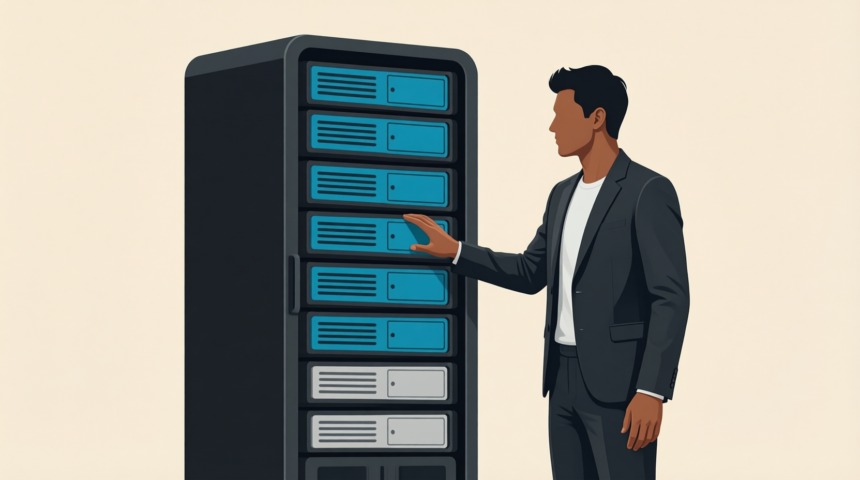
Illustration generated with Qwen Image.
SHARE

In a very competitive macro-economic climate, companies seek to reduce costs and drive those savings towards either the bottom line or re-purpose savings towards innovative projects. Cloud computing is often seen as one such avenue towards cost reductions as companies can ultimately reduce capital expenditures and data center operating costs. However, as good as the concept of “cost savings” sounds, you might be surprised to discover that according to one analyst firm, cost reduction isn’t the primary driver for cloud computing.

Too many under-utilized data marts and application servers and too many wasted kilowatts. That’s what consortiums like Energy Star say as they report most corporate servers are only utilized 5-15% of the time. Besides wasted energy, companies are saddled with a poorly utilized asset that’s still costing precious IT dollars in maintenance and possibly software subscriptions.

Cloud computing, then, can often ride to the rescue in terms of creating shared pools of system resources via virtualization technologies. This in turn helps reduce the number of servers needed, slashes application licenses, and ultimately trims power and cooling costs.

While cost savings are no doubt important, a recent analyst survey cites the primary driver for CIOs to approve cloud computing are: “(delivering results to the business) better,” followed by “(delivering results to the business) faster.” Cost savings comes in a distant third.

More Read

Why Small Businesses Shouldn’t Think Twice Before Embracing AI
Analyzing Olympic Success by Country with Data Visualization
The Growing Importance of AI for Small Businesses
Preserving Big Data to Live Forever
The Cloud Creates Opportunities for Algerian Bitcoin Investors

That’s because global product lifecycles are speeding up as companies adjust to niche consumer demands, and more nimble/agile competitors.

For evidence of faster product lifecycles, see GE appliances. In an Atlantic magazine article, GE appliance manager Lou Lenzi says that a refrigerator model design was formerly good for at least 7 years before a complete product refresh was necessary. Now because of accelerated product cycles, models are only good for 2-3 years as customers regularly clamor for new features, colors, styles and models such as “$3000 smart refrigerators.”

Cloud computing can help companies respond to faster product cycles. With cloud, customer demands can be met, almost instantaneously because analytic resources for product and customer analysis are “at the ready” and can grow and/or shrink as business demands. No more waiting for capital budget refreshes, or IT to find cycles to accommodate immediate business needs. And best of all, these resources are generally available on a pay-per- use or subscription basis, so they’re easier to fund from OPEX budgets.

And user friendly cloud self-service options help enable business managers to create analytic development “laboratories” where they can carve out system resources to work on special projects, test out new theories, or collaborate with product, marketing and R&D teams on a global basis.

In short, cost savings are a very important aspect for CIOs, but not always the primary driver for cloud adoption. CIOs then, fundamentally seek cloud computing options to help them align more closely to business user demands and better meet customer needs.  Indeed, with shrinking product lifecycles, the ability to source immediate compute, storage and analytics—for faster business results—could mean the difference between an extremely profitable or disastrous quarterly result.


TAGGED:bibusiness intelligenceclouddata in the cloud
Share This Article
Facebook Pinterest LinkedIn
Share

Follow us on Facebook

Latest News

Flat editorial illustration: The article's core relationship is the alignment between customer behavioral data (visit frequency,
Data-Driven Loyalty: How Restaurants Use Behavioral Analytics to Optimize Revenue
Exclusive
Flat editorial illustration: The article's core relationship is that reliable eCommerce attribution depends on a unified, well-st
How eCommerce Data Teams Can Build Attribution That Holds Up
Big Data Exclusive
Flat editorial illustration: The article's core relationship is the contrast between fragmented inherited data infrastructure (wh
Data Stack Consolidation as a Data Quality and Governance Strategy for Mid-Market Teams
Big Data Exclusive
Emergency responder and nurse reviewing tablet with data dashboards
Evaluating Workforce Assessment Tools: Looking Beneath the Dashboard at Psychometric Data
Exclusive Software

Stay Connected

1.2KFollowersLike
33.7KFollowersFollow
222FollowersPin

You Might also Like

How Artificial Intelligence For Contract Negotiations Impacts Companies
Artificial IntelligenceBusiness Intelligence

How Artificial Intelligence For Contract Negotiations Impacts Companies

8 Min Read
data analytics use in marketing
Big Data

What Data Methods Can Businesses Invest In to Get Better Consumer Results?

8 Min Read
AI driven big data company
Artificial IntelligenceData ManagementExclusiveRisk Management

How AI-Driven Workflows Are Changing the Way Companies Think About Data Risk

10 Min Read
The Injury Claims Industry Highlights How We Can Use Big Data For Law
Big DataExclusive

The Injury Claims Industry Highlights How We Can Use Big Data For Law

5 Min Read

SmartData Collective is one of the largest & trusted community covering technical content about Big Data, BI, Cloud, Analytics, Artificial Intelligence, IoT & more.

How To Get An Award Winning Giveaway Bot
Big Data Chatbots Exclusive
5 Great Tips for Using Data Analytics for Website UX
Big Data

Quick Link

  • About
  • Contact
  • Privacy
Follow US
© 2008-26 SmartData Collective. All Rights Reserved.
Welcome Back!

Sign in to your account

Username or Email Address
Password

Lost your password?