Repeat customers anchor the modern restaurant economy. Rising operational costs, tighter competition, and shifting consumer expectations have pushed operators away from one-off transactions toward durable, long-term relationships.
- Why Loyalty Programs Matter More Than Ever
- The Basics of an Effective Loyalty Program
- Personalization as a Competitive Advantage
- Connecting owned loyalty records with delivery activity
- Capturing zero-party preferences without requiring an app
- Expanding Marketing Impact Through Integration
- Driving Revenue Through Behavioral Insights
- Strengthening Brand Advocacy and Word-of-Mouth
- Building a Sustainable Growth Model
- FAQ
- Check the Guest Record Before Sending the Next Offer
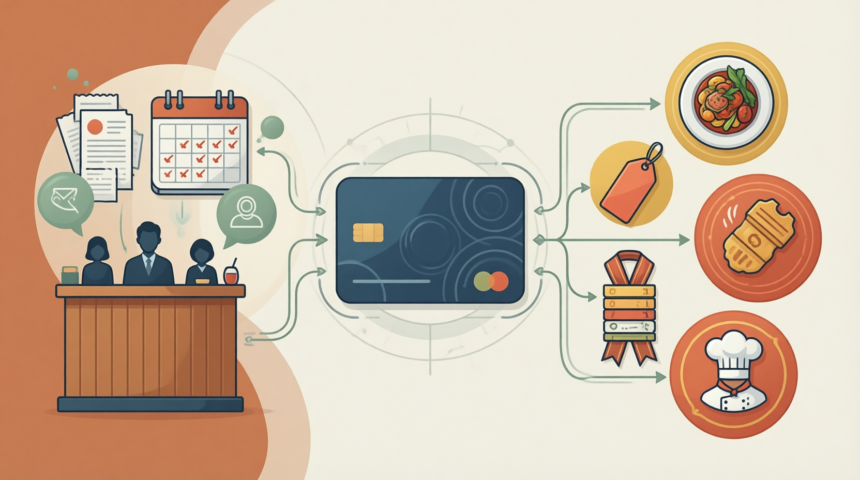
Restaurants use behavioral analytics to optimize revenue by matching loyalty rewards to ordering patterns, visit frequency, and customer preferences. Connect transaction records with information guests willingly share, then use those signals to target offers. The reward structure should fit how customers spend and return, with clear benefits and straightforward redemption.
Insights from Rewards Network position loyalty programs as a proven mechanism for building those relationships while lifting revenue performance. At its core, a loyalty program is a structured system that rewards guests for repeated engagement.
Modern programs, however, can – and should – go beyond simple incentives. The strongest programs weave together personalization, data tracking, and integrated marketing to create continuous connections between restaurants and their diners.
Why Loyalty Programs Matter More Than Ever
Loyalty programs give restaurant operators a structured way to encourage repeat visits and maintain demand during slower periods. Their value depends on rewards that guests find relevant and attainable. Transaction history then gives your team evidence for deciding which offers deserve continued marketing spend.
Retention has always beaten acquisition on cost. Acquisition costs make that gap consequential for operators. Rewards Network finds that restaurants that consistently bring guests back gain a clear edge in revenue predictability and operational efficiency.
Loyal customers deliver more than repeat visits. They tend to spend more per transaction and often act as informal brand ambassadors through reviews and recommendations. Data gathered by Rewards Network shows that loyalty program members account for a substantial share of total restaurant visits, reinforcing their role in sustaining traffic over time.
That dynamic shifts loyalty programs from optional marketing tools to core business infrastructure. Done right, they provide a dependable mechanism for maintaining consistent demand.
The Basics of an Effective Loyalty Program
Match the earning rule to the behavior your restaurant wants to encourage. Spending-based points reward purchase value, visit-based programs reward frequency, and tiers recognize rising engagement. Guests still need to understand how to earn and redeem benefits without staff having to explain the rules at every transaction.

A successful loyalty program balances simplicity, value, and relevance. Guests should grasp the program instantly, enroll without friction, and see clear benefits from participation.
The most effective programs typically include one or more of the following:
- Points-based systems: Customers accumulate rewards based on spending, redeemable later for discounts or complimentary items.
- Visit-based programs: Rewards tie to frequency, making them especially effective for quick-service or fast-casual concepts.
- Tiered programs: Customers earn progressively better rewards as engagement rises, creating a sense of exclusivity and progression.
- Hybrid models: These blend multiple approaches, letting restaurants tailor incentives to different customer behaviors.
Regardless of structure, the defining trait of a high-performing program is alignment with customer preferences. Rewards must feel relevant and attainable, while the overall experience stays straightforward from enrollment through redemption.
Choosing rewards by check average and visit frequency
Check average and visit frequency help you choose between these structures. A frequent lunch guest can make steady progress toward a visit reward. A guest making occasional larger purchases may see more value in spending-based points. Compare those patterns before setting thresholds. A tier that requires visits an occasional diner cannot realistically make gives that customer little reason to participate.
Gamification adds another design choice. Restaurant Dive’s coverage of Paytronix’s loyalty report describes Starbucks using AI-targeted messaging, aspirational experiences, and gamification. For your restaurant, compare a proposed challenge with the same reward offered through ordinary points. Keep the earning conditions visible, and check whether guests complete the activity and return after redeeming the reward. Extra rules should have a measurable purpose.
| Structure | Behavior rewarded | Fit to evaluate | Design checkpoint |
|---|---|---|---|
| Points-based | Customer spending | Guests with different check averages | Make the spending needed for redemption clear. |
| Visit-based | Repeat visits | Frequent quick-service or fast-casual purchases | Keep the qualifying-visit rule understandable. |
| Tiered | Increasing engagement | Guests seeking progressively better benefits | Check whether each threshold is attainable. |
| Hybrid | Multiple customer behaviors | Audiences with different spending and visit patterns | Check whether guests can follow the combined rules. |
Personalization as a Competitive Advantage
Personalize restaurant offers with ordering patterns, visit timing, and preferences guests choose to share. Your team needs enough customer history to make the offer relevant. When delivery orders sit outside the loyalty record, keep that gap visible so missing activity does not become an assumed lack of interest.
Generic promotions no longer carry the weight they once did. Today’s diners expect experiences that mirror their preferences and habits.
Loyalty programs enable this level of personalization by capturing and analyzing customer data. That data lets restaurants tailor offers based on ordering patterns, visit frequency, and timing. A guest who frequently visits during lunchtime, for example, may respond better to midday promotions than to evening discounts.
Connecting owned loyalty records with delivery activity
Third-party delivery touchpoints can fragment the customer history available to your team. DoorDash’s restaurant analytics guide covers customer experience and marketing optimization, while ProjectPro examines how delivery apps analyze customer tastes and preferences. For a loyalty campaign, the operational question is which of those signals actually reach your restaurant’s customer record. Review available fields and consented sharing arrangements before treating delivery activity as part of a complete guest history.
Keep an owned enrollment route available through your restaurant’s ordering or loyalty experience. For each connected purchase, retain its source alongside the customer record so analysts can distinguish direct orders from delivery activity. Where a delivery order cannot be linked through an authorized customer identifier, leave it unlinked. Otherwise, your team risks attaching another person’s order to a guest or sending a return offer to someone whose recent activity was simply missing.
Industry research indicates that a majority of consumers are more likely to remain loyal to brands that deliver personalized experiences. Customization, then, should be a central component of a loyalty strategy – not an optional add-on.
Capturing zero-party preferences without requiring an app
Zero-party data records what guests deliberately tell you, such as preferred dining occasions or the offers they want to receive. First-party transaction data records what they purchase directly from your restaurant. LiveRamp’s restaurant loyalty guide connects customer value with actionable insights. Use a short enrollment survey or preference center to ask for information your team can actually use, such as lunch preferences or an optional birthday for an occasion-based offer.
A native app download need not be the enrollment requirement. Welcome Back describes restaurant-owned customer databases built through loyalty programs without delivery apps or native app downloads. Offer the preference form through an owned web experience, explain how answers affect communications, and let guests update them. Keep declared preferences separate from inferred ones: a birthday supplied by a guest and a lunch preference inferred from purchases have different sources.
In practice, personalization deepens emotional connection. It moves the relationship from transactional to relational, increasing the odds of sustained engagement.
Expanding Marketing Impact Through Integration
Use loyalty segments to coordinate email, social media, and digital advertising around relevant guest offers. Restaurant teams can carry the same audience logic across channels while keeping the message appropriate to each one. The deciding input is the customer behavior behind the segment, including purchase timing and offer response.
Rewards Network reminds us that loyalty programs do not operate in isolation. Their effectiveness grows when integrated with broader marketing channels such as email, social media, and digital advertising.
This integration creates a unified communication strategy. Restaurants can use loyalty data to segment audiences and deliver targeted messaging across multiple platforms. Exclusive offers can go out via email campaigns, while social media reinforces brand visibility and engagement.
The result is a cohesive system where each channel reinforces the others. Loyalty programs supply the data; marketing channels distribute the message. Together, they form a continuous feedback loop that refines outreach and improves performance over time.
Driving Revenue Through Behavioral Insights
Use transaction history to connect menu preferences, visit times, and promotional response with restaurant revenue decisions. Your team can adjust an offer’s timing or audience using observed behavior. Keep the analysis tied to purchases and repeat visits so a campaign’s response does not become the only measure of success.
Beyond customer engagement, loyalty programs generate actionable insights that inform business decisions. Transaction data reveals patterns in customer behavior – preferred menu items, peak visit times, and responsiveness to promotions.
Restaurants can use this information to adjust pricing strategies, refine menu offerings, and optimize promotional timing. Owners gain a data-backed basis for pricing, menu, and promotion decisions.
These insights also make marketing spend more efficient. By focusing on high-value customers and proven strategies, restaurants can cut waste and improve return on investment. With that analytical capability, loyalty programs become strategic assets beyond simple reward systems.
Strengthening Brand Advocacy and Word-of-Mouth
Give returning guests opportunities to share experiences and provide feedback beyond the transaction. For restaurant operators, those interactions support discovery and reputation alongside repeat purchases. Keep the invitation focused on participation and honest feedback, with any incentive independent of whether the guest gives a positive rating.
Loyalty programs also shape how customers interact with a brand beyond the dining experience. Incentivizing actions like leaving reviews or sharing experiences can amplify visibility without raising advertising costs.
Positive reviews and social engagement serve as trust signals for prospective customers. In a digital-first environment, those signals can be decisive in where diners choose to eat.
By encouraging participation and feedback, loyalty programs extend their impact beyond direct revenue generation. They contribute to brand reputation, discovery, and long-term growth.
Building a Sustainable Growth Model
Keep loyalty rewards aligned with your audience as customer behavior changes. Restaurants can use repeat-visit patterns and campaign responses to refine offers across marketing channels. A sustainable program gives guests reasons to return while giving operators usable evidence for deciding where continued promotional effort belongs.
Restaurants that prioritize loyalty are better equipped to handle market volatility. A strong base of returning customers provides stability during slower periods and creates room for consistent revenue expansion.
The long-term value of loyalty programs lies in their ability to combine retention, personalization, and data analysis into a single framework. That framework lets restaurants move from reactive marketing to a proactive strategy.
For operators seeking a structured approach to customer retention, Rewards Network advises developing a program that aligns with their audience, integrating it across marketing channels, and using the resulting data to refine their approach over time. By evaluating their customer engagement strategy and identifying where loyalty can be embedded, occasional guests can become repeat customers who drive the business forward.
FAQ
Data-driven restaurant loyalty uses customer behavior to choose rewards and communications, then checks how guests respond. Program structure is a separate decision: points, visits, and tiers reward different actions. Your team should distinguish the evidence used to personalize an offer from the rules guests follow to earn it.
What is an example of data-driven?
A restaurant uses POS purchase history to identify regular lunchtime guests and send them a relevant midday offer. It then checks subsequent purchases and repeat visits to assess the response. The audience and timing come from observed behavior.
What are the three types of customer loyalty?
For restaurant program design, three common structures are points-based, visit-based, and tiered programs. They reward spending, frequency, and increasing engagement, respectively. Hybrid models mix these approaches. These are program structures, not a universal classification of customers’ reasons for staying loyal.
Check the Guest Record Before Sending the Next Offer
Check that the customer history used for targeting contains the purchases and preferences your team intends to act on. A missing delivery order or outdated preference can change which offer a guest receives. Resolve those gaps before using apparent inactivity to justify another restaurant promotion.
Trace a proposed audience back to its underlying transaction records. For a lunchtime campaign, check that selected purchases occurred during the intended hours and belong to the guest receiving the message. Keep delivery records without authorized customer matches outside that guest’s history. After redemption, compare the recorded reward with the qualifying purchase and check whether the guest returns. If those records disagree, fix the connection before increasing campaign volume.