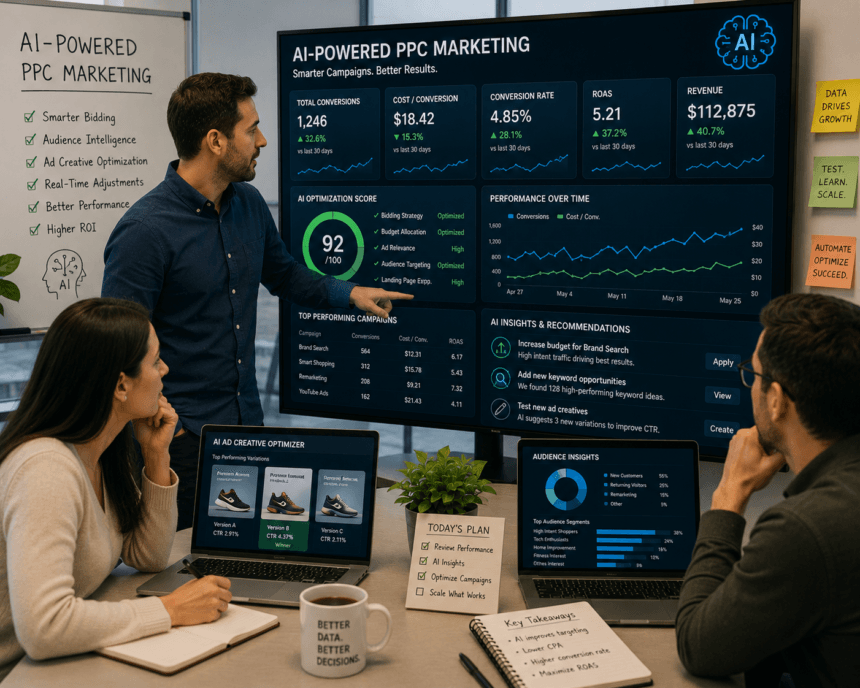
There are a lot of things that we wrote about over the years at Smart Data Collective. It is clear that AI is becoming one of the biggest topics for companies trying to improve PPC fulfilment, campaign management, and client results.
Forbes author Roger Dooley wrote in February that new data shows 54% of small businesses already use AI marketing tools, with another 27% planning to adopt this year. Something that makes this important is that PPC fulfilment often requires fast research, testing, reporting, and campaign updates that can be difficult for smaller teams to handle manually. Keep reading to learn more.
AI Can Help Companies Improve PPC Fulfilment
“AI represents perhaps the most significant leveling technology small businesses have ever had access to. Tools that analyze customer trends, generate professional content, and optimize campaigns were once available only to companies with dedicated marketing departments and big software budgets. Now a solopreneur can access similar capabilities for a tiny fraction of the cost of enterprise software.” It is a useful point for agencies and service providers that need to deliver PPC work for clients without wasting time on tasks that software can support.
PPC fulfilment can include keyword research, ad copy testing, landing page review, bid adjustments, audience research, and performance reporting. There are many ways AI can help companies handle these tasks faster while still giving human marketers control over strategy and client communication. Another thing AI can support is better campaign monitoring, since it can help teams notice changes in cost per click, conversion rates, and search behavior. It is easier for PPC teams to respond quickly when they have clearer signals from campaign data.
More Read

Elementor author Itamar Haim reports that as of late 2026, 78% of global companies report using AI in their operations. It is a sign that AI is becoming a regular part of how companies manage marketing, client work, and daily business processes.
“Artificial intelligence is no longer a futuristic concept. In 2026, it is a core business utility, fundamentally changing how companies operate, market, and create. From automating routine tasks to generating complex code, AI has moved from the lab to the mainstream. The question is no longer if businesses will adopt AI, but how they are using it to gain a competitive edge. This report digs into the real-world data, trends, and challenges of AI adoption today,” she writes. It is especially relevant for PPC fulfilment because paid search teams need tools that can help them work faster while still making careful decisions.
AI can help PPC teams create more ad variations for testing. Something that makes this useful is that campaigns often need different headlines, descriptions, calls to action, and audience angles before marketers know what works best. Another thing AI can do is help teams turn client notes, product details, and customer pain points into draft copy that marketers can review and refine.
Client fulfilment also depends on strong reporting because businesses want to know where their ad budgets are going. There are many ways AI can help agencies summarize performance, find patterns, and explain results in clearer language. Something that matters most is making reports useful instead of overwhelming clients with raw numbers. It is easier to keep clients informed when PPC teams can show what changed, why it matters, and what should happen next.
AI may also help companies manage PPC fulfilment across several clients at once. It is useful for spotting account issues, organizing campaign tasks, and helping teams prioritize the accounts that need immediate attention.
Companies still need experienced marketers to guide PPC strategy, review recommendations, and make final choices. Something that AI can provide is support for the repetitive work that often slows campaigns down. Another thing it can do is help teams test more ideas without creating more strain on staff. PPC fulfilment works best when AI supports human judgment rather than replacing it.
If you run a digital marketing agency, you already know how fast things move. Clients want immediate leads, lower acquisition costs, and flawless campaign execution. To keep up with demand without drowning in hiring costs, many agencies outsource their campaign management. This is where you typically look for white label ppc services to handle the heavy lifting while you focus on client relationships. But as you start vetting partners, you will quickly notice a massive divide in how these providers operate. There is a world of difference between a team that simply punches tickets and one that actually builds a growth engine for your agency.
The Assembly Line vs. The War Room
A standard pay-per-click fulfillment partner operates much like an old-school assembly line. You hand them the client brief, they build the basic campaign structure, and then they press start. They check the boxes, adjust a few bids here and there, and send over an automated monthly report that looks like a wall of text and numbers. They do exactly what you ask them to do, but absolutely nothing more.
A strategic partner, on the other hand, approaches your clients with the mindset of an internal director of marketing. Before a single keyword is selected, they want to understand the bigger picture. They ask about the lifetime value of your client’s customers, the sales cycle length, and the actual profit margins on the products being advertised. They do not just build campaigns to spend a budget. They build campaigns to hit specific business goals.
The Problem With Ticket Punching
When you work with a basic fulfillment provider, you are essentially buying labor. You are paying for a pair of hands to log into Google Ads or Meta and pull the levers. While this might save you time initially, it creates a massive bottleneck for your agency’s growth. Because these providers do not think critically, you have to do all the heavy lifting yourself.
If a campaign starts underperforming, a standard fulfillment partner will rarely come to you with a proactive fix. They will wait for you to notice the drop in conversions, wait for you to open a support ticket, and then wait for your specific instructions on how to fix it. This leaves you stuck in the middle, playing a stressful game of telephone between an unhappy client and a disengaged vendor. You are still carrying all the strategic weight on your shoulders.
Data Reporting vs. Data Storytelling
You can tell a lot about your PPC partner by looking at their monthly reports. A basic fulfillment provider will send you a PDF stuffed full of vanity metrics. They will highlight impressions, clicks, and average click-through rates. While those numbers matter to a degree, they do not tell your client if their business is actually growing.
A strategic partner translates that data into actual business intelligence. They do not just tell you that clicks went up by ten percent. They talk to you about the following in great detail:
- Explain why a specific audience segment is driving higher quality leads
- Suggest shifting twenty percent of the budget to exploit that trend
- Provide the exact talking points you need to walk into your client meeting looking like an absolute genius
- Turn raw numbers into a narrative of growth
Proactive Innovation and the Future
The digital advertising landscape changes almost every single week. Platforms introduce new automation features, privacy laws disrupt tracking methods, and consumer behavior shifts constantly. A fulfillment partner is usually slow to adapt because they rely on rigid, outdated playbooks. They wait until a strategy completely stops working before they try something new.
Strategic partners live for the future. They are constantly testing new betas, experimenting with alternative audience targeting methods, and looking for ways to lower your cost per acquisition. They bring these ideas to you before you even know they exist. Instead of you pushing them to do better, they are constantly pushing your agency to reach the next level. They help you stay ahead of the competition instead of constantly playing catch-up.
Final Word
AI can help with PPC fulfilment because it gives companies better ways to manage research, testing, reporting, and campaign updates. There are many benefits for agencies, freelancers, and in-house teams that need to move quickly while still staying focused on client goals.
The companies that benefit most will likely be the ones that use AI as a practical support tool. It is not enough to generate ads or reports quickly; PPC teams still need to understand the client, review the data, and make smart choices based on real campaign performance.
Choosing the right team to manage your ad spend is one of the most critical decisions your agency will ever make. Settling for a basic fulfillment provider might save a few dollars upfront, but it ultimately caps your growth and strains your client relationships. Investing in high quality white label ppc services that prioritize deep strategic thinking gives you a true competitive advantage. When you find a partner who cares as much about the final return on investment as you do, your agency can finally scale with total confidence.