Artificial intelligence has changed marketing in extraordinary ways, which is why the market for AI in the marketing profession is booming. Marketing companies spent over $35 billion on AI in marketing research alone last year, but they are likely to spend as much on AI-driven SEO.
Search engine optimization (or SEO) is a broad and highly complicated area and if you are a new business owner discovering it for the first time, it can feel terribly overwhelming. The good news? You don’t need to be an expert in SEO in order to benefit from it. However, it certainly does help to have some basic understanding of it. In fact, new AI tools have made SEO more advanced than ever!
How is AI Changing the Future of SEO?
AI has changed search permanently. This is one of the biggest ways AI has improved marketing.
Users get custom search results based on their past behaviors, devices, and locations. Search engines know what users want. This shift drives change in SEO. AI builds customized optimization strategies. SEO techniques serve as a baseline. The competitive landscape prioritizes page one results. AI looks at the relationship between search intent and content. Data paints a picture customized to specific content landscapes. Optimization strategies that work for one group of keywords might not work for another.

In this article, we’re going to share a brief layman’s guide to understand SEO in 2023 and the role that AI is playing.
What is SEO?
Before you can learn how to apply AI in SEO, you need to understand what SEO is in the first place. SEO, in the simplest terms, is the process of making your website easier to find! With some technical and onsite optimizations, you essentially help Google identify who you are and what you do – and then work towards attracting as many potential customers to your website as possible.
But it’s not just about getting more eyes on your website; it’s about ensuring that you convert as many of those website visitors into paying customers as possible.
- Make your website easy to find.
- Help Google rank you accordingly in a SERP (search engine results page).
- Ensure the “ideal” customers are clicking on your website.
- Creating a positive on-page experience in order to convert those visitors into customers.
SEO has existed long before the newest advances in AI. However, AI has helped improve the process considerably.
How can AI help with SEO?
SEO has gone through many iterations over the years as Google frequently updates its algorithm. In any case, there are four fundamental aspects of SEO that remain as important today as they have ever been. AI can help SEO professionals and marketers with all of these steps. They include the following:
- Keyword research.
- Onsite optimization.
- Content creation.
- Link-building.
SEO is arguably the process of pleasing Google (though it is much more nuanced than that). Follow the rules and you will be rewarded accordingly. Keep reading to learn some ways that artificial intelligence can help with SEO. This article provides a brief layman’s guide to understanding SEO in 2023 for your convenience.
AI helps with keyword research
You know when you type something into Google and then click on the most relevant web page in order to find the information / products that you need?
That’s keyword research in a nutshell.
Those high-ranking websites will have done their research in order to determine the kind of phrases and search terms that their ideal customers type into Google – including the intention behind those searches – and then they position their website and content accordingly.
AI technology can help with this essential stage of the SEO process. Search has been permanently changed by AI. Custom search results are provided to users based on their past behaviors, devices, and locations. Search engines have the ability to understand what users want. This shift has led to changes in SEO. AI creates personalized optimization strategies, while SEO techniques serve as a baseline. Page one results are prioritized in the competitive landscape. AI analyzes the relationship between search intent and content. Data is used to create a customized picture of specific content landscapes. Optimization strategies that work for one group of keywords may not work for another.
SEMRush, Keyword Finder and Keyword Chef are some of the top tools that you can use to find new keywords with AI.
Machine learning can help with onsite optimization
There are many, many aspects to proper optimization so we won’t bog you down with too many details. Instead, let’s focus on the fundamentals:
- Improve website performance: the faster it loads and the easier your website is to navigate, the better. It’s all about the UX (user experience). There are many different technical SEO tasks that occur in the back-end of the website that are critical for improving the overall health and performance of your website – all of which contribute to your SEO.
- Focus keywords in Titles and Meta: you need to identify your primary focus keywords and then carefully place them in your Titles and Meta descriptions – including the general content (without stuffing too many in unnaturally).
- Create awesome content: you also need to populate your website with awesome, SEO-optimized content with consumer psychology in mind. What are their biggest problems and how can you provide them with the perfect solution?
There are a lot of AI tools that can help with onsite SEO. These tools can help you identify broken links, make sure the keyword density on your posts isn’t too high and identify other onsite SEO problems.
AI Can help with content creation
Every blog post, every social media reel, and every video that you engage with online is classed as ‘content’.
Each piece of content that you associate with your brand and business must be created with a clear intention: to serve your audience and make their lives easier.
The more high-value content you create, the more opportunities you have to rank higher in Google. This is because it builds your relevancy in your industry – while also establishing your authority.
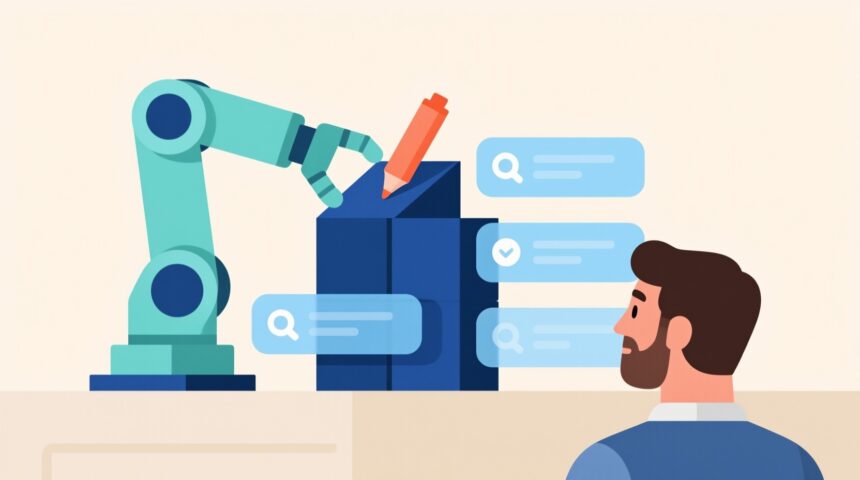
There are also a number of benefits of using AI to help with content generation. Tools like Ryte.me, ChatGPT and Copy.AI can help considerably.
However, it is important to properly edit your content instead of just mindlessly relying on AI. You need to read Google’s spam guidelines on using AI-generated content, which read:
“To be eligible to appear in Google web search results (web pages, images, videos, news content, or other material that Google finds from across the web), content shouldn’t violate Google Search’s overall policies or the spam policies listed on this page.”
In other words, it is okay to use AI-created content. However, it shouldn’t look like spam.
AI can also help with link building
For every link that points to your website from other reputable, industry-relevant websites, it essentially counts as a ‘vote of confidence’.
The more links you have, clearly the more authoritative and trustworthy your website is.
For example, if you write a blog post in so much depth that other marketers and websites invariably share and link to the post, Google is going to assume that it must be very interesting. As a result, they will reward you with more visibility.
Links = votes.
There are also many ways that AI can help with linkbuilding. You can use AI tools like the SEMRush backlink finder to identify links to relevant sites and use them for your own prospecting. You can also use AI to generate automated email outreach campaigns to ask other bloggers to link to your content or offer you guest blogging opportunities.
Artificial Intelligence Can Help with All Four Aspects of SEO
Let’s have a quick recap of the ways that you can use AI to help with SEO:
- Your keywords help Google (and your customers) identify what your website is all about. AI tools can help you find new keywords.
- Onsite optimization tidies up your website, makes it easier to find, and helps your customers navigate their way to a positive conclusion (money in your pocket). AI can help you deal with broken links and keyword density issues.
- Content creation is all about establishing yourself as an authority by sharing high-value information that your audience can engage with. ChatGPT and other AI tools make writing content easier than ever.
- Link building is all about getting as many ‘votes of confidence’ from other reputable websites as possible. AI can help you find new linkbuilding opportunities and automate outreach email campaigns to get those links.
As mentioned earlier: you don’t need to master SEO to benefit from it. For the best results it may be worth hiring a digital marketing agency to handle these requirements on your behalf. That way, you won’t have to try and master a broad and complicated field and simply enjoy the benefits instead: a high and sustainable ROI.
In summary, there are huge benefits of using AI for SEO. You should use it to your advantage.