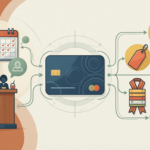
When James Taylor and I wrote the book “Smart (Enough) Systems: How to Gain Competitive Advantage by Automating Hidden Decisions,” we focused mainly on those kinds of decisions that are managed by a “decision service.” A decision service is an embedded applet that fires decisions in stream, typically by employing a ruleset (a set of declarative statements) and a business rules engine.
When James Taylor and I wrote the book “Smart (Enough) Systems: How to Gain Competitive Advantage by Automating Hidden Decisions,” we focused mainly on those kinds of decisions that are managed by a “decision service.” A decision service is an embedded applet that fires decisions in stream, typically by employing a ruleset (a set of declarative statements) and a business rules engine. We dealt at length with both predictive modeling and optimization, but the goal was to automate “little decisions that add up,” like credit line increases or call center responses, not, “Should I buy Yammer?”
You develop a decision service like the one we proposed with predictive modeling, as the models inform the rules engine with what to do, but that wasn’t the focus of the book. In the five years since we wrote the book, some organizations have developed and expanded the idea of decision services, combining predictive modeling, business rules, entity analytics, optimization and cognitive computing. The goal is to provide decision services addressing both horizontal applications (customer, risk, pricing and performance management, for example) and platforms (big data and decision management analytics).
Where these newer decision management proposition expands on James’ and my decision services proposition is the ability to provide advice and recommendations to the full spectrum of strategic, operational and tactical decisions, automated or not. The goal of is outcomes, not features.

I do wonder how much this costs and how long does it take: like an ERP initiative, or a data warehouse or just flip a switch? No answer is forthcoming yet. This mega-approach may sound daunting, but in the demos, I ‘ve seen very useful and intuitive amalgams of these components that are clearly ready for the enterprise, such as analytics at scale, analytics with uncertain data, visualization, and the future of cognitive computing like IBM’s Watson plus decision management.
On the subject of Watson, I have some concerns. For my money, Watson was a cute name for a system to compete on Jeopardy! But Watson is composed 41 interoperating sub-systems including Natural Language Processing, Voice Recognition, Text Analytics, knowledge representation including ontologies and a host of other features. I don’t know if IBM will stick with the name, but they are offering the capability through the cloud under the title “Cognitive Computing.” The first commercial customer was WellPoint, a decision I’ve been unimpressed with and written about previously, but they have also announced what seems to be an oncology assistant at Memorial Sloan-Kettering. There are others, but IBM does not disclose that yet.
Watson’s ability to gather, represent and use information is pretty stunning. However, Watson seems to learn partially by mistakes (don’t we all), but some mistakes, like oncology, can have disastrous results that don’t appear for a long time, during which presumably the same mistakes are made repeatedly. IBM counters that Watson is an advisor, not a doctor, but I wonder what he’s doing at WellPoint, which is the 2nd largest for-profit health insurer in the US. A report in Reuters alleged that the Anthem Blue Cross subsidiary improperly singled out women with breast cancer for cancellation of their policies shortly after they were diagnosed with breast cancer. Lets hope Watson didn’t “learn” to do that.
My guess is that Watson is offered as “service” to providers (at a fee? I don’t know) to advise on the best treatment approach for patients. Actually, providers are irritated enough about how their practices are constrained by insurance companies, Medicare/Medicaid and their malpractice insurers. Watson may make things worse (for them). Personally, if Watson’s efforts can make a dent in the poor quality of healthcare in this country (WHO ranks the US 1st in spending per capita and 26th in quality, just above Bosnia) I’ll be delighted.
I find a glaring contradiction in some briefings. While encouraging companies to use social media data to gain insight in other, customer-oriented applications, Watson’s handlers are openly disparaging about sites like WebMB or PatientsLikeMe as a source of information for Watson’s forays into medicine. If serious sites like these are not acceptable, how can frivolous sites like Twiiter or Facebook be useful? One thing we learned long ago in data warehousing is that you can increase the value of your existing data by integrating other sources, even small ones that add to your ability to gain insight. How in the world we’re going to curate that with the mass of data now accessible is a question that will keep us busy for a while.
A lingering feeling I have, though, is that as these systems are given more and more leeway to make and direct decisions, there has to be an agreement that the models underlying those decisions are adequate. James and I were pretty clear that the decisions we wrote about were negligible singularly, but very important in the aggregate. Much could be gained by being consistent and timely in these decisions, even if a few stakeholders got mistreated. But when the decision services are pointed towards more important decisions, like your health or your employment or your kids placement in programs, you really have to wonder how you can ever determine whether the modelers really considered everything, or at least the important things. As humans, we tend to excel at simplified models, not comprehensive one. It’s a little worrisome. George Box said it best: “All models are wrong. Some are useful.” Too bad Dr. Box didn’t give us guidance figure out which ones.