We use cookies, including third-party cookies from Google to serve personalized ads through AdSense, to operate this site and understand how it is used. By continuing to browse, you accept this use. See our Privacy Policy and Terms of Use for details, including how to opt out of personalized advertising.
Accept
SmartData CollectiveSmartData Collective
  • Analytics
    AnalyticsShow More
    chatgpt image jul 21, 2026, 04 34 30 pm
    4 Core Benefits of Predictive Maintenance after Vibration Analysis
    10 Min Read
    How Does Data Mining Boost Customer Satisfaction in Logistics? Harnessing Analytics for Results -- AI-generated illustration
    How Does Data Mining Boost Customer Satisfaction in Logistics? Harnessing Analytics for Results
    11 Min Read
    chatgpt image jul 13, 2026, 04 23 45 pm
    How Data Analytics Helps Companies Improve User Engagement
    19 Min Read
    chatgpt image jul 13, 2026, 03 59 46 pm
    How Data Analytics Improves Multi-Location Search Strategies
    10 Min Read
    cybersecurity efforts
    How Behavioral Analytics and AI Are Redefining Cybersecurity for Boca Raton Businesses
    14 Min Read
  • Big Data
  • BI
  • Exclusive
  • IT
  • Marketing
  • Software
Search
© 2008-25 SmartData Collective. All Rights Reserved.
Reading: Analytics for Creating More Choices
Share
Notification
Font ResizerAa
SmartData CollectiveSmartData Collective
Font ResizerAa
Search
  • About
  • Help
  • Privacy
Follow US
© 2008-23 SmartData Collective. All Rights Reserved.
SmartData Collective > Analytics > Analytics for Creating More Choices
AnalyticsBusiness Intelligence

Analytics for Creating More Choices

GaryCokins
GaryCokins
5 Min Read
Analytics for Creating More Choices
Illustration generated with Qwen Image.
SHARE

Choice covers both the capacity to control people and events, and an underlying belief in the possibility of such control. Being able to rule your environment gives power to self-determination, even for babies. In a study, researchers attached strings to the arms of infants “as young as four months.” When they moved their arms, music played. The babies grew “sad and angry” when researchers removed the strings and they could no longer make music play, though music continued sporadically.

Wanting to choose comes naturally, though it isn’t linked to any distinct biological advantage. Without choice, as zoo animals show, even if someone else’s decisions set you up in luxury, you won’t be happy. Having influence on control makes people happiest. A nursing home let some patients decide when to watch movies and which plants they wanted. After six months, those who had more perceived choice “were happier and more alert” and, it turned out, “were less likely to have died.”

People define themselves through their choices

The studies just described come from the book The Art of Choices written by Sheena Iyengar, a professor at Columbia University. In her book, Iyengar makes these observations. The way that people make choices as individual consumers of products and services has changed with industrialization. Buying was once very matter-of-fact due to limited options, but it has been transformed into collecting markers of personal identity. As “an ethos of independence” took over, getting noticed as an individual replaced blending in, and choice became an exercise of personal definition. Think Starbucks, automobiles, or clothing fashion. Now, people everywhere face substantial new alternatives. Options for family structure, political affiliation, and even eye color (with “tinted contact lenses”) let people express themselves in countless ways.
More Read

Increased Data Analytics Capabilities Revolutionized The Tower Industry
Comparing and Contrasting Analytics Types
The analyst function is dead
Detecting the Madoff Effect: Methodology for Fraud in Hedge Funds
New Features of CRM that has Revolutionized Microsoft Dynamics 365

Iyengar continues by stating that along with freedom, these decisions carry the burden of defining a person’s self-image. She describes three challenges make this hard: People believe they are more unique than they are, they want a consistent vision of themselves, and they want it to mesh with others’ views of them. With each potentially immobilizing choice, people define themselves privately and socially. Iyengar’s solution: Try to see your identity as ever changing, so that choosing helps you discover yourself.

If we replace organizations with people there are similarities.

The role of analytics to make choices for organizations

Analytics’ goal should be to gain insights and solve problems, to make better and quicker decisions with more accurate and fact-based data, and to take actions. “Big data” with high performance computing is allowing organizations to deploy business analytics to have more choices and make better decisions. But the three challenges that Iyengar describes also apply to organizations. For commercial companies they seek a competitive edge typically through differentiated products and services increasingly targeting differentiated customers.

Since customer preferences are not static – they are making individual choices on what to purchase – business analytics are essential to detect what is changing. They are also needed for organizations to uniquely define themselves. Ultimately the best source to gain a competitive edge is to grow competencies in employees with analytics – creating a culture for analytics.

 
TAGGED:analyticsbusiness analytics
Share This Article
Facebook Pinterest LinkedIn
Share

Follow us on Facebook

Latest News

Illustration of mobile analytics dashboards with ad performance charts connected to backend databases
11 Best Sisense Alternatives for Embedded Analytics
Business Intelligence Exclusive
Analyst points at colorful circular data dashboard on screen - information technology business metrics
How Fragmented Workplace Tech Undermines Reliable Business Metrics and Reporting
Cloud Computing Exclusive Infographic IT
Using Multi-Source Data and Analytics to Detect Operational Drift Across Franchise Networks -- AI-generated illustration
Using Multi-Source Data and Analytics to Detect Operational Drift Across Franchise Networks
Exclusive Infographic
Beyond The First Impression: The Long-Lasting Impact Of Sensory Marketing -- AI-generated illustration
Beyond The First Impression: The Long-Lasting Impact Of Sensory Marketing
Infographic Marketing

Stay Connected

1.2KFollowersLike
33.7KFollowersFollow
222FollowersPin

You Might also Like

Business Intelligence
AnalyticsBusiness IntelligencePredictive Analytics

Business Intelligence to Deliver the Real-time Business Answers

4 Min Read
Economist or Iconomist?
Business IntelligencePredictive Analytics

Economist or Iconomist?

7 Min Read
Effective Data Management Is the Overlooked Key to Business Growth
Big Data

Effective Data Management Is the Overlooked Key to Business Growth

8 Min Read
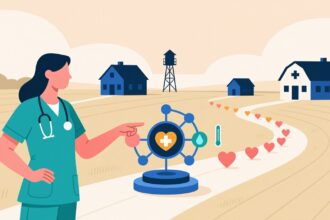
The Importance of Data-Driven Approaches to Improving Healthcare in Rural Areas
Analytics

The Importance of Data-Driven Approaches to Improving Healthcare in Rural Areas

6 Min Read

SmartData Collective is one of the largest & trusted community covering technical content about Big Data, BI, Cloud, Analytics, Artificial Intelligence, IoT & more.

Chatbots and SEO: How Can Chatbots Improve Your SEO Ranking?
Artificial Intelligence Chatbots Exclusive
ai chatbot
How AI Website Chatbots Improve Customer Support and Lead Generation
Chatbots Exclusive

Quick Link

  • About
  • Contact
  • Privacy
Follow US
© 2008-26 SmartData Collective. All Rights Reserved.
Welcome Back!

Sign in to your account

Username or Email Address
Password

Lost your password?