We use cookies, including third-party cookies from Google to serve personalized ads through AdSense, to operate this site and understand how it is used. By continuing to browse, you accept this use. See our Privacy Policy and Terms of Use for details, including how to opt out of personalized advertising.
Accept
SmartData CollectiveSmartData Collective
  • Analytics
    AnalyticsShow More
    chatgpt image jul 21, 2026, 04 34 30 pm
    4 Core Benefits of Predictive Maintenance after Vibration Analysis
    10 Min Read
    How Does Data Mining Boost Customer Satisfaction in Logistics? Harnessing Analytics for Results -- AI-generated illustration
    How Does Data Mining Boost Customer Satisfaction in Logistics? Harnessing Analytics for Results
    11 Min Read
    chatgpt image jul 13, 2026, 04 23 45 pm
    How Data Analytics Helps Companies Improve User Engagement
    19 Min Read
    chatgpt image jul 13, 2026, 03 59 46 pm
    How Data Analytics Improves Multi-Location Search Strategies
    10 Min Read
    cybersecurity efforts
    How Behavioral Analytics and AI Are Redefining Cybersecurity for Boca Raton Businesses
    14 Min Read
  • Big Data
  • BI
  • Exclusive
  • IT
  • Marketing
  • Software
Search
© 2008-25 SmartData Collective. All Rights Reserved.
Reading: Facebook Analyzes Big Data, Concludes World is Smaller
Share
Notification
Font ResizerAa
SmartData CollectiveSmartData Collective
Font ResizerAa
Search
  • About
  • Help
  • Privacy
Follow US
© 2008-23 SmartData Collective. All Rights Reserved.
SmartData Collective > Big Data > Social Data > Facebook Analyzes Big Data, Concludes World is Smaller
AnalyticsSocial Data

Facebook Analyzes Big Data, Concludes World is Smaller

Brett Stupakevich
Brett Stupakevich
4 Min Read
Facebook Analyzes Big Data, Concludes World is Smaller
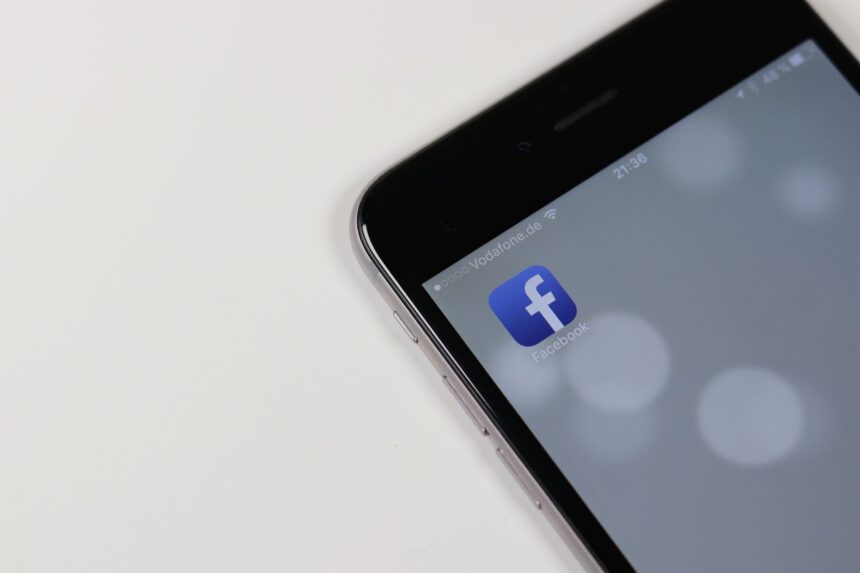
Photo by Pixabay on Pexels (https://www.pexels.com/photo/space-gray-iphone-6-414830/)
SHARE

Author: Linda Rosencrance
Spotfire Blogging Team

I’m sure you’ve heard of the “six degrees of separation” theory, which refers to the idea that it takes just six steps to connect any two people on earth.

For example: Person 1 has coffee with Person 2, who once worked with Person 3, who dated Person 4, who went to school with Person 5, who is Person 6’s mother, who used to babysit Person 1. (I think that works out.)

Pretty cool, right?
More Read

Yellowfin: Top 14 Benefits of Business Intelligence (Part One)
Protecting the World with Big Data
How Data and Analytics Have Changed the Beautiful Game
Voice of the (Vocal Few) Customer(s)
Using Analytics to Successfully Use Instagram Stories for Your Business

Well, now Facebook’s data analysis team contends that on the social networking site the average user is only 4.74 degrees away from any other Facebook user. “Thus, when considering even the most distant Facebook user in the Siberian tundra or the Peruvian rainforest, a friend of your friend probably knows a friend of their friend,” Facebook’s data team wrote in a blog post about its research. 

To reach its conclusions, Facebook, in collaboration with the Universita degli Studi di Milano, examined all of its 721 million active users (more than 10% of the global population). According to the research, 99.6% of all Facebook users were separated from any other Facebook user by five degrees or less and 92% were separated by only four degrees.

And Facebook said that the distance between users is dwindling fast. “The average distance in 2008 was 5.28 hops, while now it is 4.74,” Facebook’s data team says.

One of the things Facebook’s researchers discovered was that while people throughout the world are linked via friends of friends of friends, a user’s friends most likely are the same age and come from the same country. In the US, for example, users on average are connected by three intermediary contacts, Facebook says.

Facebook’s data team compares its work to that of social psychologist Stanley Milgram, who conducted experiments in the 1960s to prove that people are separated by only six contacts.

“The experiment showed that not only are there few degrees of separation between any two people, but that individuals can successfully navigate these short paths, even though they have no way of seeing the entire network,” Facebook’s data team says of Milgram’s experiment.

According to the CNN story, however, there seems to be some differences between their reports—something Facebook recognizes as well.

“It is important to note that while Milgram was motivated by the same question (how many individuals separate any two people), these numbers are not directly comparable; his subjects only had limited knowledge of the social network, while we have a nearly complete representation of the entire thing,” according to Facebook’s data team. “Our measurements essentially describe the shortest possible routes that his subjects could have found.”

As the author of the CNN story points out, “The findings do highlight the idea that the Internet is bringing people closer together—something social media users can sense with or without this data.”

As one Facebook user who commented on the story says, “Beyond any commercial purpose, Facebook data can help us understand how human society is organized, how ideas spread, and how we are connected to each other. Very cool.”

Very cool, indeed.

Next Step: Use the TIBCO Spotfire gift finder to find the perfect gift for each Facebook friend on your holiday shopping list.
TAGGED:social media analytics
Share This Article
Facebook Pinterest LinkedIn
Share

Follow us on Facebook

Latest News

How Search Engine Indexing Lags Behind Large-Scale Website Domain Migrations -- AI-generated illustration
How Search Engine Indexing Lags Behind Large-Scale Website Domain Migrations
News
How Great Content Moves Through A Marketing Ecosystem -- AI-generated illustration
How Great Content Moves Through A Marketing Ecosystem
Exclusive Infographic Marketing
What Your Brand Misses That Data Reveals -- AI-generated illustration
What Your Brand Misses That Data Reveals
Big Data Exclusive Infographic
5 Common Mistakes Businesses Make During the Risk Assessment Process -- AI-generated illustration
5 Common Mistakes Businesses Make During the Risk Assessment Process
Business Intelligence Exclusive Risk Management

Stay Connected

1.2KFollowersLike
33.7KFollowersFollow
222FollowersPin

You Might also Like

Leveraging Social Analytics for Optimizing Your Marketing Strategy

9 Min Read
Social Media Analytics: Three Perspectives
AnalyticsBest PracticesSocial DataText Analytics

Social Media Analytics: Three Perspectives

6 Min Read

4 Amazing Time Saving Analytics Tools For Social Media Marketing

9 Min Read

Integrating Data-Driven Network Marketing And Social Media In 2019

8 Min Read

SmartData Collective is one of the largest & trusted community covering technical content about Big Data, BI, Cloud, Analytics, Artificial Intelligence, IoT & more.

ai chatbot
How AI Website Chatbots Improve Customer Support and Lead Generation
Chatbots Exclusive
Artificial Intelligence for eCommerce: A Closer Look
Artificial Intelligence

Quick Link

  • About
  • Contact
  • Privacy
Follow US
© 2008-26 SmartData Collective. All Rights Reserved.
Welcome Back!

Sign in to your account

Username or Email Address
Password

Lost your password?