When The Harvard Business Review declared the data scientist “the sexiest job of the 21st century,” a frenzy occurred. Companies of all types started sending out SOS’s in search of a data scientist to hire, and anyone who used data in some capacity began calling themselves a data scientist.
Yes, most companies do have untapped data that requires analysis and action, and there is certainly a shortage of data scientists. So HBR’s declaration drew much needed attention to both of these points. But there are a few important things to consider when looking to add a data scientist to your company’s arsenal.
As data scientists are all the hype right now, many companies are hiring them without knowing how to best utilize their skills. This leads to a huge expense and a waste of resources. It’s the classic “if it’s not broke, don’t fix it” mentality. Businesses need to know why—even if—they need a data scientist and know what they’re looking to get out of the investment before bringing one on board.
At the same time, companies need to be diligent in the hiring process. People think that a self-made title, or a degree from a university that just introduced data science into their curriculum, qualifies them as a data scientist.

The reality is there is an intensive array of technical skills required to become a genuine data scientist (are you comfortable with coding and preparing data from different data sources? Understand how to build analytical models? Possess the domain expertise to correctly interpret and apply results?), and according to the McKinsey stat mentioned above, companies are strapped to find them.
People don’t jokingly refer to data scientists as “unicorns” for nothing. They’re difficult to find because their value lies in not only analyzing the data, but holistically understanding the data at hand to contextualize results, derive understanding, and make accurate strategic diagnoses and recommendations. A true data scientist should be able to scrub and sort through raw data to develop intelligent data models. However, without in-depth company knowledge, or the ability to search unlimited data, their conclusions will be limited to the data they decide is the most important.
Set Your Data Scientist Up for Success
Having the technology, team, and overall support in place at the onset will only help data scientists succeed and further augment results.
Data scientists rely on software like machine intelligence—focused on human-interpretable results and quick iteration—to create models. If technology is outdated and/or data is unavailable, data scientists are worthless. Oftentimes, data users or analysts fail to set up the problem. They need to ask, “What do I need to do to impact the bottom line and work back?” And subsequently, “Does the data exist to solve this problem?” If the answer is “I don’t know,” then speed to result is critical. This is where machine intelligence comes in.
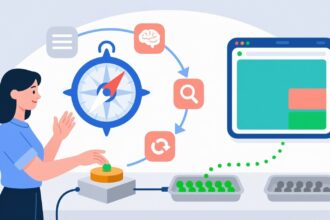
Machine intelligence is the new engine driving data science. It leverages a set of algorithms to automatically build transparent predictive and analytical models from raw data, so data scientists can understand what’s happening in the data and why. Machine intelligence searches an infinite equation space to bring the user the simplest, most accurate models possible to explain the data’s behavior without assuming any underlying structure in the data.
The technology independently transforms, hypothesizes, tests, and validates in the same way as a data scientist would, but automation and scalable computation resources enable it to repeat this process hundreds of millions of times per second.
Aligned Expectations
The true value of a data scientist comes from the application of business context and a sophisticated understanding of the data. One of the most common oversights is the disjointed expectations between executives and data scientists.
Executives need to clearly communicate business goals and objectives. Whether it’s uncovering certain insights or trends from data, or simply building specific models, data scientists must understand their tasks while also communicating their capabilities.
With machine intelligence, data scientists can incorporate their domain expertise through shareable models to define clear and measurable action items to ensure the models align with business objectives.
Keeping a Data Scientist Happy
At a recent industry event, Doug Cutting, creator of Hadoop, said “speed is quality.” The point was that we need more throughput to get results. If you need information, for example, you can go to the library or use Google. Google might not provide the best result on the first hit, but the ability to quickly iterate enables us to find value in minutes instead of days.
Data scientists can offer invaluable benefits to companies, but having an acute understanding of how to extract that value is critical to the success of not only the data scientist, but to the company.
We, as a society, are going to use more information to make better decisions. To accelerate the creation of more true data scientists, and massively improve the productivity of those we already do have, machine intelligence will be a powerful industry trend.