We use cookies, including third-party cookies from Google to serve personalized ads through AdSense, to operate this site and understand how it is used. By continuing to browse, you accept this use. See our Privacy Policy and Terms of Use for details, including how to opt out of personalized advertising.
Accept
SmartData CollectiveSmartData Collective
  • Analytics
    AnalyticsShow More
    chatgpt image jul 21, 2026, 04 34 30 pm
    4 Core Benefits of Predictive Maintenance after Vibration Analysis
    10 Min Read
    How Does Data Mining Boost Customer Satisfaction in Logistics? Harnessing Analytics for Results -- AI-generated illustration
    How Does Data Mining Boost Customer Satisfaction in Logistics? Harnessing Analytics for Results
    11 Min Read
    chatgpt image jul 13, 2026, 04 23 45 pm
    How Data Analytics Helps Companies Improve User Engagement
    19 Min Read
    chatgpt image jul 13, 2026, 03 59 46 pm
    How Data Analytics Improves Multi-Location Search Strategies
    10 Min Read
    cybersecurity efforts
    How Behavioral Analytics and AI Are Redefining Cybersecurity for Boca Raton Businesses
    14 Min Read
  • Big Data
  • BI
  • Exclusive
  • IT
  • Marketing
  • Software
Search
© 2008-25 SmartData Collective. All Rights Reserved.
Reading: Public vs. Private Cloud: How to Integrate Your Data Across Both
Share
Notification
Font ResizerAa
SmartData CollectiveSmartData Collective
Font ResizerAa
Search
  • About
  • Help
  • Privacy
Follow US
© 2008-23 SmartData Collective. All Rights Reserved.
SmartData Collective > IT > Cloud Computing > Public vs. Private Cloud: How to Integrate Your Data Across Both
Cloud Computing

Public vs. Private Cloud: How to Integrate Your Data Across Both

petejohnson
petejohnson
5 Min Read
Public vs. Private Cloud: How to Integrate Your Data Across Both
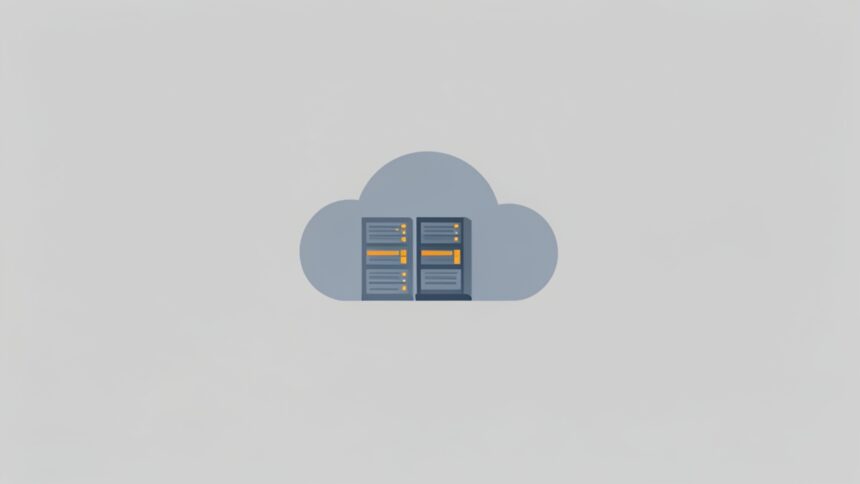
Illustration generated with FLUX.2 [klein 4B] via Cloudflare Workers AI.
SHARE

Private clouds are a natural extension of the virtualization revolution of the late 1990s and early 2000s, and they give organizations the ability to quickly create virtual machine environments— whether they are running vSphere, OpenStack, CloudStack or some other technology. Ultimately, though, that private cloud is based on capital expense of bare metal hardware in a data center you are responsible for.

Contents
  • Everybody Has Everything: Cross Internet Master/Master Replication
  • Single Version of the Truth Approach
  • Avoiding Hybrid Cloud Data Issues with Workload Placement Guidelines
  • The Choice Is Yours

Public clouds—including Amazon Web Services, Microsoft Azure, Google Cloud Platform and other IaaS market players—enable an organization to lease virtual machines across the Internet for hours or even minutes at a time. Utilizing this pay-as-you-go model can be especially helpful for workloads with unpredictable demands so that an organization can handle peaks without the underutilized capacity that would otherwise come during slower periods.

Many organizations are opting for a hybrid approach, using private cloud in certain situations and public cloud in others. A key consideration with such a strategy has to do with handling data that might have to be spread over multiple physical locations across the public Internet, and the latency as well as security concerns that might arise.

Everybody Has Everything: Cross Internet Master/Master Replication

The simplest approach to tackling data replication across a public and private or multiple public clouds is the same solution used for exclusively internal use cases: master/master replication. Keeping data replicated and symphonized across multiple locations ensures data integrity. The nuance here is now replication traffic is running across the public Internet and requires additional security measures.

More Read
5 Disruptive Technology Advancements Which Will Change Business as Usual
Massive DDoS attack spotlights internet choke point
Cloud Technology Changes Role of Soft Skills in Nursing
A Million Monkeys Demonstrate the Power of Hadoop
Data Lakes and Network Optimization: What’s Next for Telecommunications and Big Data

Replication latency is a strong consideration here as well. Depending upon how an application is using data, it may need to proceed with caution given that replication data is now being carried over much larger distances.

Single Version of the Truth Approach

Alternatively, should data gravity issues prevent a master/master replication approach, data may have to reside in a single place while multiple front ends access it from wherever they might be running. Security issues remain the same and can benefit from a more formally structured REST API sitting in front of the single data source, but replication latency concerns get replaced by transactional latency between the data source and the consuming application layer. Those transactional concerns can often be mitigated with creative caching approaches on the consumption end so that requests for data back at the single source can be minimized.

Avoiding Hybrid Cloud Data Issues with Workload Placement Guidelines

Another way to avoid data issues across public and private clouds is to simply choose one or another based on workload type and not have any particular workload straddle both. Some workloads have steady demand or sensitive data, which makes them better suited for the firewalled, fixed capacity confines of a private cloud. Financial analytics and Human Resources workloads are good examples.

Other workloads see wide variations in demand and have publicly viewable data that make them a great fit for the elasticity of the public cloud. A customer-facing marketing website or customer analytics that have been sanitized to remove Personally Identifiable Information are typical candidates.

So, instead of choosing both for a particular application, establish guidelines for your entire portfolio of applications and decide to run each individual application on one or the other depending upon demand variability and data sensitivity.

The Choice Is Yours

Every organization has its unique challenges, strengths and key performance indicators that make no single choice the right one for everyone. Some applications should be deployed across multiple clouds in a hybrid fashion. Replicating data using long tested master/master methods can be successful in such situations when security concerns are met. Single data source techniques can also prove useful, especially when establishing a REST-API in front of them and using data caching techniques. An equally valid approach is to opt against single application hybrids and instead choose guidelines for how demand and data sensitivity thresholds dictate which applications get deployed where.

Share This Article
Facebook Pinterest LinkedIn
Share

Follow us on Facebook

Latest News

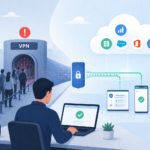
Managing Application Access When Corporate VPNs Reach Capacity Limits -- AI-generated illustration
Managing Application Access When Corporate VPNs Reach Capacity Limits
Exclusive IT Security
How Digital Knowledge Repositories Facilitate Self-Directed Research and Information Discovery -- AI-generated illustration
How Digital Knowledge Repositories Facilitate Self-Directed Research and Information Discovery
Exclusive News
7 MDR Providers Combining Offensive Security Testing With 24/7 Monitoring -- AI-generated illustration
7 MDR Providers Combining Offensive Security Testing With 24/7 Monitoring
Exclusive IT Security
The Information Governance Practices That High-Demand Social Work Roles Require -- AI-generated illustration
The Information Governance Practices That High-Demand Social Work Roles Require
Data Management Exclusive Policy and Governance Security

Stay Connected

1.2KFollowersLike
33.7KFollowersFollow
222FollowersPin

You Might also Like

cloud computing
Cloud Computing

7 Common Challenges Companies Face While Migrating to the Cloud

5 Min Read
Image
Cloud ComputingIT

5 Top Tools for Government Tech [INFOGRAPHIC]

1 Min Read
How to Secure Federal Data in the Cloud
Cloud ComputingData WarehousingPolicy and GovernanceTransparency

How to Secure Federal Data in the Cloud

0 Min Read
Every Cloud Has a Silver Lining
AnalyticsCloud Computing

Every Cloud Has a Silver Lining

4 Min Read

SmartData Collective is one of the largest & trusted community covering technical content about Big Data, BI, Cloud, Analytics, Artificial Intelligence, IoT & more.

From Bolts to Bots: How AI Is Fortifying the Automotive Industry
Artificial Intelligence
AI chatbots
AI Chatbots Can Help Retailers Convert Live Broadcast Viewers into Sales!
Chatbots

Quick Link

  • About
  • Contact
  • Privacy
Follow US
© 2008-26 SmartData Collective. All Rights Reserved.
Welcome Back!

Sign in to your account

Username or Email Address
Password

Lost your password?