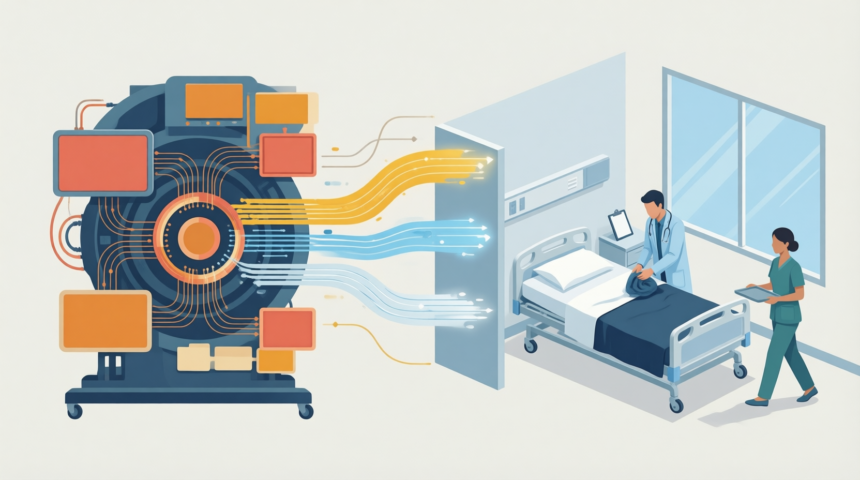
Unstructured data makes up about 80% of all information in the healthcare industry, and is growing faster than most people could even comprehend.
Unstructured data makes up about 80% of all information in the healthcare industry, and is growing faster than most people could even comprehend. Sorting through the data, finding necessary patient information, and doing research for diagnoses and treatments is almost impossible without the vast technological abilities of Hadoop.
The MapR Distribution including Hadoop is helping providers organize medical files, communicate with other doctors, patients, and organizations, and process lab results, financial data, clinical data, imaging reports, and output from medical devices. The capabilities are virtually endless, and new capabilities and applications for Hadoop are constantly being developed.
There are many different use cases for Hadoop in healthcare. Some of them include helping doctors, patients, and healthcare organizations include personalized treatment planning, assisted diagnosis, fraud detection, and monitoring patient vital signs. Learn how Hadoop is being implemented in each of these use cases below.
More Read
1. Personalized Treatment Planning
Personalized treatment planning is a way to diagnose and medicate patients on a case-by-case basis according to individuals’ unique medical histories, special needs and sensitivities, and even personal preferences. The MapR Distribution including Hadoop provides real-time analysis and updates so that patients receive the individualized care they need when they need it.
2. Assisted Diagnosis
By being able to narrow down diagnoses with the technology of big data based on conditions, symptoms, medications, side effects, medical history, and other contributing factors, doctors are able to isolate, discover, and research rare nuances of diseases and treat patients accordingly. Healthcare providers can leverage Hadoop to provide deduction technology, predictive modeling, and machine learning to help professionals as they help their patients.
3. Fraud Detection
Healthcare and insurance providers need to be able to detect and prevent fraud. Anomaly detection alerts the organizations of any suspected errors or fraud in real time so that the issue can be resolved immediately, saving the organization time and resources. For example, if multiple prescriptions of the identical medication have been filled in separate locations, if a hospital accidentally bills a patient multiple times for the same service, or a patient’s medical records are updated inconsistently in two different locations, providers can detect the incident and send an alert to the proper personnel.
4. Monitoring of Patient Vital Signs
Since healthcare facilities are monitoring patients’ vital signs constantly in an effort to provide more proactive and comprehensive care, the amount of related data is exponentially growing. Hadoop stores and processes the data, so applications can alert providers of any changes in the vital signs, allowing them to effectively prepare for and respond to patient emergencies.
5. Customer Use
In addition to the use cases above for healthcare providers, Hadoop has (or will eventually have) private patient applications. It allows patients to be more involved with their own healthcare options, from preventative lifestyle and care, to medications, treatments, and cures. Secure access protects confidential patient information and lets the patients view their own medical histories, communicate with their providers, manage medical finances, and research personalized care options.
How Will Hadoop Help in the Future?
The adoption of Hadoop into the medical and life science fields has not only helped countless patients thus far — it is working to prevent and cure diseases like cancer, Alzheimer’s, and other currently incurable diseases. Hadoop is a powerful platform that allows you to build smart programs to learn from the data that is constantly being streamed into it (called machine learning). As the healthcare field explores, researches, and learns more about the structures, strengths, and weaknesses of diseases and treatment plans, they are able to make immeasurable progress toward cures, side effect-free medications, and preventative care.