Cookies help us display personalized product recommendations and ensure you have great shopping experience.

By using this site, you agree to the Privacy Policy and Terms of Use.
Accept
SmartData CollectiveSmartData Collective
  • Analytics
    AnalyticsShow More
    unusual trading activity
    Signal Or Noise? A Decision Tree For Evaluating Unusual Trading Activity
    3 Min Read
    software developer using ai
    How Data Analytics Helps Developers Deliver Better Tech Services
    8 Min Read
    ai for stock trading
    Can Data Analytics Help Investors Outperform Warren Buffett
    9 Min Read
    media monitoring
    Signals In The Noise: Using Media Monitoring To Manage Negative Publicity
    5 Min Read
    data analytics
    How Data Analytics Can Help You Construct A Financial Weather Map
    4 Min Read
  • Big Data
  • BI
  • Exclusive
  • IT
  • Marketing
  • Software
Search
© 2008-25 SmartData Collective. All Rights Reserved.
Reading: Why Data Sampling Leads to Bad Decisions
Share
Notification
Font ResizerAa
SmartData CollectiveSmartData Collective
Font ResizerAa
Search
  • About
  • Help
  • Privacy
Follow US
© 2008-23 SmartData Collective. All Rights Reserved.
SmartData Collective > Analytics > Predictive Analytics > Why Data Sampling Leads to Bad Decisions
Business IntelligencePredictive Analytics

Why Data Sampling Leads to Bad Decisions

BradTerrell
BradTerrell
3 Min Read
SHARE

Sampling

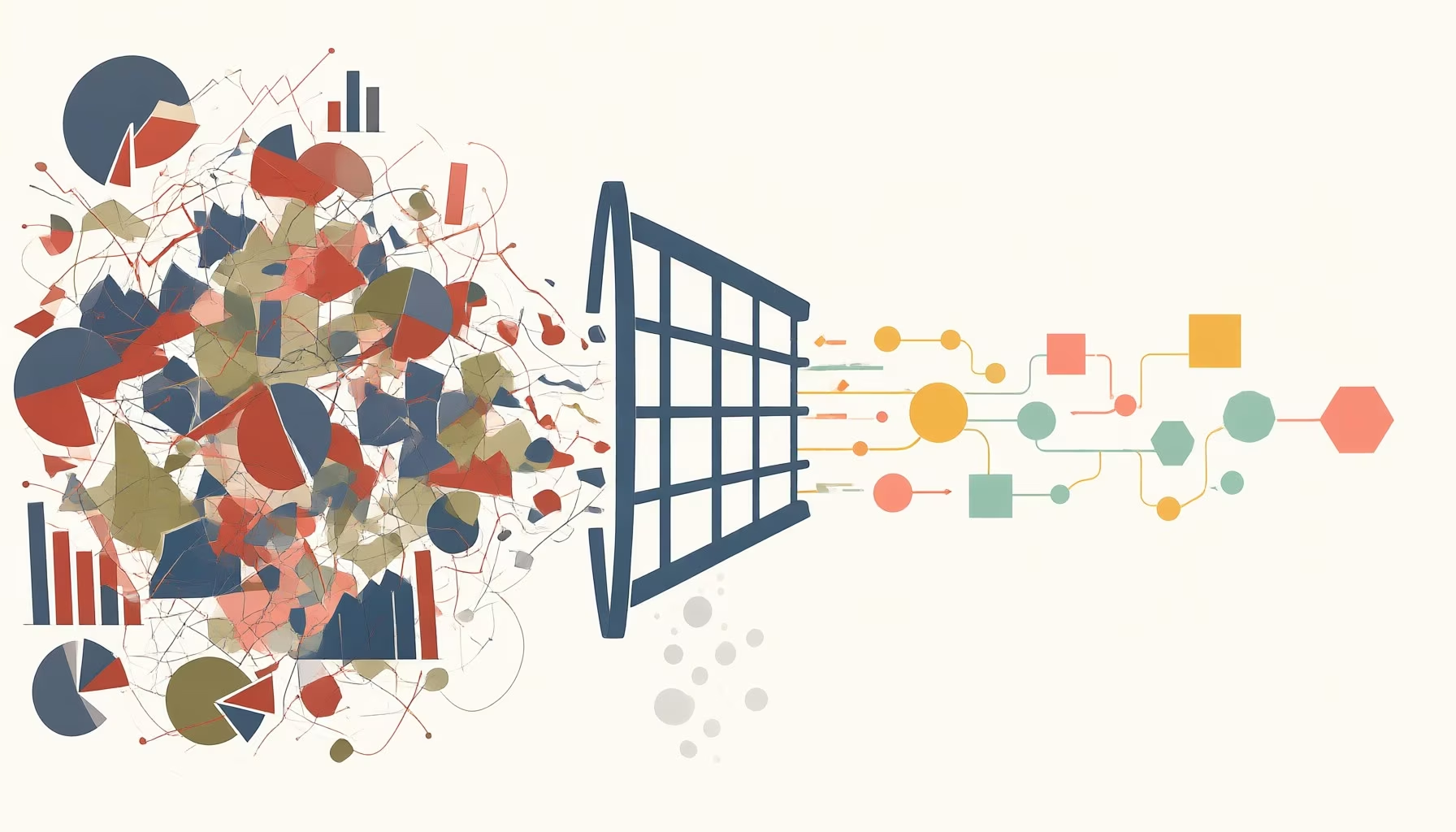
New technologies enabling terabyte-scale data analysis are causing a shift in the market away from sampling techniques. This is good because reducing sampling results in more accurate predictive analysis, which leads to better decisions and ultimately produces good things like:

  • Increased campaign response rates
  • Increased website conversion rates
  • Increased audience engagement
  • Increased customer loyalty

Chris Anderson’s article, “The Petabyte Age”, presents a number of compelling examples of how this shift away from sampling is changing the world (though I don’t agree with his related notion that simply having more data makes the scientific method obsolete).

Judah Phillips cites “Sampling, Sampling, Sampling” as one of the “reasons why web analytics data quality can stink”, stating that “… sampling… opens the possibility that you miss key data.” …

More Read

How to Innovate in a Bureaucratic Culture
Streamline service operations and reduce costs
How AI Chatbots Can Help Strengthen Your Marketing Efforts
5 Principles of Analytical Hub Architecture (Part 1)
Can AI Replace The Staff In The Judicial System?

Sampling

New technologies enabling terabyte-scale data analysis are causing a shift in the market away from sampling techniques. This is good because reducing sampling results in more accurate predictive analysis, which leads to better decisions and ultimately produces good things like:

  • Increased campaign response rates
  • Increased website conversion rates
  • Increased audience engagement
  • Increased customer loyalty

Chris Anderson’s article, “The Petabyte Age”, presents a number of compelling examples of how this shift away from sampling is changing the world (though I don’t agree with his related notion that simply having more data makes the scientific method obsolete).

Judah Phillips cites “Sampling, Sampling, Sampling” as one of the “reasons why web analytics data quality can stink”, stating that “… sampling… opens the possibility that you miss key data.”

Anand Rajaraman gave a compelling presentation at Predictive Analytics World last month entitled, “It’s the Data, Stupid!”, which built on ideas from his blog post, “More data usually beats better algorithms” , and pointed out that sampling is often less-than-optimal, stating that “it’s often better to use really simple algorithms to analyze really large datasets, rather than complex algorithms that can only work with smaller datasets.”

The bottom line is that predictive models are more accurate when they utilize a complete data set, because this approach completely avoids the risk of sampling error or bias.

Importantly, sampling is often being used to overcome the performance limitations of legacy technologies that were simply not designed to address the challenges of terabyte-scale data analysis.  Thankfully, that world has changed – technology has evolved – and for an increasingly common set of problems, sampling is no longer required (nor is it the optimal solution).  This is exciting because it opens up opportunities to solve challenging problems in ways previously not possible.

And clearly, the need to sample data is reduced as query and data load performance increase. In other words, performance matters.

Photo credit:  Paul Joseph
TAGGED:predictive modelssampling
Share This Article
Facebook Pinterest LinkedIn
Share

Follow us on Facebook

Latest News

Hidden AI, a risk?
Hidden AI, Real Risk: A Governance Roadmap For Mid-Market Organizations
Artificial Intelligence Exclusive Infographic
unusual trading activity
Signal Or Noise? A Decision Tree For Evaluating Unusual Trading Activity
Analytics Exclusive Infographic
Ai agents
AI Agent Trends Shaping Data-Driven Businesses
Artificial Intelligence Exclusive Infographic
Why Businesses Are Using Data to Rethink Office Operations
Big Data Exclusive

Stay Connected

1.2KFollowersLike
33.7KFollowersFollow
222FollowersPin

You Might also Like

Scoring data in ADAPA via web services using SQL Server Integration Services (SSIS)

9 Min Read

Careful with the S-word

5 Min Read

Some thoughts on advanced analytics in 2010

5 Min Read

The Trouble with Big Data

6 Min Read

SmartData Collective is one of the largest & trusted community covering technical content about Big Data, BI, Cloud, Analytics, Artificial Intelligence, IoT & more.

ai is improving the safety of cars
From Bolts to Bots: How AI Is Fortifying the Automotive Industry
Artificial Intelligence
ai in ecommerce
Artificial Intelligence for eCommerce: A Closer Look
Artificial Intelligence

Quick Link

  • About
  • Contact
  • Privacy
Follow US
© 2008-25 SmartData Collective. All Rights Reserved.
Welcome Back!

Sign in to your account

Username or Email Address
Password

Lost your password?