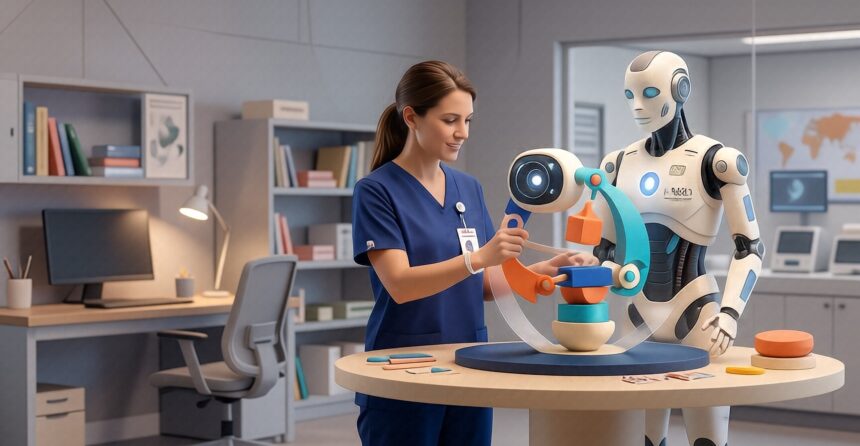
AI technology has had a tremendous impact on both the healthcare and education sectors. The market size for AI in these industries was worth $6.07 billion in 2023 and $2.75 billion in 2022 respectively. It is interesting to see how much of an impact AI has when these two fields collide.
Nursing schools are making new changes to help their students prepare for a world governed by AI technology. There are entire AI startups like iseek.ai that focus on helping nursing schools prepare their students for the future. The College of Nursing at the University of Florida has an entire page on its website that discusses the ways that it uses AI to improve its nursing programs.
AI Technology is Driving Huge Changes in Nursing Education
In recent years, the landscape of nursing education has undergone significant transformations, primarily driven by rapid advancements in technology and the increasing importance of digital literacy. The evolution of nursing education through technology and digital literacy reflects a broader shift in the healthcare landscape, underscoring the critical need for nurses to be technologically competent.
AI has been especially important in nursing education. Last December, a trio of researchers from the University of Hawai‘i talked about its impact.

“AI has the potential to transform the way that nurses provide individualized evidence-based care that aligns with patients’ needs and priorities. For example, AI is rapidly demonstrating its versatility in secondary and tertiary prevention, including an increase in accurate screening, reducing medical errors, and improving health service providers’ productivity and efficiency,” the authors write.
As healthcare systems globally embrace electronic health records (EHRs), telehealth, and other digital health tools, preparing nursing students for a tech-savvy environment is more critical than ever. In order to best prepare students for the workforce and how to become a nurse, educational institutions embrace innovative teaching methods and foster digital skills among nursing students.
Here are some ways in which nursing education is evolving in consideration of the evolutions in technology and digital literacy.
The Integration of Technology in Nursing Education
The integration of technology in nursing education has dramatically reshaped the teaching and learning experience. In addition to traditional methods, today’s nursing programs incorporate a variety of digital resources to enhance educational outcomes and cultivate competency in a tech-oriented healthcare environment.
- Simulation and Virtual Learning: High-fidelity simulation labs and virtual reality (VR) training scenarios are increasingly becoming staples in nursing curricula. These technologies allow students to practice clinical skills in a safe environment where they can make mistakes without jeopardizing patient safety. Simulations can mimic real-life scenarios, such as emergency responses or patient interactions, enabling students to hone their decision-making and critical thinking skills.
- Online Learning Platforms: With the rise of online education, nursing programs now offer hybrid and fully online courses. These platforms allow for greater flexibility in learning, accommodating students who may balance education with work or family responsibilities. In addition to traditional coursework, online learning tools often include interactive modules, video lectures, and discussion boards, promoting engagement and collaboration among students. Though these digital platforms are no longer new, the flexibility and availability to more resources has made it a staple in any good curriculum.
- EHR Training: As with most of the modern world, information is being digitized. Electronic health records (EHR) is just standard practice now, so nurses need to be familiar with the software that accompanies this resource. Nursing programs are increasingly incorporating EHR training into their curricula. Familiarizing students with various EHR systems prepare them for clinical placements and future employment, ensuring they can efficiently document patient care, access medical histories, and communicate effectively with other healthcare professionals.
- Telemedicine: The COVID-19 pandemic accelerated the adoption of telehealth, and nursing education had to adapt swiftly. Nursing programs are now incorporating telemedicine training into their curriculum, teaching students how to conduct virtual assessments, communicate with patients remotely, and use telehealth technologies effectively. AI has helped develop new software in healthcare, which includes telemedicine.
Emphasizing Digital Literacy
As the reliance on technology increases in healthcare, so does the need for nursing professionals to possess strong digital literacy skills. Digital literacy encompasses the ability to navigate, evaluate, and create information using a range of digital technologies.
With robust digital literacy skills, nursing students can leverage technology to improve patient outcomes, engage in lifelong learning, and contribute constructively to every team.
- Information Evaluation: Nurses are often tasked with sourcing and applying the latest evidence-based practices. Digital literacy equips them to critically evaluate online resources, ensuring that they rely on credible and relevant information in their clinical practice.
- Patient Education and Engagement: Nurses can be very helpful with educating patients about their health conditions and treatment options. Digital literacy enables nurses to utilize various digital tools and platforms to enhance patient engagement, helping patients better understand their health care through apps, videos, and informational websites.
- Continuous Professional Development: As with any industry, in a rapidly evolving healthcare environment, ongoing education is essential. Awareness and familiarity with digital literacy enables nurses to navigate online learning opportunities.
Challenges and Considerations
Despite the many benefits that technology and digital literacy bring to nursing education, there are a few challenges to consider. Depending on the program and funding, not all students will have equal access to technology, which can make it harder for them to enjoy the benefits of AI in healthcare. This can create disparities in learning experiences. Hence the importance of attending accredited programs.
Regardless, the influence of technology is on the rise and will continue to exert massive influence on the progression of medical care and as such means that such preparation, as stated above, will become the new expectation industry wide.