At Smart Data Collective, we want to help our readers understand why sensitive data protection has become a core public service concern in a society governed by big data. It is no longer enough for agencies to collect, store, and analyze information without asking how that information could be exposed or misused. Another thing public leaders must face is that personal records, service histories, benefits data, health details, addresses, and identity documents can create lasting harm when they fall into the wrong hands.
Public services now depend on data to deliver faster decisions, better access, and more targeted support, but that same dependence creates new risks for citizens. You need to understand how those risks grow when governments, contractors, and digital service providers handle large volumes of personal information every day. Keep reading to learn more.
Why Sensitive Data Protection Matters In Public Services
A report from Surfshark reports there were 425.7 million data breaches around the world last year. It is a reminder that data security is not only a private-sector concern, because public services often hold some of the most personal records people ever share.
A Surfshark article states, “However, not all countries contributed equally to regional numbers. In North America, for example, the United States was the primary contributor, accounting for 93% of all compromised accounts in the region. Canada followed with 5%, and Mexico contributed 1%, with all other countries below 1%. The situation is different in Asia and Europe. In Europe, five countries accounted for 81% of the region’s compromised accounts. France led with 39%, followed by Germany at half that amount with 18%, Russia at 12%, the UK at 8%, and Spain at 4%. In Asia, India accounted for 49% of the compromised accounts, with Vietnam contributing approximately four times less at 12%, and Indonesia, China and Japan each at 5%. Together, these five Asian countries accounted for 75% of the region’s total compromised accounts.”
More Read

Public agencies use data to manage schools, hospitals, tax systems, courts, benefits, transportation, emergency response, and many other services. There are serious consequences when those records are exposed, because people may not be able to change the information that was stolen. Something that makes public-sector data different from many other records is that citizens often have no real choice about sharing it.
A Total Assure report states, “Small businesses experienced a 49% cyberattack rate in 2026 with incidents occurring every 7 seconds. Average losses reach $254,000 per breach, and 60% of companies attacked close within 6 months. This data demonstrates cybercriminals’ intensified focus on small businesses as high-value, low-security targets.”
Those small-business risks also matter to public services because many agencies rely on outside vendors, local contractors, nonprofit partners, and software providers. Another thing that can create danger is a weak link in a public service supply chain, where one smaller partner may hold access to citizen data or government systems. It is easy for the public to think only large agencies are targets, but attackers often look for the simplest path into valuable records.
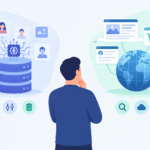
Big data can help public leaders see patterns in housing, crime, health, education, traffic, and social needs. You can also see why the same data needs strong limits, because detailed profiles can expose more about people than they expect. There are risks when agencies collect more information than they truly need, keep it too long, or share it across systems without clear controls. Something that protects the public is a data culture built around purpose, consent, access limits, staff training, and clear accountability.
Sensitive data protection is also tied to trust. It is harder for citizens to use digital services when they fear that applying for help, paying taxes, requesting records, or reporting problems could expose them to fraud. Another thing public agencies should remember is that trust can take years to build and only one breach to damage. There are real human costs when leaked data leads to identity theft, harassment, financial loss, or fear of using public programs.
Protecting sensitive data in public services is not only a technical task; it is a public duty. You should see cybersecurity, privacy, and responsible data use as part of the basic promise that public services make to the people they serve.
A society governed by big data needs public systems that can use information without treating citizens as data points alone. It is the responsibility of public leaders to protect records, reduce needless collection, and make sure digital progress does not come at the cost of personal safety.
Public services depend on trust. Whether people are applying for housing support, accessing healthcare, paying council tax, reporting an issue, or using local authority services online, they expect their personal information to be handled safely. As more public services move toward digital systems, protecting sensitive data has become one of the most important responsibilities for public sector organizations.
Sensitive data can include names, addresses, financial details, health records, identification documents, and information about vulnerable individuals. If this data is exposed, lost, or misused, the consequences can be serious. It can lead to fraud, identity theft, service disruption, reputational damage, and a loss of public confidence. For organizations that serve communities every day, maintaining that confidence is essential.
Why Data Protection Matters
Public sector organizations often manage large volumes of information across multiple departments, systems, and services. This makes data protection more complex, especially when older systems are still in use or staff are working across different platforms. A single weak point can create risks across the wider organization.
Strong data protection is not only about meeting compliance requirements. It is about making sure residents, service users, and staff are protected. When people share personal information with a public body, they are doing so because they need support, access, or guidance. They should feel confident that their details are secure.
The Risks Of Poor Data Security
Cyber threats are becoming more sophisticated, and public services can be attractive targets because of the amount and type of data they hold. Phishing attacks, ransomware, accidental data sharing, and unauthorized access can all create major problems.
Poor data security can also slow down service delivery. If systems are compromised, teams may be unable to access the information they need, causing delays for residents and extra pressure for staff. In some cases, essential services may be disrupted entirely.
This is why many organizations work with technology specialists such as Cisilion IT to strengthen digital infrastructure, improve security measures, and support safer public service delivery.
Building A Culture Of Security
Technology plays a major role in data protection, but people are just as important. Staff should understand how to recognize risks, handle information correctly, and follow secure processes. Regular training can help reduce mistakes and make security part of everyday working culture.
Clear policies are also important. Employees need to know what data they can access, how it should be stored, when it can be shared, and what to do if they suspect a breach. When everyone understands their role, organizations are better prepared to prevent and respond to threats.
Investing In Secure Systems
Outdated systems can make data protection harder. Legacy technology may lack modern security features, be difficult to update, or create gaps between departments. Investing in secure, connected systems can help public services work more efficiently while reducing risk.
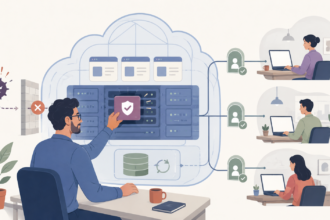
Modern IT infrastructure can support encryption, access controls, secure cloud storage, monitoring, and better backup processes. These tools help protect sensitive data while allowing staff to deliver services more effectively.
Protecting Trust For The Future
Public services rely on strong relationships with the communities they serve. Protecting sensitive data is a key part of maintaining those relationships. When organizations take security seriously, they show that they value the people who depend on them.
As digital public services continue to grow, data protection must remain a priority. With the right systems, training, and strategy in place, public sector organizations can reduce risk, improve resilience, and continue delivering services with confidence.