Every year, patients are paying larger percentages of their health care costs as a result of rising health care costs and the rise in the number of patients enrolled in high deductible plans. Due to the increase in the complexity of health care insurance plans and increases in deductibles, health care providers have a tremendous challenge on their hands on how to assist their patients in paying for the cost of care while also maintaining healthy revenue cycles.
- The Shift Toward Consumer-Driven Healthcare
- Predictive Analytics Is Improving Financing Decisions
- Personalized Payment Plans Are Becoming the Standard
- AI and Automation Are Accelerating Financial Operations
- Real-Time Data Is Improving Financial Transparency
- Data Analytics Supports Better Healthcare Access
- The Future of Patient Financing Will Be Data-Driven
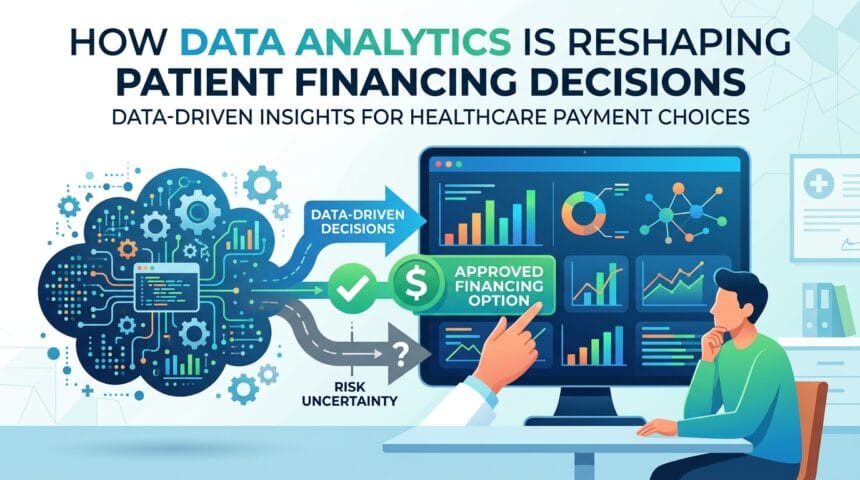
Therefore, many health care organizations are transforming how they traditionally approach patient financing by utilizing the power of data analytics. Data analytics can be used for clinical and operational performance, but they also provide insight into the patterns of patients making payments and can help measure the risk of patients not being able to pay for their care, identify personalized payment options for patients based on their specific circumstances, and improve the overall patient financial experience.
In addition, health care providers are using predictive modeling, artificial intelligence, and real-time financial information to dramatically change their current approaches to affordability and collections. As a result, a health care financing ecosystem is being created that is becoming more proactive, more personalized, and more efficient.
The Shift Toward Consumer-Driven Healthcare
Today’s healthcare marketplace is rapidly adopting elements of other consumer sectors. Patients can now evaluate their options, compare costs and make informed decisions before seeking treatment.

While the increased focus relies on the patient as a primary payer, many patients will continue to experience financial distress, creating additional pressure for providers. A recent study indicated that only 31% of patient balances are actually paid, further demonstrating the financial strain on both patients and providers.
As the patient becomes the primary payer, the provider must have greater insight into how patients will pay for services, including identifying patients who may have difficulty paying and providing options for financing. With traditional payment plan models becoming less viable in this new environment, it is essential that providers leverage data analytics to identify patients who are likely to successfully pay for services based on the financing options available to them.
Predictive Analytics Is Improving Financing Decisions
Predictive analytics is one of the most important new developments in the financing of healthcare. These tools gather large amounts of patient data, analyze it, and use that information to determine payment patterns and approximate the probability that a patient will be able to pay their medical bill.
Healthcare providers now can utilize predictive models to evaluate different factors such as:
- Previous payment history
- Insurance coverage
- Demographic information
- Income estimates
- Credit-related information
- Cost of treatment
- Historical collection trends
This data enables healthcare providers to make better financing decisions without solely relying on a static credit score or having to manually assess each individual case.
In addition to allowing healthcare organizations to make better financing decisions, predictive analytics also helps them identify which patients will require financial help much sooner in the care continuum. By identifying the need sooner, healthcare professionals can proactively provide financing options before patients experience financial distress.
Experian Health found that propensity-to-pay models increase healthcare organizations’ ability to prioritize accounts, result in less bad debt, and make the collection process more efficient from both providers’ and patients’ perspectives.
By utilizing these types of predictive analytics tools, healthcare organizations can create a more strategic way of doing business while reducing the barriers for patients to access care.
Personalized Payment Plans Are Becoming the Standard
Analytics are also allowing for more tailored patient financing. Providers traditionally provided standardised payment plans with a set timeframe and very little adaptability. However, these generic payment plans frequently did not match what a patient was actually able to afford and often were unsuccessful.
Data analytics now provides the ability to provide customized payment plans to patients based on their actual financial behaviours, and as such, can provide a more realistic and sustainable way for patients to manage their financial obligations to their healthcare providers. These mean:
- Monthly payment amounts could be altered
- Repayment timelines could be lengthened
- Deferred payment options could be made available
- Patients that may qualify for lower interest rates could be identified
- Alternative affordable programs could be recommended to patients
Providing this degree of personalized payment plans has been shown to increase patient satisfaction and increase repayment rates.
Healthcare systems have recognised that financing is not just about collecting payment. Financing is a part of the overall experience for patients of the healthcare system, and patient financing has been shown in research by CommerceHealthcare to now be aligned with other larger goals related to growth, patient access, and equity in healthcare.
When a patient has a feeling of financial support from a provider, they are more likely to act in accordance with their providers’ recommendations and maintain a long-term relationship with their provider.
AI and Automation Are Accelerating Financial Operations
AI is transforming revenue cycle management within healthcare by increasing the utilization of analytics. AI-based solutions are being utilized by many healthcare organizations to automate their financing-related processes, including identifying financial risks as well as enhancing patient communications. AI can enable healthcare organizations to quickly analyze large volumes of data that would typically take a significant amount of time to review manually.
Based on recent surveys, there has been an increase in healthcare providers implementing AI-based solutions into their revenue cycles. Examples of the use of AI in revenue cycle operations include eligibility checks, patient access, claims processing, and predicting cash flow.
Using analytics, AI-driven financing solutions can help healthcare organizations determine the best timing of when to speak with patients regarding financing options. Analytics can provide insights as to when patients are more likely to agree to finance their services prior to having them done, whereas patients are less likely to agree to financing after treatment has occurred due to increased levels of financial anxiety.
In addition to improving operational performance by using AI to perform repetitive analyses that would otherwise require significant resources to complete, automation helps improve operational efficiencies within healthcare organizations due to their ability to reduce administrative overload. As staff spend less time completing routine tasks, they can devote more time to providing high-quality care to patients while leveraging analytics tools to perform routine financial analyses.
As healthcare organizations experience staffing shortages and increasing financial pressures, operational efficiency through the use of AI and analytics will continue to be critical for their ongoing success.
Real-Time Data Is Improving Financial Transparency
Some providers are utilizing analytics tools to offer clear and accurate cost information to patients because financial transparency is a major focus of healthcare. These providers have the ability to use a real-time data system to produce an accurate estimate of the cost of procedures prior to providing the actual procedure. Their estimates will include the patient’s health insurance (i.e. insurance benefits, deductible, copayment) as well as the patient’s anticipated out-of-pocket (i.e. actual) expenses.
By providing patients with access to accurate cost estimates before a procedure, patients can make more informed decisions regarding their financial obligations and explore financing options sooner rather than later.
By providing patients with accurate cost estimates prior to treatment, it reduces the amount of billing surprises for the patient. The leading cause of dissatisfied patients is billing surprises. When a patient is provided with an accurate estimate of what they will owe the provider prior to treatment, the likelihood of the patient trusting the provider and entering into a payment plan will greatly increase.
Furthermore, predictive cost modeling will allow providers to identify financial risks associated with certain procedures or patient populations. By understanding these financial risks, healthcare organizations can allocate resources accordingly and prevent revenue leakage.
Data Analytics Supports Better Healthcare Access
In addition to enhancing operational efficiencies, strategies that utilize analytics for funding solutions can work to improve access to health care services. Many individuals have delayed or not obtained the necessary health care services due to cost concerns. Providers can leverage advanced analytics to identify patients who are likely to leave the health care system because they cannot afford treatment; they are then able to reach out to the patient sooner with a financing option.
Some organizations have begun to develop new artificial intelligence-based underwriting models that go beyond the use of conventional credit score systems. These new underwriting models leverage a wider range of financial events to offer financing options to patients with limited credit.
This evolution could help to minimize discrepancies in access to health care, all the while enhancing treatment options for under-represented populations. With the increasing focus on the consumer, analytics-related financing tools will likely become a routine part of patients’ experiences and not simply an option available for patients.
The Future of Patient Financing Will Be Data-Driven
Data Intelligence and Automation are the future of healthcare financing. Healthcare providers have an even greater challenge when trying to provide patient-focused care while also ensuring financial sustainability. By providing analytical data to their providers, they can make more informed financing choices while improving transparency and improving the affordability of providing care.
In addition, patients are increasingly expecting a financing experience similar to that which they experience in their everyday life, which places more pressure on healthcare providers to stay on the cutting edge of creativity when it comes to innovating their financing strategies. If a healthcare provider does not find a way to innovate their financing strategy and remain competitive in a continuously changing environment, they will eventually fall behind all of their competitors.
As the use of predictive analytics and AI continues to develop, performing predictive analytics will allow for patient financing decisions to be made in a manner that is faster, more accurate, and more customized. As a result of these advancements, providers will not only improve the performance of their revenue cycles, but will also contribute to improving the patient trust and access to healthcare in general by improving the affordability of healthcare.
Overall, the transition from reactive billing functions to proactive strategies of utilizing data to assist in financing will contribute in two ways: to provide for greater financial stability to the provider and to improve the health care outcomes of patients.