
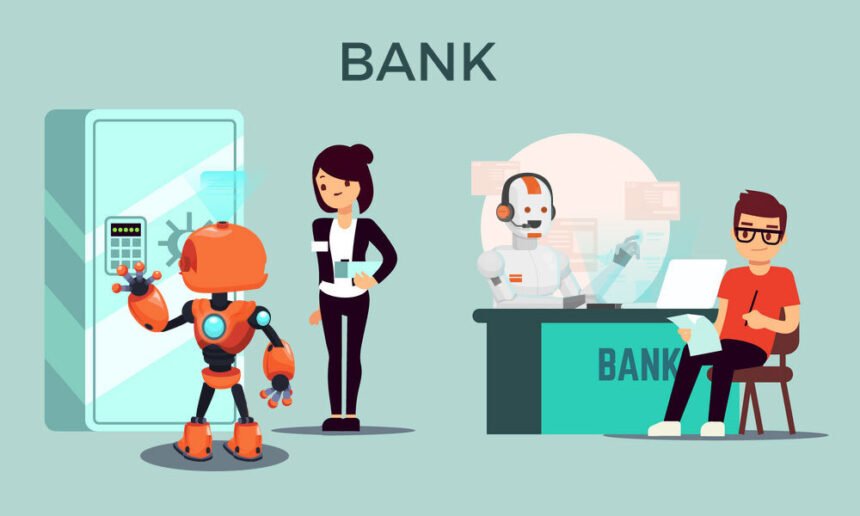
Artificial intelligence (AI) was once mostly associated with the video game industry, but financial institutions are starting to realize that this technology can do a lot for them. Perhaps the most common use of AI modules in the banking industry involves the calculation of interest rates and home values. Intelligent software can sort through historical pricing charts to develop a model that more accurately predicts the financial future by taking numerous factors into account. It’s these additional factors that indicate that artificial intelligence can benefit the finance industry.
Mining Big Data from Banks
Historical pricing models have normally looked at such things as seasonal demand to determine the future value of any commodity. Banks have been collecting far more information than this for quite some time, but only a recent push for data monetization has forced developers to take a second look at countless other factors. AI-based solutions determine the value of both physical and investment products by looking at the following:
-How demand for one type of product influences another

-Price fluctuations of different investment products against one another. This can, in return, enhance the benefits of inventory management.
-The geographical location of consumers who make financial choices
–Post-trade allocation preferences of different investors
-Trading patterns that shape hourly prices
-Volatility of prices traded on an open exchange
-Relative costs of goods and services in different markets
Banks and brokerage houses have been compiling this information for decades, but they haven’t had much of a way to analyze it until now. AI modules are taking big data elements like these and mining them for opportunities. Additionally, new IoT devices installed in regular teller stations are helping to identify patterns in how consumers deposit and withdraw funds. This may soon help to reduce the risk of cash crunches caused by a surfeit of sudden withdrawal orders given to s single physical bank.
AI and the World of Creditors
Most consumers are by now familiar with the concept of checking their annual credit score. Each time an institution decides to look at an individual’s credit score, it leaves a mark called an inquiry. Companies may pull someone’s score when they’re applying for a loan or asking for a job.
Soft pulls, such as when a consumer performs an annual credit check when doing their taxes, have little influence on a person’s overall score. Hard inquiries, such as those caused by a person applying for a new mortgage, are far more serious. While sophisticated mathematical models are in place to determine the severity of any credit pull, they’re often left up to a large degree of interpretation.
Credit bureaus are phasing in new scorecard technology that takes into account potential risk and past performance in order to apply their own rules more fairly to consumers. In order to prevent extending a line of credit to someone who may default on a loan, financial institutions are in turn building AI-based credit risk models. These models use predictive reasoning coupled to self-learning neural networks in order to determine the total risk of any specific loan.
Neural networks learn in the same manner that people do. By making use of a database stored on a virtualized file system, risk models can avoid repeating past mistakes. Consumers can then be offered better rates if a database finds no indication that they’re a risky investment.
Streamlining Compliance Tasks
News services continue to report on these trends in the financial sector. Nevertheless, computer security experts believe that regulatory and compliance tasks are going to be the area in which AI algorithms change the financial industry the most. In order to deliver value to operators, any AI needs to have a secure digital backbone. Data collected for analysis also has to be anonymized in many jurisdictions.
New laws like the General Data Protection Regulation (GDPR) require companies to be far more open about how they’re using client data. AI software can streamline the process of wiping any personally identifying information from stored data while automating the reporting process at the same time.
From a consumer’s standpoint, the biggest change will probably come in the form of increased account protections. The same predictive analytical technology that’s mining big data storage systems for actionable financial patterns will also occasionally notice irregularities. As these programs continue to mine, they’ll get better at spotting problems and alerting consumers to anything awry with their accounts. As a result, regular banking customers may soon reap the benefits of AI technology every bit as much as the institutions themselves.