Cookies help us display personalized product recommendations and ensure you have great shopping experience.

By using this site, you agree to the Privacy Policy and Terms of Use.
Accept
SmartData CollectiveSmartData Collective
  • Analytics
    AnalyticsShow More
    warehouse accidents
    Data Analytics and the Future of Warehouse Safety
    10 Min Read
    stock investing and data analytics
    How Data Analytics Supports Smarter Stock Trading Strategies
    4 Min Read
    predictive analytics risk management
    How Predictive Analytics Is Redefining Risk Management Across Industries
    7 Min Read
    data analytics and gold trading
    Data Analytics and the New Era of Gold Trading
    9 Min Read
    composable analytics
    How Composable Analytics Unlocks Modular Agility for Data Teams
    9 Min Read
  • Big Data
  • BI
  • Exclusive
  • IT
  • Marketing
  • Software
Search
© 2008-25 SmartData Collective. All Rights Reserved.
Reading: Extreme Redundancy – Don’t Leave Home Without It!
Share
Notification
Font ResizerAa
SmartData CollectiveSmartData Collective
Font ResizerAa
Search
  • About
  • Help
  • Privacy
Follow US
© 2008-23 SmartData Collective. All Rights Reserved.
SmartData Collective > Data Management > Best Practices > Extreme Redundancy – Don’t Leave Home Without It!
Best PracticesCommentaryCulture/LeadershipDecision ManagementExclusiveRisk ManagementSecurity

Extreme Redundancy – Don’t Leave Home Without It!

paulbarsch
paulbarsch
4 Min Read
SHARE

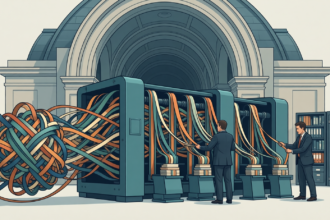
Visa’s command and control center—somewhere on the east coast of the United States—is a case study in redundancy with intense security, backups (for everything), and failover processes for system failures. And while most businesses don’t require these same levels of high availability for their own information networks and data centers, Visa can certainly teach a course on risk management to those who don’t believe such redundancy is necessary.

Visa’s command and control center—somewhere on the east coast of the United States—is a case study in redundancy with intense security, backups (for everything), and failover processes for system failures. And while most businesses don’t require these same levels of high availability for their own information networks and data centers, Visa can certainly teach a course on risk management to those who don’t believe such redundancy is necessary.

In the past four years, the unthinkable is happening more often than predicted. From the global stock market meltdown of 2008, to the Japanese tsunami disaster at Fukushima, to flooding in Thailand, and many other prominent examples, there’s Black Swans aplenty without signs of abatement.

More Read

Watson, you know my methods… IBM moves towards HAL
Artificial Intelligence In Healthcare Is Changing The Fabric Of The Industry
Data Center Security: Not Just About Cyber
7 Accounting Practice Management Software that Rely on AI
SAP’s SAPPHIRENOW: Women’s Leadership Summit

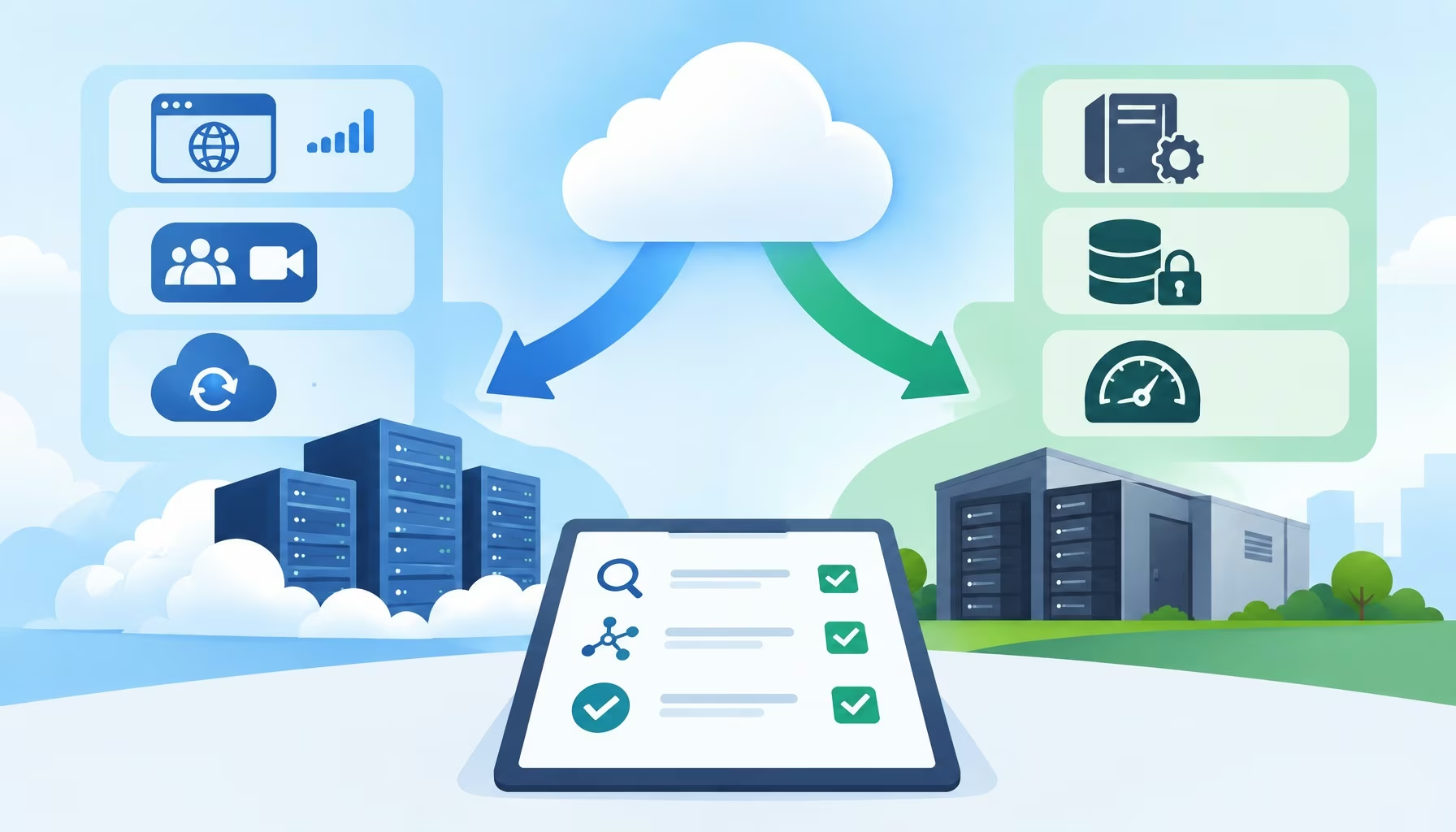
Most of these events were near impossible to predict, but it’s entirely within the realm of risk management to prepare for heavy tails. The key to countering effects from extreme outlier events, says Black Swan author Nassim Taleb, is to build redundancy into business processes. He counsels companies, enterprises and even countries to “avoid optimization (and) learn to love redundancy.”

And while it may be a progressive example, Visa provides a well documented case study into managing fourth quadrant risk.  A Fast Company article titled, “Visa is Ready for Anything” provides a rare view in Visa’s data centers where 150 million daily transactions are processed.  Taking a page from NASA’s Mission Control, this data center monitors Visa network security, availability and capacity on a 24x7x265 basis. And meeting the definition of a “Tier 4” data center; “every major system—mainframes, air conditioners batteries etc, has a backup.”  With backups for backups and disaster planning in place, this data center is designed to withstand attacks from all sorts of events – terrorism, hackers, and even natural disasters such as earthquake and/or tornado.

While it’s true that Black Swans are about “unknown, unknowns”, and preparation for every type of risk is not only unrealistic but also too expensive, there is much companies can do to build more redundancy into daily operations. Redundancy is especially relevant as “interlocking fragility” of global communication, supply chain, and financial networks means correlations move to one with increasing frequency.

Today’s business culture celebrates “optimization” for every process; in essence living as near the edge as possible without falling off the cliff.  That’s a dangerous strategy for today’s interconnected world, especially because extreme events can take networks offline for hours, days and even weeks, costing companies tens of millions in lost revenues.

Critics of redundancy argue that robustness is too expensive. But Dr. Taleb counters; “Redundancy is like (being) long on an option, you certainly pay for it but it may be necessary for survival.” 
TAGGED:black swandata centerfragilityglobal supply chainnassim talebredundancyrisk managementrobustnesssecurityThailand flooding
Share This Article
Facebook Pinterest LinkedIn
Share

Follow us on Facebook

Latest News

macro intelligence and ai
How Permutable AI is Advancing Macro Intelligence for Complex Global Markets
Artificial Intelligence Exclusive
warehouse accidents
Data Analytics and the Future of Warehouse Safety
Analytics Commentary Exclusive
stock investing and data analytics
How Data Analytics Supports Smarter Stock Trading Strategies
Analytics Exclusive
qr codes for data-driven marketing
Role of QR Codes in Data-Driven Marketing
Big Data Exclusive

Stay Connected

1.2KFollowersLike
33.7KFollowersFollow
222FollowersPin

You Might also Like

The ATI’s Radeon HD 5970 is a Supercomputer in your desktop

5 Min Read

Proven method reduces data center energy consumption by 70%

4 Min Read

Breaches of data confidentiality can be costly

2 Min Read

What’s Next – Predictive Scores for Healthcare?

4 Min Read

SmartData Collective is one of the largest & trusted community covering technical content about Big Data, BI, Cloud, Analytics, Artificial Intelligence, IoT & more.

data-driven web design
5 Great Tips for Using Data Analytics for Website UX
Big Data
ai is improving the safety of cars
From Bolts to Bots: How AI Is Fortifying the Automotive Industry
Artificial Intelligence

Quick Link

  • About
  • Contact
  • Privacy
Follow US
© 2008-25 SmartData Collective. All Rights Reserved.
Go to mobile version
Welcome Back!

Sign in to your account

Username or Email Address
Password

Lost your password?