We use cookies, including third-party cookies from Google to serve personalized ads through AdSense, to operate this site and understand how it is used. By continuing to browse, you accept this use. See our Privacy Policy and Terms of Use for details, including how to opt out of personalized advertising.
Accept
SmartData CollectiveSmartData Collective
  • Analytics
    AnalyticsShow More
    chatgpt image jul 21, 2026, 04 34 30 pm
    4 Core Benefits of Predictive Maintenance after Vibration Analysis
    10 Min Read
    How Does Data Mining Boost Customer Satisfaction in Logistics? Harnessing Analytics for Results -- AI-generated illustration
    How Does Data Mining Boost Customer Satisfaction in Logistics? Harnessing Analytics for Results
    11 Min Read
    chatgpt image jul 13, 2026, 04 23 45 pm
    How Data Analytics Helps Companies Improve User Engagement
    19 Min Read
    chatgpt image jul 13, 2026, 03 59 46 pm
    How Data Analytics Improves Multi-Location Search Strategies
    10 Min Read
    cybersecurity efforts
    How Behavioral Analytics and AI Are Redefining Cybersecurity for Boca Raton Businesses
    14 Min Read
  • Big Data
  • BI
  • Exclusive
  • IT
  • Marketing
  • Software
Search
© 2008-25 SmartData Collective. All Rights Reserved.
Reading: Could Big Data Play a Key Role in Fighting Terrorism?
Share
Notification
Font ResizerAa
SmartData CollectiveSmartData Collective
Font ResizerAa
Search
  • About
  • Help
  • Privacy
Follow US
© 2008-23 SmartData Collective. All Rights Reserved.
SmartData Collective > Big Data > Could Big Data Play a Key Role in Fighting Terrorism?
Big Data

Could Big Data Play a Key Role in Fighting Terrorism?

faizan4it
faizan4it
4 Min Read
Could Big Data Play a Key Role in Fighting Terrorism?
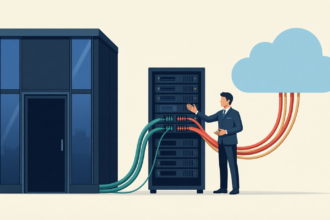
Illustration generated with FLUX.2 [klein 4B] via Cloudflare Workers AI.
SHARE

With the earth-shattering news that yet another pair of terrorist attacks hit both the United States and France in the past few days, it’s little wonder that people are looking for answers. How do we balance privacy concerns with national security? How are the greatest intelligence apparatuses in the world missing the large-scale patterns and the micro-transactions that signal a future event? 

Creating a National Database of Gun Owners is Critical 

Yes, the Second Amendment is as quintessentially American as baseball and apple pie, but tracking gun ownership in a database is not the same as disarming the populace at large. The entire point behind the more than 23 million background checks performed by the Federal Bureau of Investigations in 2016 was to better identify potential threats, before the completion of a firearm purchase. 

While the FBI does perform background checks on gun purchases conducted by individuals and companies that hold a Federal Firearm License, as mandated by the Brady Violence Prevention Act (a.k.a. The Brady Law), there is currently no unified, national database of gun owners. 

Without a Database, Establishing and Identifying Patterns from Data is Nearly Impossible 

Federal and State agencies who take on the challenge of keeping us safe from terrorist attacks have to piece together data from a variety of sources. In corporate America, a data analyst would demand that a singular database be created in order to make data-mining a more efficient and reliable process. 

Unfortunately, the Federal Government isn’t know for its efficiency. And, if it had the political will to create a registry, it would incur the wrath of the gun lobby in the United States. Protecting the rights of citizens is important, but demanding that only minimal tracking of firearms on a national level take place, we’re handicapping law enforcement and making the transfer of weapons to our enemies far easier. 

How Would a National Database of Gun Owners Work? 

To understand how a database could be successfully implemented, while still respecting the privacy of innocent individuals, the legislators need to look no further than the current System ID infrastructure that is utilized in the private sector. At the point of manufacture, firearm producers can barcode their devices and register them in the database.  

While firearms currently have serial numbers etched into them, this information is only rarely entered into comprehensive databases that track the weapon from manufacturer to vendor and finally to consumer. Having a unified System ID infrastructure would allow for law enforcement to keep track of registered events involving a specific firearm (i.e. manufacture, purchase and sale). 

Online, Accessible and Efficient 

By providing gun owners the ability to register their firearms online and then self-report sales (including identifying information of the new owners), a national database could be maintained. Will it be perfect? No, there will always be a degree of data-loss as unreported transactions take place. But, having a good-faith effort to track weapons and the purchase of weapons would provide law enforcement and their data analysts the ability to better understand the threat-vector; hopefully preventing a large number of future terrorist events.

Share This Article
Facebook Pinterest LinkedIn
Share
Byfaizan4it
Follow:
I love Tech authors, publishing, and talking incessantly about them. My passion is partnering with authors to bring worthwhile content to publication. I started Outreach-Media agency to contact journalists for publishing content on 9listed.com.

Follow us on Facebook

Latest News

How Search Engine Indexing Lags Behind Large-Scale Website Domain Migrations -- AI-generated illustration
How Search Engine Indexing Lags Behind Large-Scale Website Domain Migrations
News
How Great Content Moves Through A Marketing Ecosystem -- AI-generated illustration
How Great Content Moves Through A Marketing Ecosystem
Exclusive Infographic Marketing
What Your Brand Misses That Data Reveals -- AI-generated illustration
What Your Brand Misses That Data Reveals
Big Data Exclusive Infographic
5 Common Mistakes Businesses Make During the Risk Assessment Process -- AI-generated illustration
5 Common Mistakes Businesses Make During the Risk Assessment Process
Business Intelligence Exclusive Risk Management

Stay Connected

1.2KFollowersLike
33.7KFollowersFollow
222FollowersPin

You Might also Like

Electrospinning is a process that uses an electrical charge to...
Business IntelligenceData MiningData WarehousingPredictive Analytics

Electrospinning is a process that uses an electrical charge to…

2 Min Read
Big Data - Quantity vs Quality: Don’t confuse lots of data with good data
AnalyticsData Quality

Big Data – Quantity vs Quality: Don’t confuse lots of data with good data

6 Min Read

How Online Stock Trading is Being Impacted by Big Data

4 Min Read
big data and games matching
Big DataExclusive

How Big Data Can Improve Multiplayer Game Matching

6 Min Read

SmartData Collective is one of the largest & trusted community covering technical content about Big Data, BI, Cloud, Analytics, Artificial Intelligence, IoT & more.

From Bolts to Bots: How AI Is Fortifying the Automotive Industry
Artificial Intelligence
AI chatbots
AI Chatbots Can Help Retailers Convert Live Broadcast Viewers into Sales!
Chatbots

Quick Link

  • About
  • Contact
  • Privacy
Follow US
© 2008-26 SmartData Collective. All Rights Reserved.
Welcome Back!

Sign in to your account

Username or Email Address
Password

Lost your password?