The products around us are growing more complex every year. Mechanical designs are increasingly intricate, software development is ever more powerful, not to mention more and more physical products are being incorporated into the internet of things or contain distinct software. As a result, manufacturers need to be more agile than ever, and most struggle to keep up.
Cloud technology is among the biggest changes. The market for cloud services is worth over $400 billion and growing.
While linear development processes have served manufacturers well for decades, future products require multidimensional planning. Now is the time for companies deploying limited tools to consider switching to cloud-based data storage and powerful product planning tools.
The Limitations of Linear Manufacturing Processes
Data silos have become one of the biggest restraints with using linear manufacturing processes. Even when a manufacturer adopts advanced process solutions, the legacy data collection problem remains in isolated channels. For example, if your company collects data from your new equipment while collecting data from other vendors separately, you may end up with incompatible file formats. How will you analyze your data to get a comprehensive picture of your products if you cannot combine your stats?
More Read

Problems with compatibility can also occur across internal departments. Your marketing, product, and design departments may be using the latest tools, but if their data is not compatible or integrated into the same destination, it can cause delays. You may have trouble organizing all your reports, and you may miss crucial information altogether.
Agility Is Important at Every Stage of Manufacturing
Agility is an essential quality at every stage of manufacturing. When your company is better equipped to make efficient, informed decisions, you’ll be better able to deliver competitive products to your markets in shorter time spans.
Agility Begins In the Cloud
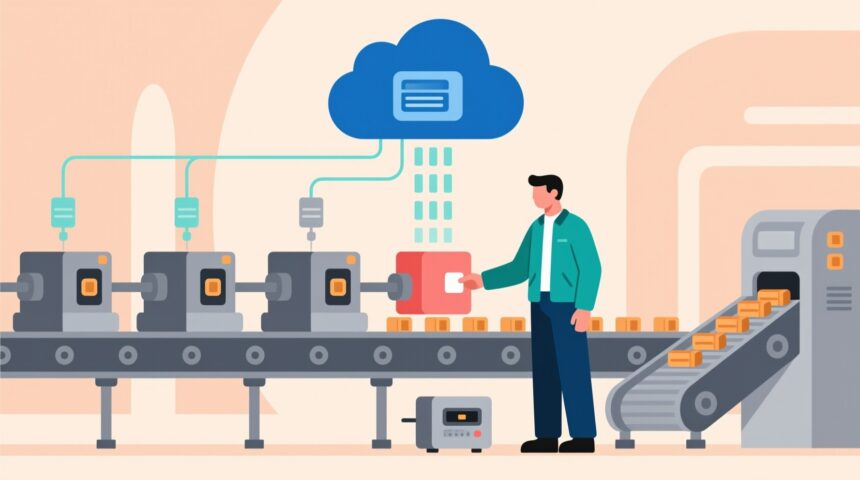
When implemented correctly, the cloud enables organizations to eliminate data silos and create one source of truth for the entire organization, regardless of where your teams are located. The cloud also enables you to apply powerful analytics over your data to prevent anyone in your organization from having to interpret raw data. Rather than spending precious hours pouring over the figures, your teams can use the cloud to deliver the best interpretations of the stats automatically.
The Cloud Saves You Time
Using the cloud helps your teams communicate and collaborate more efficiently. Imagine your design team creates a 3D rendering of a prototype, then sends it to the cloud, where your factory in another time zone gets an automatic notice to download the file. They can then create a 3D physical version to analyze, test, and send immediate feedback to the design team while preparing their production line for the new product. Simultaneously, your marketing team can examine the design and build a campaign story around it.
The Cloud Increases Functionality
Product planning teams that use the cloud have much more flexibility in managing their teams than those still using a suite of rigid tools with separate functions. Instead, product planning teams can use the cloud to communicate, collaborate, analyze, and make decisions in one centralized location. Product management becomes agile, flexible, and functional with the right software platform.
Reliable and Trusted Security
The idea that the cloud lacks reliable security is completely outdated. Most cloud service providers deliver superior network security and safe infrastructure to resist cyber attacks and include disaster recovery contingency plans. Most manufacturers do not maintain nearly the same level of security for their on-site servers and systems as cloud service providers do. It’s fairly common knowledge nowadays that moving to the cloud will actually enhance your network and infrastructure security rather than decrease it.
When manufacturers embrace the possibilities using the cloud delivers, their systems and processes become far more efficient and flexible than before. Designs can evolve simultaneously, rather than in a linear, stunted function, making the manufacturing process much better equipped to handle the increasing complexity of products.
Choosing a Cloud platform
The cloud is not pre-equipped to make your manufacturing process more efficient. You’ll want to find the right cloud software that is designed for manufacturing. More and more cloud platforms offer manufacturers streamlined processes, so how do you find the right one for your company? When researching and testing the platform that is right for your company, there are several factors to consider:
- Does the platform allow seamless integration of your existing data?
- Does the platform eliminate your data silos into one accessible source of truth?
- Can your teams work efficiently and collaboratively on product design?
- Do they prioritize security to protect your intellectual property?
- Do they create features that are useful for manufacturing?
- Do they offer helpful support and guidance when using their platform?
The SaaS solutions that offer the most agility, security, and powerful features use the cloud to power their apps and manage their data. With the possibilities of the cloud, SaaS companies can scale their service based on what each client needs for capacity. The cloud can be a game-changer for manufacturers who find the right software for their needs.
Gocious is an example of a tech start-up using the cloud to deliver specific application functionality. We’ve created Product Roadmap Management software to help manufacturers become more agile with clear data visualizations and unique competitive analysis features.