Start a laboratory information system (LIS) shortlist with the work your lab actually does. Ask who runs the software, which interfaces you will need and whether a clinician can find a corrected result in the electronic health record (EHR). The products below cover hospital, outreach and independent lab settings.
- What to check before comparing LIS products
- NovoPath
- Epic Beaker
- Oracle Health PathNet
- Clinisys
- LigoLab
- Clinisys Orchard
- CGM LABDAQ
- XiFin Empower LIS
- How to Pick the Right System
- Frequently Asked Questions
- What is the difference between a true SaaS LIS and a hospital EHR module?
- Why does interoperability matter when choosing a laboratory information system?
- Which labs benefit most from an integrated revenue cycle management platform?
- EHR Fit and Specialty Workflows
Cloud hosting describes where the software runs. SaaS describes who operates and updates it. EHR integration describes how the order and result travel. Compare all three, then run the same sample case through each finalist.
- Confirm who owns upgrades, backups and interface retesting.
- Watch an order, a result and a correction reach the right patient record.
- Request separate prices for the LIS, interfaces, support and any viewing or billing modules.
A cloud-hosted LIS can be a dedicated installation run for one lab. A SaaS vendor operates the application as a service and manages the release process. In either case, confirm who maintains local instrument interfaces and who tests them after updates. A hospital EHR module can itself be hosted or managed as a service.
What to check before comparing LIS products
Before comparing specific vendors, weigh each platform’s cloud delivery model and integration depth alongside its clinical fit. The strongest platforms tend to share a few qualities:
- A written division of responsibility for application updates, uptime and local connections
- Strong interoperability with EHRs, instruments, scanners and billing systems
- Deep support for the lab’s core specialties, whether anatomic, clinical, molecular or veterinary
- Documented scanner and viewer integration for labs that use digital pathology
- Implementation and support teams who understand laboratory workflows
No single architecture fits every lab. A hospital tied to a specific EHR has different integration priorities than an independent dermatopathology group evaluating cloud-hosted specialty software. The list below reflects those differences.

It also helps to think about the next five years, not just today. A lab that plans to add digital pathology, open new locations or expand into molecular testing needs a platform that can grow with those plans. Switching systems is expensive and disruptive, so the right choice should still fit well long after the first contract term ends.
| LIS Platform | Target Setting | Key Specialties | Architecture / Integration Model |
|---|---|---|---|
| NovoPath | Independent labs, multi-site groups, acquisition mode | Anatomic, molecular, veterinary pathology | Multi-tenant SaaS on Azure, per vendor |
| Epic Beaker | Hospitals and health systems running Epic | Clinical pathology, anatomic pathology | EHR module, shared database |
| Oracle Health PathNet | Hospital labs running Oracle Health EHR | General laboratory, microbiology, blood bank, anatomic pathology | EHR alignment |
| Clinisys | Large hospital systems, international markets, enterprise organizations | Clinical, anatomic pathology, molecular, public health | Enterprise-scale portfolio |
| LigoLab | Independent labs managing own billing | Anatomic pathology, clinical laboratory, molecular diagnostics, revenue cycle management | Single platform with integrated RCM |
| Clinisys Orchard | Hospital labs, reference labs, physician office labs, outreach programs | Clinical laboratory, outreach operations | Rules-based automation |
| CGM LABDAQ | Physician office labs, smaller independent clinical labs | Clinical testing workflows | Connectivity with instruments and practice systems |
| XiFin Empower LIS | Diagnostic labs prioritizing revenue performance | Laboratory operations, billing | SaaS LIS with an Empower RCM integration |
NovoPath
NovoPath fits labs focused on anatomic, molecular and veterinary pathology.
NovoPath’s digital pathology workflow links slides to the case and can open an external viewer or its built-in viewer. The vendor specifies that the built-in viewer is not for diagnostic use. Ask how your lab’s validated viewing setup would connect to the case and the report.
NovoPath describes its Azure service as multi-tenant SaaS with centrally managed updates. Independent and multisite labs can test accessioning, slide matching and reporting at two locations in the same demo.
Epic Beaker
Epic Beaker is the laboratory module within the Epic EHR ecosystem. It includes both clinical pathology and anatomic pathology components and connects tightly with the rest of Epic’s applications.
Beaker makes sense for hospitals and health systems already running Epic, where a shared database and familiar interface simplify ordering and results across departments. For independent labs or outreach programs serving many outside practices, the comparison turns on how those practices send orders and receive results.
Oracle Health PathNet
Oracle Health’s laboratory portfolio, historically associated with Cerner PathNet, serves hospital labs using Oracle Health. It covers general laboratory, microbiology, blood bank and anatomic pathology functions.
Like Beaker, its advantage is alignment with the parent EHR. Health systems standardized on Oracle Health can choose PathNet to keep data flowing in one ecosystem.
Clinisys
Clinisys offers several laboratory products, including the former Sunquest products. Clinisys also acquired Orchard Software in July 2025. Its solutions span clinical, anatomic pathology, molecular and public health settings, with a strong presence in large hospital systems and international markets.
Clinisys fits organizations that need enterprise-scale coverage across many disciplines and sites. Smaller independent labs may find the portfolio more extensive than they need.
LigoLab
LigoLab combines anatomic pathology, clinical laboratory, molecular diagnostics and revenue cycle management in a single platform. Labs that want LIS and billing from one vendor often put LigoLab on their shortlist.
Its integrated RCM tools appeal to independent labs that manage their own billing and want tighter control over claims and collections.
Clinisys Orchard
Clinisys Orchard includes the Harvest, Enterprise and Point-of-Care products. Compare the specific Orchard product and its interfaces with the other Clinisys products on your shortlist.
Orchard works well for clinical-focused labs and outreach operations. Labs centered on complex anatomic pathology workflows may want to compare its depth in that area against specialty platforms.
CGM LABDAQ
CGM LABDAQ is available onsite or hosted by CompuGroup Medical and serves clinical labs including physician office, independent and hospital labs. It focuses on straightforward clinical testing workflows and connectivity with instruments and practice systems.
LABDAQ suits labs with primarily clinical test menus that don’t need an enterprise system.
XiFin Empower LIS
XiFin Empower LIS is a SaaS laboratory system that can connect to the company’s Empower revenue cycle management (RCM) product. Ask which RCM features require a separate purchase and what data crosses between the products.
The system appeals to diagnostic labs where revenue performance sits at the top of the priority list.
How to Pick the Right System
Pick a laboratory information system that supports your specimen workflows and connects to the systems your lab uses. Start with these checks before shortlisting vendors.
- Map current workflows and pain points before talking to vendors
- Decide whether alignment with a hospital EHR outweighs specialty depth
- Ask every vendor to demonstrate a real case from your specialty
- Confirm how digital pathology connects to the case record
- Speak with reference customers who look like your lab
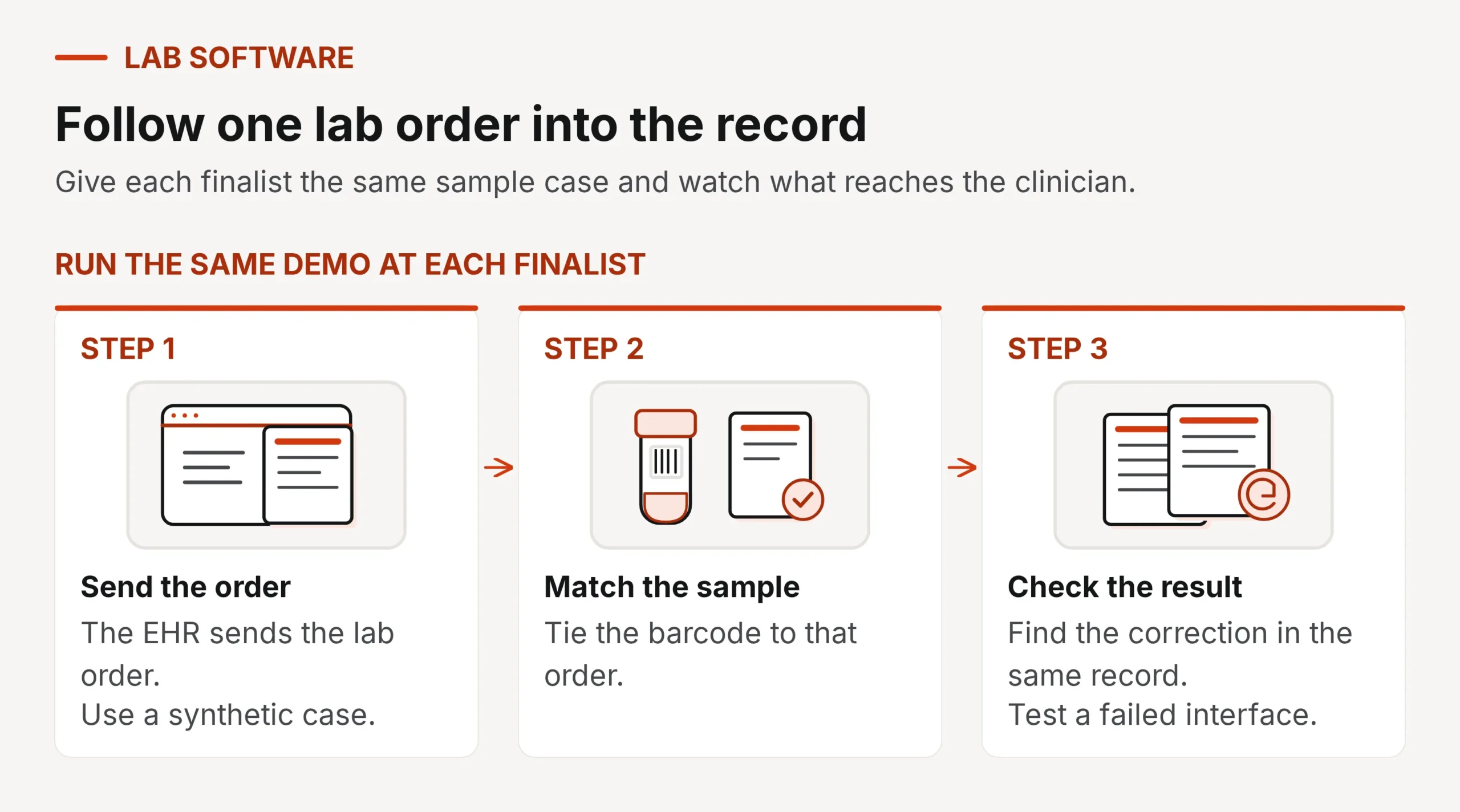
Give every finalist the same synthetic case. Have the lab receive the EHR order, match the specimen barcode, deliver a preliminary and final result, and send a correction. Record where the clinician sees each version and what happens if the result interface is unavailable. Ask who fixes a failed message after go-live.
For U.S. labs subject to CLIA, use the corrected report as an acceptance test. The federal test-report rule requires labs to notify the people using an erroneous result promptly, issue a corrected report, and retain both the original and corrected reports. Ask the vendor to show where a reviewer can retrieve either version.
Frequently Asked Questions
What is the difference between a true SaaS LIS and a hospital EHR module?
SaaS describes how a vendor operates and updates the software. An EHR module describes where the lab workflow fits inside a health record system. Ask who hosts and supports the specific product, and test both the hospital’s own orders and orders from outside practices.
Why does interoperability matter when choosing a laboratory information system?
An interface can deliver a routine result while handling corrections or amended reports differently. Verify what the receiving system displays, whether it links the correction to the original result and who can see the audit trail.
Which labs benefit most from an integrated revenue cycle management platform?
An integrated RCM product is worth testing if your lab handles claims in-house. Ask a finalist to show how a corrected result or missing order field moves to billing, then check which functions are included in the quoted package.
EHR Fit and Specialty Workflows
Record the demo results and who owns each unresolved interface or workflow. A system can fit the lab’s specialty and still require work at the EHR, instrument or billing boundary. Get those responsibilities and costs in writing.