We use cookies, including third-party cookies from Google to serve personalized ads through AdSense, to operate this site and understand how it is used. By continuing to browse, you accept this use. See our Privacy Policy and Terms of Use for details, including how to opt out of personalized advertising.
Accept
SmartData CollectiveSmartData Collective
  • Analytics
    AnalyticsShow More
    chatgpt image jul 21, 2026, 04 34 30 pm
    4 Core Benefits of Predictive Maintenance after Vibration Analysis
    10 Min Read
    How Does Data Mining Boost Customer Satisfaction in Logistics? Harnessing Analytics for Results -- AI-generated illustration
    How Does Data Mining Boost Customer Satisfaction in Logistics? Harnessing Analytics for Results
    11 Min Read
    chatgpt image jul 13, 2026, 04 23 45 pm
    How Data Analytics Helps Companies Improve User Engagement
    19 Min Read
    chatgpt image jul 13, 2026, 03 59 46 pm
    How Data Analytics Improves Multi-Location Search Strategies
    10 Min Read
    cybersecurity efforts
    How Behavioral Analytics and AI Are Redefining Cybersecurity for Boca Raton Businesses
    14 Min Read
  • Big Data
  • BI
  • Exclusive
  • IT
  • Marketing
  • Software
Search
© 2008-25 SmartData Collective. All Rights Reserved.
Reading: What Big Data Doesn’t Appear to Tell Us, But Actually Does
Share
Notification
Font ResizerAa
SmartData CollectiveSmartData Collective
Font ResizerAa
Search
  • About
  • Help
  • Privacy
Follow US
© 2008-23 SmartData Collective. All Rights Reserved.
SmartData Collective > Analytics > Workforce Analytics > What Big Data Doesn’t Appear to Tell Us, But Actually Does
AnalyticsBig DataBusiness IntelligenceData ManagementInside CompaniesJobsWorkforce Analytics

What Big Data Doesn’t Appear to Tell Us, But Actually Does

MIKE20
MIKE20
4 Min Read
What Big Data Doesn't Appear to Tell Us, But Actually Does
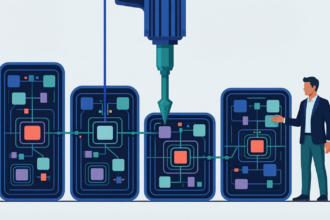
Illustration generated with Qwen Image.
SHARE

While researching Too Big to Ignore, I discovered that Big Data is already having a major impact on a wide swath of industries and functions. It’s interesting to note, though, that what the data doesn’t appear to say can actually say quite a bit.

Contents
  • New Questions and Answers
  • Simon Says
  • Feedback

In How Big Data Is Changing the Whole Equation for Business, Stephen Rosenbush and Michael Totty write about the impact that Big Data is having on the world of business. From the article:

Big Data is also changing hiring. Take Catalyst IT Services, a Baltimore-based technology outsourcing company that assembles teams for programming jobs. This year, the company will screen more than 10,000 candidates. Not only is traditional recruiting too slow and cumbersome, the company says, but also the subjective choices of hiring managers too often result in new employees who aren’t the best fit.

“You need to be able to build models that help you take that subjective view away,” says Michael Rosenbaum, Catalyst’s founder and chief executive.

More Read

What the Ebola Crisis Has Taught Us About Big Data
Developing Change Management for BI
The IoT and Big Data Are Teaming Up to Push Healthcare Further Than Ever
Data = Opportunity: But Are You Monetizing Information?
Developing an IT Strategy: Timing

So, Catalyst asks candidates to fill out an online assessment—a move that many companies are making these days, most famously Google. Catalyst uses it to collect thousands of bits of information about each applicant; in fact, it gets more data from how they answer than what they answer.

For instance, the assessment might give a problem requiring calculus to an applicant who isn’t expected to know it. How the applicant reacts—laboring over an answer; answering quickly and then returning later; or skipping it entirely—provides lots of data about how someone will deal with challenges.

Someone who labors over a difficult question might fit an assignment that requires a methodical approach to problem solving, while an applicant who takes a more aggressive approach might be better in another setting.

Think about the ramifications of things like this.

New Questions and Answers

No longer will we be required to assess people (say, students, customers, or potential employees) by a simple score. How long they took to answer questions or make purchases (or not) can serve as a very effective gauge of future performance–and areas in which improvement is needed.

Sai Khan of Khan Academy has made the same point about assessing student performance. Through data, we will be able to determine which parts of a subject give a student difficulty. For instance, no longer will be confined to statements like “Jill struggles with geometry.” Rather, will be able to ascertain which parts of geometry give Jill the most trouble. Maybe she just doesn’t get along with cotangents and cosines.

Simon Says

It is incumbent upon everyone in business (from CXOs to entry-level employees) to realize the vast potential of the Big Data opportunity. New ways of thinking and addressing problems have arrived; they’re not just for early adopters.

Realize that information inheres a tremendous amount of value–and not just the traditional kind. Start asking yourselves what we know, what we don’t, and how we can bridge that gap. Short answer: through data and technology. There’s gold in the streets for those who understand the enormous potential of Big Data.

Feedback

What say you?

(big data missing piece / shutterstock)

Share This Article
Facebook Pinterest LinkedIn
Share

Follow us on Facebook

Latest News

Illustration of mobile analytics dashboards with ad performance charts connected to backend databases
11 Best Sisense Alternatives for Embedded Analytics
Business Intelligence Exclusive
Analyst points at colorful circular data dashboard on screen - information technology business metrics
How Fragmented Workplace Tech Undermines Reliable Business Metrics and Reporting
Cloud Computing Exclusive Infographic IT
Using Multi-Source Data and Analytics to Detect Operational Drift Across Franchise Networks -- AI-generated illustration
Using Multi-Source Data and Analytics to Detect Operational Drift Across Franchise Networks
Exclusive Infographic
Beyond The First Impression: The Long-Lasting Impact Of Sensory Marketing -- AI-generated illustration
Beyond The First Impression: The Long-Lasting Impact Of Sensory Marketing
Infographic Marketing

Stay Connected

1.2KFollowersLike
33.7KFollowersFollow
222FollowersPin

You Might also Like

mac malware attacks
ComputingExclusiveITPrivacySecurity

Modern Mac Malware Is Worse Than Your Wildest Dreams

5 Min Read
AI-Powered Cyberattacks: Hackers Are Weaponizing Artificial Intelligence
Artificial Intelligence

AI-Powered Cyberattacks: Hackers Are Weaponizing Artificial Intelligence

8 Min Read
Big Intelligence: BI Meets Big Data, with Apache Drill
Data Warehousing

Big Intelligence: BI Meets Big Data, with Apache Drill

6 Min Read
Cloud Customer Data Management Limits and Opportunities
Big DataCloud ComputingIT

Cloud Customer Data Management Limits and Opportunities

4 Min Read

SmartData Collective is one of the largest & trusted community covering technical content about Big Data, BI, Cloud, Analytics, Artificial Intelligence, IoT & more.

From Bolts to Bots: How AI Is Fortifying the Automotive Industry
Artificial Intelligence
Artificial Intelligence for eCommerce: A Closer Look
Artificial Intelligence

Quick Link

  • About
  • Contact
  • Privacy
Follow US
© 2008-26 SmartData Collective. All Rights Reserved.
Welcome Back!

Sign in to your account

Username or Email Address
Password

Lost your password?