Cookies help us display personalized product recommendations and ensure you have great shopping experience.

By using this site, you agree to the Privacy Policy and Terms of Use.
Accept
SmartData CollectiveSmartData Collective
  • Analytics
    AnalyticsShow More
    warehouse accidents
    Data Analytics and the Future of Warehouse Safety
    10 Min Read
    stock investing and data analytics
    How Data Analytics Supports Smarter Stock Trading Strategies
    4 Min Read
    predictive analytics risk management
    How Predictive Analytics Is Redefining Risk Management Across Industries
    7 Min Read
    data analytics and gold trading
    Data Analytics and the New Era of Gold Trading
    9 Min Read
    composable analytics
    How Composable Analytics Unlocks Modular Agility for Data Teams
    9 Min Read
  • Big Data
  • BI
  • Exclusive
  • IT
  • Marketing
  • Software
Search
© 2008-25 SmartData Collective. All Rights Reserved.
Reading: Has Personalized Filtering Gone Too Far?
Share
Notification
Font ResizerAa
SmartData CollectiveSmartData Collective
Font ResizerAa
Search
  • About
  • Help
  • Privacy
Follow US
© 2008-23 SmartData Collective. All Rights Reserved.
SmartData Collective > Big Data > Data Quality > Has Personalized Filtering Gone Too Far?
CommentaryData Quality

Has Personalized Filtering Gone Too Far?

paulbarsch
paulbarsch
5 Min Read
SHARE

In a world of plenty, algorithms may be our saving grace as they map, sort, reduce, recommend, and decide how airplanes fly, packages ship, and even who shows up first in online dating profiles. But in a world where algorithms increasingly determine what we see and don’t see, there’s danger of filtering gone too far. 

In a world of plenty, algorithms may be our saving grace as they map, sort, reduce, recommend, and decide how airplanes fly, packages ship, and even who shows up first in online dating profiles. But in a world where algorithms increasingly determine what we see and don’t see, there’s danger of filtering gone too far. 

The global economy may be a wreck, but data volumes keep advancing. In fact, there is so much information competing for our limited attention, companies are increasingly turning to compute power and algorithms to make sense of the madness.

More Read

Image
Criteria for Determining Which SaaS Platform to Choose
How Digital Experience Monitoring and Customer-Centric IT Makes Everyone Happy
Turbo-Charge Data Scientist Productivity with a Data Catalog
The 4 Biggest Problems with Big Data
Waiting for the Big Bing

The human brain has its own methods for dealing with information overload. For example, think about millions of daily input the human eye receives and how it transmits and coordinates information with our brain. A task as simple as stepping a shallow flight of stairs takes incredible information processing. Of course, not all received data points are relevant to the task of walking a stairwell, and thus the brain must decide which data to process and which to ignore. And with our visual systems bombarded with sensory input from the time we wake until we sleep, it’s amazing the brain can do it all.

But the brain can’t do it all—especially not with the onslaught of data and information exploding at exponential rates. We need what author Rick Bookstaber calls “artificial filters,” computers and algorithms to help sort through mountains of data and present the best options. These algorithms are programmed with decision logic to find needles in haystacks, ultimately presenting us with more relevant choices in an ocean of data abundance.

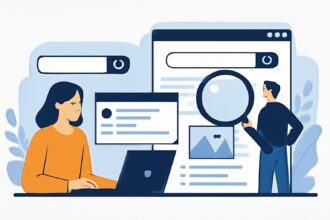
Algorithms are at work all around us. Google’s PageRank presents us relevant results—in real time—captured from web server farms across the globe. Match.com sorts through millions of profiles, seeking compatible profiles for subscribers. And Facebook shows us friends we should “like.”

But algorithmic programming can go too far. As humans are more and more inundated with information, there’s a danger in turning over too much “pre-cognitive” work to algorithms. When we have computers sort friends we would “like”, pick the most relevant advertisements or best travel deals, and choose ideal dating partners for us, there’s a danger in missing the completely unexpected discovery, or the most unlikely correlation of negative one. And even as algorithms “watch” and process our online behavior and learn what makes us tick, there’s still a high possibility that results presented will be far and away from what we might consider “the best choice.”

With a data flood approaching, there’s a temptation to let algorithms do more and more of our pre-processing cognitive work. And if we continue to let algorithms “sort and choose” for us – we should be extremely careful to understand who’s designing these algorithms and how they decide. Perhaps it’s cynical to suggest otherwise, but in regards to algorithms we should always ask ourselves, are we really getting the best choice, or getting the choice that someone or some company has ultimately designed for us?

Question:

  • Rick Bookstaber makes the case that personalized filters may ultimately reduce human freedom. He says, “If filtering is part of thinking, then taking over the filtering also takes over how we think.” Are there dangers in too much personalized filtering?

[Paul Barsch works for Teradata, sponsor of Smart Data Collective]

 

TAGGED:algorithmsfacebookfilteringgoogleonline advertisingsecurity and privacy
Share This Article
Facebook Pinterest LinkedIn
Share

Follow us on Facebook

Latest News

Diverse Research Datasets
The 5 Best Platforms Offering the Most Diverse Research Datasets in 2026
Big Data Exclusive
macro intelligence and ai
How Permutable AI is Advancing Macro Intelligence for Complex Global Markets
Artificial Intelligence Exclusive
warehouse accidents
Data Analytics and the Future of Warehouse Safety
Analytics Commentary Exclusive
stock investing and data analytics
How Data Analytics Supports Smarter Stock Trading Strategies
Analytics Exclusive

Stay Connected

1.2KFollowersLike
33.7KFollowersFollow
222FollowersPin

You Might also Like

PAW Analyzing and predicting user satisfaction with sponsored search

5 Min Read

Your Friend the Algorithm

5 Min Read

What was Google thinking?

0 Min Read

Anatomy of a bad search result

4 Min Read

SmartData Collective is one of the largest & trusted community covering technical content about Big Data, BI, Cloud, Analytics, Artificial Intelligence, IoT & more.

AI chatbots
AI Chatbots Can Help Retailers Convert Live Broadcast Viewers into Sales!
Chatbots
ai chatbot
The Art of Conversation: Enhancing Chatbots with Advanced AI Prompts
Chatbots

Quick Link

  • About
  • Contact
  • Privacy
Follow US
© 2008-25 SmartData Collective. All Rights Reserved.
Go to mobile version
Welcome Back!

Sign in to your account

Username or Email Address
Password

Lost your password?