There are a lot of things that we have written about at Smart Data Collective since Ryan acquired the site 10 years ago. It is clear that cloud technology is becoming more important for companies that need safer, more organized, and more reliable IT asset recovery services.
- Cloud Technology Can Strengthen IT Asset Recovery Services
- The Mechanics of a Secure Hardware Transition
- 1. Minimizing the Blind Spots in Secure Data Destruction
- 2. Utilizing ITAD Analytics for Asset Optimization
- 3. Managing Complete Device Lifecycle Data
- 4. Recovering Financial Value through Secondary Markets
- 5. Navigating Corporate Compliance and Environmental Standards
- A Grounded Approach to Corporate Asset Protection
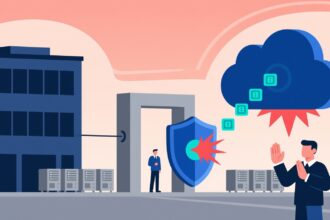
SentinelOne reports that ransomware attacks hit 78% of companies over the past year, with projected growth of 40% by the end of 2026 based on disclosed incidents. Something that makes this alarming is that companies need better ways to protect, track, recover, and retire digital assets before cyber threats create larger losses. Keep reading to learn more.
Cloud Technology Can Strengthen IT Asset Recovery Services
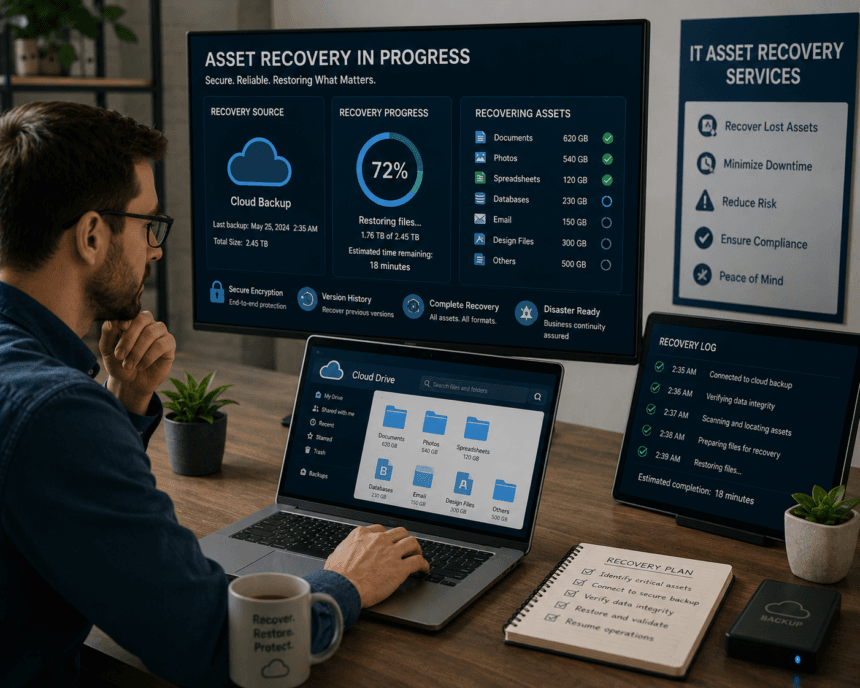
IT asset recovery services help companies manage devices, data, software, and hardware when equipment is replaced, returned, resold, recycled, or retired. There are many ways cloud platforms can support this work by keeping asset records, recovery steps, security checks, and chain-of-custody details in one accessible system. Another thing cloud tools can help with is making sure IT teams know which assets still contain sensitive data before they leave the company.
Brenda Buckman of Huntress.com reports that 26.4% of organizations lose between $100,000 and $500,000 per year to cybercrime. It is a reminder that asset recovery is not only about getting value from old equipment, but also about reducing the risk that forgotten devices, exposed files, or poorly wiped systems can create.
More Read

“It’s worth noting that in our 2025 Cybercrime Report, 16% of IT professionals rated security awareness training as the single most underfunded cybersecurity measure at their organization, even as 44% of organizations reported phishing or spearphishing attacks in the past year. Training budgets don’t need to be big to make a meaningful difference,” Buckman says.
Cloud technology can help IT asset recovery teams keep better records of laptops, servers, phones, drives, and other devices across offices, remote teams, and storage sites. Something that makes this useful is that companies can track who had an asset, where it went, when it was wiped, and whether it was ready for resale, reuse, or disposal. Another thing cloud-based systems can support is faster reporting when managers need proof that data was handled properly. It is easier to reduce confusion when everyone involved in recovery can work from updated asset information.
Edge Delta reports that the cloud computing market is projected to reach US$1,251.09 billion by 2028. There are many reasons cloud adoption matters for IT asset recovery, especially as businesses manage more devices, more data, and more distributed teams.
“A Cloud Security Alliance report revealed that 98% of organizations worldwide use cloud services. This includes SaaS applications and complete cloud-native networks. Recent data indicates a significant rise in cloud usage yearly. A 2022 study with 753 technical and business professionals worldwide reported that 63% of the respondents used the cloud ‘heavily.’ The use of cloud services was 59% in 2021 and 53% in 2020. Read the following sections to understand the cloud computing market, its adoption rate, market players, and more.”
Cloud tools can also make IT asset recovery more useful for compliance, insurance, audits, and vendor management. Something that companies can do is use cloud records to document data wiping, device status, recycling steps, resale value, and responsible disposal. Another thing this helps with is reducing the chance that retired assets are lost, mishandled, or left sitting in storage without proper review.
Companies with multiple offices or remote workers often struggle to keep track of old or reassigned technology. It is easier to manage recovery when cloud systems can show which devices need pickup, which ones are still active, and which ones have been cleared for reuse or disposal.
When corporate operations scale, the accumulation of old technology assets becomes a quiet infrastructure challenge. Hundreds of laptops, tablets, and network switches eventually phase out during standard refresh timelines. Most organizational focus centers on purchasing new equipment, yet the real operational vulnerabilities exist during the offboarding phase. Hardware gathering dust in a back storage closet represents more than just misplaced square footage. Every decommissioned hard drive represents an active compliance risk if corporate or customer information remains exposed. Enterprise teams frequently struggle to handle logistics, verify data eradication, and account for the financial residual value trapped inside these aging machines. Moving old hardware out of circulation requires a calculated strategy that treats old electronics as active data liabilities rather than mere office junk. Managing this transition with strict procedural oversight protects corporate integrity and ensures that no sensitive records escape into secondary markets.
The Mechanics of a Secure Hardware Transition
Transitioning complex technology environments requires a systematic method that eliminates guesswork. Organizations cannot rely on manual spreadsheets or casual shipping methods to handle corporate assets. Implementing a documented IT asset recovery process guarantees that every single computer, tablet, or phone is tracked from the moment it leaves an employee desk. The journey begins with automated inventory capturing, where teams record serial numbers, hardware specifications, and asset conditions immediately upon receipt.
This transparency shifts how corporate finance and security divisions view hardware retirement. Instead of treating logistics as a blind spot, enterprise operations can monitor every milestone through a continuous chain of custody. Working with specialized IT asset recovery services provides companies with a predictable framework to wipe data, assess internal redeployment opportunities, or prep units for wholesale markets. This structured oversight eliminates the risk of missing assets, which is a frequent issue when companies try to coordinate multi site technology refreshes internally. When every drive receives a unique identifier at intake, compliance officers can track processing milestones in real time. This operational visibility changes hardware logistics from a chaotic cleanup project into a clean, predictable line item that satisfies strict corporate data governance rules.
1. Minimizing the Blind Spots in Secure Data Destruction
Data protection is the absolute cornerstone of technology disposal. Simply resetting an operating system or formatting a standard drive leaves corporate secrets vulnerable to basic recovery software. True data security requires adherence to rigorous sanitization standards, such as the National Institute of Standards and Technology guidelines. Every data bearing drive must undergo specialized software sanitization that completely overwrites existing files, making recovery impossible.
- Software based erasure provides a verified solution for functional drives, clearing data while preserving the physical device for potential secondary use.
- Physical shredding becomes mandatory for solid state drives or traditional hard drives that fail standard software overwrite protocols.
- Serialized tracking logs ensure that every individual drive connects directly to an official certificate of destruction for legal record keeping.
- Visual verification options allow compliance teams to review recorded footage of physical destruction when handling high security enterprise assets.
When drives fail processing criteria or show physical degradation, industrial shredding is the only acceptable path forward. This double layered approach ensures that nothing slips through administrative cracks. Once the process wraps up, stakeholders receive a verified certificate of data destruction. This document provides clear, audited proof that data sanitization met legal standards. It serves as an essential protection during corporate regulatory audits, confirming that corporate intelligence was permanently neutralized.
2. Utilizing ITAD Analytics for Asset Optimization
Modern enterprise hardware management relies heavily on actionable data intelligence. Managing thousands of endpoints without deep analytics leaves significant corporate capital on the table. Advanced reporting platforms allow operational leaders to view real time metrics regarding asset values, processing statuses, and historical depreciation rates. This information helps corporate leadership understand exactly how fast specific laptop lines lose value over a twenty four month period.
When teams have clear oversight of these technical metrics, procurement habits shift for the better. Instead of guessing when to replace a fleet of employee tablets, managers can use actual market data to schedule refreshes when residual values are highest. ITAD analytics also highlight which brands or models hold up best under heavy corporate use. If a specific manufacturer line consistently requires early retirement due to hardware failures, the data flags this pattern clearly.
Businesses can use these insights to adjust future vendor contracts and purchase hardware that boasts a lower total cost of ownership. Turning hardware disposal into a data driven discipline ensures that operations teams contribute directly to corporate fiscal health. Accurate analytics remove the emotional component from technology lifecycles, substituting subjective opinions with verifiable financial metrics.
3. Managing Complete Device Lifecycle Data
Every technological asset possesses a distinct lifecycle that extends from the initial corporate procurement phase to the final recycling drop off. Documenting this journey creates an official paper trail that protects companies from security risks and environmental liabilities. Complete lifecycle tracking connects procurement logs, active deployment history, employee assignments, and final disposition details into a unified narrative.
- Early phase tracking monitors original purchase dates, warranty extensions, and active maintenance costs across the enterprise fleet.
- Deployment logs show which departments or personnel operated specific hardware configurations during their useful lifespan.
- Disposition mapping details whether a device was refurbished for resale, stripped down for spare parts, or sent to a certified recycling facility.
- Downstream verification confirms that non functional electronic waste was processed without violating hazardous waste regulations.
Maintaining this level of detail prevents old devices from lingering in corporate blind spots. When an employee departs a company, the hardware tracking system highlights exactly which assets require recovery. This prevents equipment from being left behind in remote home offices or forgotten in field locations. Knowing the exact status of the corporate fleet simplifies resource allocation, allowing teams to redeploy spare inventory rather than purchasing duplicate equipment. The resulting data stream gives corporate leadership a clear view of their hardware ecosystem, maximizing utility at every stage of ownership.
4. Recovering Financial Value through Secondary Markets
Retired corporate technology should not be viewed as an automatic financial loss. A substantial portion of decommissioned hardware retains significant economic value that can be reclaimed. Strategic IT asset recovery services help businesses capture this trapped capital by routing functional equipment into global resale channels. Specialized technicians grade devices based on physical condition and functional capabilities, identifying units that are prime candidates for refurbishment.
Refurbishing laptops and mobile devices extends their useful lifespan and opens up access to robust secondary consumer and institutional markets. Daily monitoring of international secondary pricing ensures that corporate sellers receive accurate returns for their old investments. Rather than accepting flat rate scrap prices, organizations receive detailed financial breakdowns showing the exact resale price of each processed asset. The recovered funds can be directly reinvested into upcoming technology upgrades, transforming the IT department from a pure cost center into an efficient contributor to corporate liquidity. This financial recovery makes technology transitions sustainable over the long term.
5. Navigating Corporate Compliance and Environmental Standards
Corporate regulatory pressure continues to expand, forcing businesses to prioritize ethical electronics disposal. Improperly discarded electronic waste contains hazardous materials like lead and mercury, which pose significant ecological dangers. Regulatory bodies enforce heavy fines on organizations that let retired equipment end up in standard landfills.
Utilizing certified IT asset recovery services protects businesses from these liabilities. Working with partners holding certified industry standards like R2v3 ensures that all non salvageable components are managed under strict environmental guidelines. These certifications guarantee a zero landfill policy, meaning every piece of scrap plastic and metal is recycled responsibly. Furthermore, the accompanying audit trail satisfies major compliance standards, including healthcare and financial data privacy acts. Organizations can confidently demonstrate that their technology disposal practices match their public sustainability goals.
Corporate accountability extends beyond the digital realm into physical stewardship. When companies verify their downstream recycling pipelines, they build stronger relationships with investors who prioritize environmental responsibility. Having compliance documentation readily available turns a standard security task into a corporate asset.
A Grounded Approach to Corporate Asset Protection
Cloud technology gives companies a stronger way to manage IT asset recovery while reducing security and data risks. There are many benefits to having a central system for tracking equipment, documenting recovery steps, and making sure sensitive data is removed before assets leave the organization.
IT asset recovery services are becoming more important as cyber risks, cloud adoption, and device growth continue to rise. Something that matters most is giving companies a clear process for recovering value from old technology without creating new security problems. Another thing businesses should remember is that cloud tools work best when they support careful planning, staff training, and strong data handling practices. It is a practical way to make asset recovery safer, clearer, and easier to manage.
Managing hardware retirement requires a careful balance between data security and asset valuation. Treating old machinery as an afterthought introduces operational risks that modern enterprises cannot afford to take. By adopting systematic tracking, certified data destruction, and strategic remarketing, organizations secure their sensitive information while reclaiming lost financial capital. Comprehensive IT asset recovery services deliver the transparency required to navigate complex compliance landscapes while protecting corporate bottom lines. Turning a messy logistics problem into a transparent, data driven workflow ensures long term compliance, corporate safety, and operational efficiency.