We use cookies, including third-party cookies from Google to serve personalized ads through AdSense, to operate this site and understand how it is used. By continuing to browse, you accept this use. See our Privacy Policy and Terms of Use for details, including how to opt out of personalized advertising.
Accept
SmartData CollectiveSmartData Collective
  • Analytics
    AnalyticsShow More
    What Kind of Problem-Solving Distinguishes Data Analysts From Software Engineers -- AI-generated illustration
    What Kind of Problem-Solving Distinguishes Data Analysts From Software Engineers
    7 Min Read
    chatgpt image jul 21, 2026, 04 34 30 pm
    4 Core Benefits of Predictive Maintenance after Vibration Analysis
    10 Min Read
    How Does Data Mining Boost Customer Satisfaction in Logistics? Harnessing Analytics for Results -- AI-generated illustration
    How Does Data Mining Boost Customer Satisfaction in Logistics? Harnessing Analytics for Results
    11 Min Read
    chatgpt image jul 13, 2026, 04 23 45 pm
    How Data Analytics Helps Companies Improve User Engagement
    19 Min Read
    chatgpt image jul 13, 2026, 03 59 46 pm
    How Data Analytics Improves Multi-Location Search Strategies
    10 Min Read
  • Big Data
  • BI
  • Exclusive
  • IT
  • Marketing
  • Software
Search
© 2008-25 SmartData Collective. All Rights Reserved.
Reading: Prinicpal Components for Modeling
Share
Notification
Font ResizerAa
SmartData CollectiveSmartData Collective
Font ResizerAa
Search
  • About
  • Help
  • Privacy
Follow US
© 2008-23 SmartData Collective. All Rights Reserved.
SmartData Collective > Analytics > Predictive Analytics > Prinicpal Components for Modeling
Predictive Analytics

Prinicpal Components for Modeling

Editor SDC
Editor SDC
6 Min Read
Prinicpal Components for Modeling
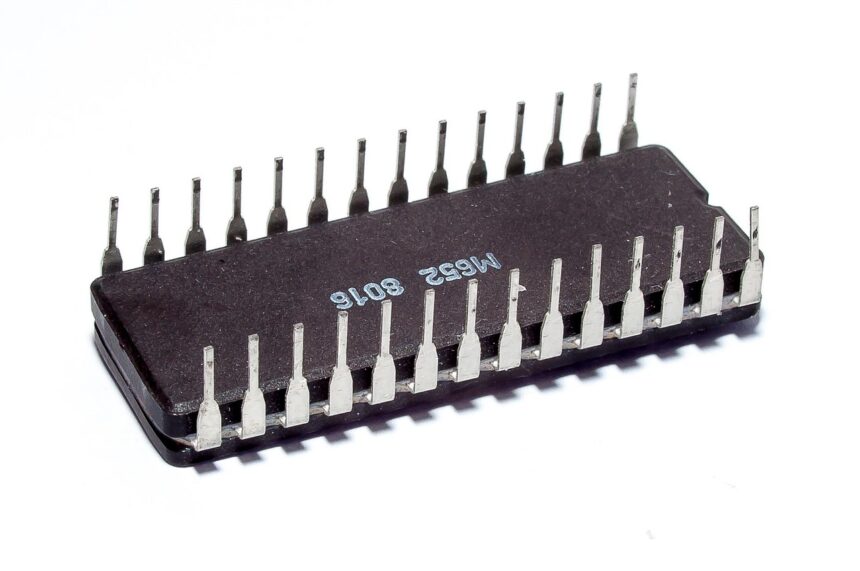
Photo by Silberfuchs on Pixabay (https://pixabay.com/photos/chip-data-processing-pc-computer-298664/)
SHARE

Problem Statement

Analysts constructing predictive models frequently encounter the need to reduce the size of the available data, both in terms of variables and observations. One reason is that data sets are now available which are far too large to be modeled directly in their entirety using contemporary hardware and software. Another reason is that some data elements (variables) have an associated cost. For instance, medical tests bring an economic and sometimes human cost, so it would be ideal to minimize their use if possible. Another problem is overfitting: Many modeling algorithms will eagerly consume however much data they are fed, but increasing the size of this data will eventually produce models of increased complexity without a corresponding increase in quality. Model deployment and maintenance, too, may be encumbered by extra model inputs, in terms of both execution time and required data preparation and storage.

Naturally, the goal in data reduction is to decrease the size of needed data, while maintaining (as much as is possible) model performance, this process must be performed carefully.

A Solution: Principal Components

More Read

Text Analytics WIIFM (What’s in it for Me?)
Why Text Analytics Is Important in Search
Lessons from Social Media Meet-Up, Part I – Measuring is Easy; Evaluation is Hard.
WOW! Big Data at Google
R and Hadoop: Step-by-step Tutorials

Selection of candidate predictor variables to retain (or to eliminate) is the most obvious way to reduce the size of the data. If model performance is not to suffer, though, then some effective measure of each variable’s usefulness in the final model must be employed- which is complicated by the correlations among predictors. Several important procedures have been developed along these lines, such as forward selection, backward selection and stepwise selection.

Another possibility is principal components analysis (“PCA” to his friends), which is a procedure from multivariate statistics which yields a new set of variables (the same number as before), called the principal components. Conveniently, all of the principal components are simply linear functions of the original variables. As a side benefit, all of the principal components are completely uncorrelated. The technical details will not be presented here (see the reference, below), but suffice it to say that if 100 variables enter PCA, then 100 new variables (called the principal components come out. You are now wondering, perhaps, where the “data reduction” is? Simple: PCA constructs the new variables so that the first principal component exhibits the largest variance, the second principal component exhibits the second largest variance, and so on.

How well this works in practice depends completely on the data. In some cases, though, a large fraction of the total variance in the data can be compressed into a very small number of principal components. The data reduction comes when the analyst decides to retain only the first n principal components.

Note that PCA does not eliminate the need for the original variables: they are all still used in the calculation of the principal components, no matter how few of the principal components are retained. Also, statistical variance (which is what is concentrated by PCA) may not correspond perfectly to “predictive information”, although it is often a reasonable approximation.

Last Words

Many statistical and data mining software packages will perform PCA, and it is not difficult to write one’s own code. If you haven’t tried this technique before, I recommend it: It is truly impressive to see PCA squeeze 90% of the variance in a large data set into a handful of variables.

Note: Related terms from the engineering world: eigenanalysis, eigenvector and eigenfunction.

Reference

For the down-and-dirty technical details of PCA (with enough information to allow you to program PCA), see:

Multivariate Statistical Methods: A Primer, by Manly (ISBN: 0-412-28620-3)

Note: The first edition is adequate for coding PCA, and is at present much cheaper than the second or third editions.


TAGGED:data qualitydata reductionpredictive modeling
Share This Article
Facebook Pinterest LinkedIn
Share

Follow us on Facebook

Latest News

Technical architecture diagram and decision framework for ai-powered logo generation: design.com vs looka
AI-Powered Logo Generation: Design.com vs Looka
Artificial Intelligence Exclusive
Retailers Should Stop Treating Every Stockout as Equal -- AI-generated illustration
Retailers Should Stop Treating Every Stockout as Equal
Business Intelligence Exclusive
Best Vibe Coding Cleanup Specialists in the USA: Fix or Rebuild? -- AI-generated illustration
Best Vibe Coding Cleanup Specialists in the USA: Fix or Rebuild?
Development Exclusive
Using Warehouse, Transportation and Order Data to Plan Distribution-Center Capacity -- AI-generated illustration
Using Warehouse, Transportation and Order Data to Plan Distribution-Center Capacity
Big Data Exclusive

Stay Connected

1.2KFollowersLike
33.7KFollowersFollow
222FollowersPin

You Might also Like

Stop Justifying Data Quality Programs and Do the DQ Work Already!
Uncategorized

Stop Justifying Data Quality Programs and Do the DQ Work Already!

5 Min Read
Leadership Lessons in Data Quality - Part 1
Uncategorized

Leadership Lessons in Data Quality – Part 1

9 Min Read
On A Smarter Planet … Some Organizations Will Be Smarter-er Than Others
Uncategorized

On A Smarter Planet … Some Organizations Will Be Smarter-er Than Others

4 Min Read
The Importance of Scope In Data Quality Efforts
Exclusive

The Importance of Scope In Data Quality Efforts

4 Min Read

SmartData Collective is one of the largest & trusted community covering technical content about Big Data, BI, Cloud, Analytics, Artificial Intelligence, IoT & more.

How To Get An Award Winning Giveaway Bot
Big Data Chatbots Exclusive
Chatbots and SEO: How Can Chatbots Improve Your SEO Ranking?
Artificial Intelligence Chatbots Exclusive

Quick Link

  • About
  • Contact
  • Privacy
Follow US
© 2008-26 SmartData Collective. All Rights Reserved.
Welcome Back!

Sign in to your account

Username or Email Address
Password

Lost your password?