
These days, almost every organization relies on huge quantities of data to run day-to-day operations. There are times when projects may require you to convert or migrate data, depending on whether it’s moving from one system to another or from several databases into one.
The terms “database conversion” and “database migration” are often used interchangeably, but they are two different processes that play a big role in an organization’s software implementation.
What Is Data Conversion?
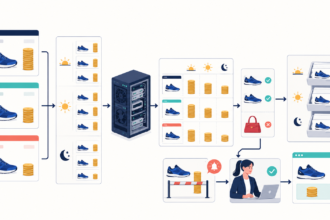
Database conversion involves pulling data from a no longer useful database, converting it from the original format to a fully useful format and propagating it into a new, more appropriate instance. The target database determines the format that the data will take once converted. For example, videos or music files played on your smartphone must be converted into a format that is compatible with your phone. So, an MKV file must convert into an MP4 file for use on your mobile device.
The ultimate goal of database conversion is to maintain the integrity of each piece of data. When moving data from one database to another, if the target source has the same formatting, conversion may not be necessary. However, when data formatting from the source database doesn’t match the receiving instance, a database conversion will be required to properly maintain, analyze, read or use the data in the target database.
More Read

Data Conversion Process
While all database conversion projects differ, there are a few basic steps that most conversions follow.
- Analyze the originating source data, along with the target database.
- Design a plan based on the project requirements and needs of the end user.
- Test the conversion in at least three iterations and quality check the results.
- Implement the plan by converting (or transforming) the data into the formatting required by the target database.
- Quality check the final results.
Issues Related to Data Conversion
The complexity surrounding database conversion really stems from the need to understand the originating source and the new format. Without this knowledge, the result can be compromised data or ruined data integrity. Other common issues include duplicate data, which may need to be merged; obsolete data, which will need to be deleted before conversion; and incorrect data, which may result in the need for a manual fix.
What Is Data Migration?
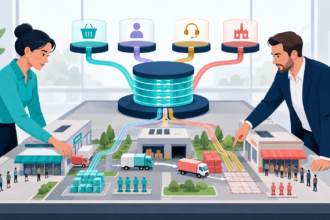
While database conversion is basically the transformation of data from one format to another, database migration is the process of moving data from one source, format or system to another. Data migration usually requires quality assurance processes by the target source, such as data validation, cleansing and profiling.
Most organizations need database migration when they upgrade their systems or begin using a cloud solution. There are three basic types of migration: storage, cloud and application. Storage migration is the process of moving arrays of data from deprecating (aging) databases into more modern versions to enable access by a newer system. Cloud migration refers to moving data from one cloud instance to another or from a data center to a new cloud. Application migration is moving an entire application from one location to another or moving its existing data to a new version of the application.
Data Migration Process
The process of data migration involves reviewing the database as it currently stands, data mapping to find potential inconsistencies or discrepancies, transferring the data to the new database and, finally, testing to ensure all data is migrated correctly.
Issues Related to Data Migration
At first glance, database migration may seem simple, but it is actually quite complex. The new system must have matching fields for the existing data; otherwise, it can be lost in the migration process. The process required to ensure that data sets are properly mapped during a migration is generally performed prior as part of database conversion. Proper planning before performing a database migration is critical to help reduce the chance that issues will arise.
Outsourcing Data Conversion and Migration
To avoid any issues of lost or ruined data, outsourcing data conversion or migration may be your best bet. Few inhouse IT teams, regardless of their technical capabilities, are properly trained to handle database conversion or migration projects. A qualified provider can make it easier for your organization’s database upgrades to go more smoothly. A quality deployment model will go a long way in providing you peace of mind surrounding security and performance, especially if your data is currently unorganized, unusable or outdated.