Cookies help us display personalized product recommendations and ensure you have great shopping experience.

By using this site, you agree to the Privacy Policy and Terms of Use.
Accept
SmartData CollectiveSmartData Collective
  • Analytics
    AnalyticsShow More
    predictive analytics risk management
    How Predictive Analytics Is Redefining Risk Management Across Industries
    7 Min Read
    data analytics and gold trading
    Data Analytics and the New Era of Gold Trading
    9 Min Read
    composable analytics
    How Composable Analytics Unlocks Modular Agility for Data Teams
    9 Min Read
    data mining to find the right poly bag makers
    Using Data Analytics to Choose the Best Poly Mailer Bags
    12 Min Read
    data analytics for pharmacy trends
    How Data Analytics Is Tracking Trends in the Pharmacy Industry
    5 Min Read
  • Big Data
  • BI
  • Exclusive
  • IT
  • Marketing
  • Software
Search
© 2008-25 SmartData Collective. All Rights Reserved.
Reading: The State of Performance Management for Hybrid Clouds
Share
Notification
Font ResizerAa
SmartData CollectiveSmartData Collective
Font ResizerAa
Search
  • About
  • Help
  • Privacy
Follow US
© 2008-23 SmartData Collective. All Rights Reserved.
SmartData Collective > IT > Cloud Computing > The State of Performance Management for Hybrid Clouds
Cloud Computing

The State of Performance Management for Hybrid Clouds

CloudWedge
CloudWedge
5 Min Read
SHARE

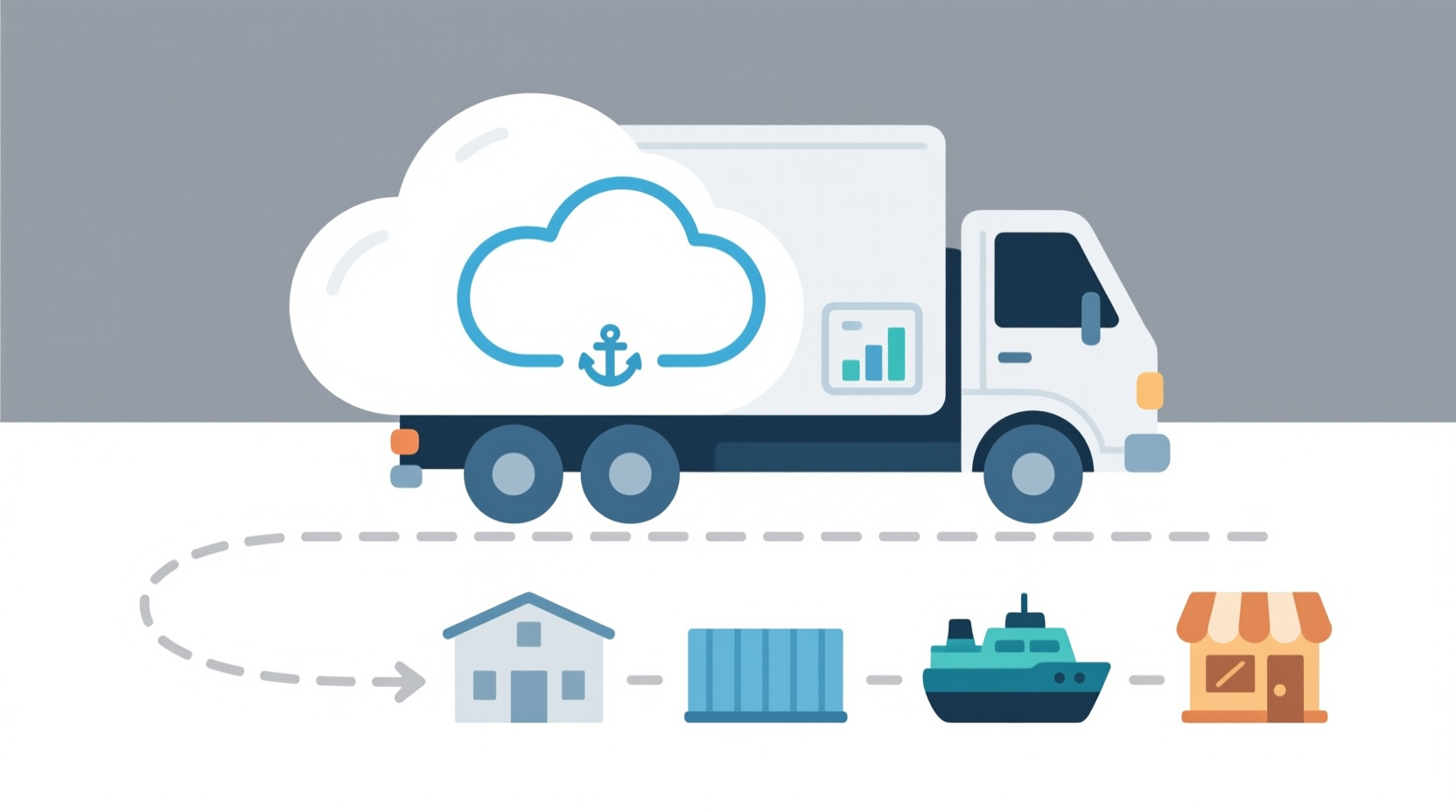
Performance Management for Hybrid Cloud

Contents
  • The Move to Virtual
  • The Move to Cloud
  • The Hybrid Cloud Challenge
  • The Hybrid Cloud Solution
  • Application-level Visibility
  • Conclusion

IT Administrators have more choices today than ever before on how to run the workloads that are mission-critical for the business — physical, virtual, on-premises, in Clouds, or some combination. That’s why it’s vital to find a performance management toolset to help inform those choices.

Performance Management for Hybrid Cloud

More Read

SAP Aims to be More Cloudy and Mobile in 2012 and Beyond
Gaining the Millennial Digital Storage Market With Metadata and Tagging
Start-up? You Should Start with a Big Data Mindset
Securing the Cloud @FedScoop CyberSecurity Summit
CAPEX for IT: Why So Painful?

IT Administrators have more choices today than ever before on how to run the workloads that are mission-critical for the business — physical, virtual, on-premises, in Clouds, or some combination. That’s why it’s vital to find a performance management toolset to help inform those choices.

The Move to Virtual

In virtualized infrastructures, a workload may not be getting the resources it needs because of a “noisy neighbor” workload that is overburdening a host, one that may be running potentially dozens of VMs. Another possibility is that a mission-critical workload may be relying on some supporting servers or services that are the culprits of a bottleneck. It is impossible for humans to track the complex interactions within a medium-sized virtualized infrastructure to eliminate bottlenecks, and get the most from their IT investments, without performance management tools. The dilemma is that there are many to choose from and they often sound alike.

The Move to Cloud

In a pure cloud environment, the techniques used to collect metrics from the virtualized data center no longer work. This means that performance management tool vendors have to adapt by making the changes necessary to discover, map, monitor and manage all of the workloads and resources available to run those workloads when they are run in clouds. For instance, in the datacenter a performance management tool typically calls vCenter to get a wealth of metric information on hosts, datastores, and guest VMs – but in AWS or Azure, there is no vCenter server. As a result, newer performance management tools that support clouds often cannot handle data centers and the older, more proven tools used in the data center do not support workloads being run in clouds.

The Hybrid Cloud Challenge

How can a performance management tool support workloads that are run in the datacenter, moved to the Cloud for an anticipated spike in demand, then need to be moved back into the data center once the demand spike is over? Relying on the infrastructure is a problem because every Cloud uses different technologies. Requiring application developers to include a monitoring and control agent when their application is compiled is not a realistic solution, as it does not support existing applications and does not scale.

The Hybrid Cloud Solution

In order to reap the benefits of hybrid clouds, IT Administrators are looking for performance management tools that can manage all workloads, whether they are running in the datacenter or in Clouds – from a single pane of glass. Such tools may use a combination of techniques such as collecting information from the infrastructure layer; vCenter or Hyper-V in the data center or AWS , Azure integration in clouds, as well collecting data from the workload OS, be it Windows or Linux OS, either by using an agent or probing the VM with API so it can report on individual application metrics back to the management application.

Application-level Visibility

In the data center, the IT Administrator looks for overloaded hosts. Once found, the VMs on that host are inspected to see if they are starved for resources or using more resources than is reasonable. In either case, a robust root cause analysis requires visibility inside that VM to the sessions and processes that may be exhausting these resources. Moreover when a problem is detected and root cause found, remediating this problem from within the same toolset in that context would save a lot of time and offer uniformity across the variety of architectures and choices

Conclusion

Look for a performance management solution that can handle both the datacenter and Clouds from a single pane of glass, that provides visibility right down to the application level, and ideally, can fix problems as they arise and are identified. 

Share This Article
Facebook Pinterest LinkedIn
Share

Follow us on Facebook

Latest News

street address database
Why Data-Driven Companies Rely on Accurate Street Address Databases
Big Data Exclusive
predictive analytics risk management
How Predictive Analytics Is Redefining Risk Management Across Industries
Analytics Exclusive Predictive Analytics
data analytics and gold trading
Data Analytics and the New Era of Gold Trading
Analytics Big Data Exclusive
student learning AI
Advanced Degrees Still Matter in an AI-Driven Job Market
Artificial Intelligence Exclusive

Stay Connected

1.2kFollowersLike
33.7kFollowersFollow
222FollowersPin

You Might also Like

hadoop
Big DataBusiness IntelligenceCloud ComputingData MiningData WarehousingHadoopITMapReduceOpen Source

Hadoop Toolbox: When to Use What

11 Min Read

Cloud Computing Prompts 2012 Data Center Expansion Plans

4 Min Read

The Cloud and Physical Security

3 Min Read
AnalyticsBusiness IntelligenceCloud ComputingData ManagementModelingSoftware

Minding the KPI Gap – A Critical Part of the EPM Process

7 Min Read

SmartData Collective is one of the largest & trusted community covering technical content about Big Data, BI, Cloud, Analytics, Artificial Intelligence, IoT & more.

AI and chatbots
Chatbots and SEO: How Can Chatbots Improve Your SEO Ranking?
Artificial Intelligence Chatbots Exclusive
ai in ecommerce
Artificial Intelligence for eCommerce: A Closer Look
Artificial Intelligence

Quick Link

  • About
  • Contact
  • Privacy
Follow US
© 2008-25 SmartData Collective. All Rights Reserved.
Go to mobile version
Welcome Back!

Sign in to your account

Username or Email Address
Password

Lost your password?