
We use cookies, including third-party cookies from Google to serve personalized ads through AdSense, to operate this site and understand how it is used. By continuing to browse, you accept this use. See our Privacy Policy and Terms of Use for details, including how to opt out of personalized advertising.
Accept
SmartData CollectiveSmartData Collective
  • Analytics
    AnalyticsShow More
    chatgpt image jul 21, 2026, 04 34 30 pm
    4 Core Benefits of Predictive Maintenance after Vibration Analysis
    10 Min Read
    How Does Data Mining Boost Customer Satisfaction in Logistics? Harnessing Analytics for Results -- AI-generated illustration
    How Does Data Mining Boost Customer Satisfaction in Logistics? Harnessing Analytics for Results
    11 Min Read
    chatgpt image jul 13, 2026, 04 23 45 pm
    How Data Analytics Helps Companies Improve User Engagement
    19 Min Read
    chatgpt image jul 13, 2026, 03 59 46 pm
    How Data Analytics Improves Multi-Location Search Strategies
    10 Min Read
    cybersecurity efforts
    How Behavioral Analytics and AI Are Redefining Cybersecurity for Boca Raton Businesses
    14 Min Read
  • Big Data
  • BI
  • Exclusive
  • IT
  • Marketing
  • Software
Search
© 2008-25 SmartData Collective. All Rights Reserved.
Reading: Why Hybrid Will Be the Next Chapter for Cloud Adoption
Share
Notification
Font ResizerAa
SmartData CollectiveSmartData Collective
Font ResizerAa
Search
  • About
  • Help
  • Privacy
Follow US
© 2008-23 SmartData Collective. All Rights Reserved.
SmartData Collective > IT > Cloud Computing > Why Hybrid Will Be the Next Chapter for Cloud Adoption
Cloud ComputingIT

Why Hybrid Will Be the Next Chapter for Cloud Adoption

vineetjain
vineetjain
4 Min Read
Why Hybrid Will Be the Next Chapter for Cloud Adoption
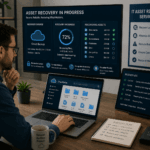
Illustration generated with Qwen Image.
SHARE

There’s no question that the cloud is here to stay. Organizations ranging from Netflix to NASA now rely on the cloud for their day-to-day operations.

There’s no question that the cloud is here to stay. Organizations ranging from Netflix to NASA now rely on the cloud for their day-to-day operations. Both in our personal lives and in business, the convenience, portability, and accessibility of cloud services have played a major part in increasing efficiency and decreasing costs when it comes to storage and collaboration across the globe. 

But while the cloud may be an excellent solution for many situations, it’s far from perfect — especially for the enterprise market. Relying on the cloud means leaving infrastructure and security in the hands of third-party companies, which can lead to downtime and breaches that lie beyond the IT department’s control. In fact, according to a recent study, 73 percent of IT executives across the globe worry that cloud services are hiding performance problems.

Deciding between the convenience of the cloud and the control of on-premises infrastructure can be a major headache for IT departments. But in reality, the best solution is rarely choosing one over the other. For most organizations, hybrid is the way to go.

More Read

Enterprise CTOs: WayIn Will Provide New Capabilities to Your Organization
Big Data is Bridging eCommerce and Fulfillment for Young Entrepreneurs
3 Important Things To Know About Cloud Automation
Chatting with Your Computer: How the iPhone’s Siri Compares with IBM’S Watson
The Strategy of Big Data

The Power of Hybrid

A recent survey found that 70 percent of businesses are either considering or already using a hybrid solution to meet their data needs. Many IT managers are finding that the cloud works best when it’s complemented by on-site options. The benefits of a hybrid environment include: 

Collaboration. When Sega was looking for a better solution to develop and test video games among its developers throughout the world, it turned to the hybrid cloud. Sega’s alternative deployment solution took advantage of the simple, cost-effective collaboration the cloud has to offer while still allowing employees to develop offline when needed. 

Hybrid helps a company save on bandwidth when working with large files and allows employees to work offline even when they have a poor (or nonexistent) connection. This way, collaboration can actually mean working together rather than waiting on another person to complete work.

Customized security. There are plenty of cases where security comes second to accessibility. The cloud is great because it allows employees to access files wherever they are — from virtually any device — without costing IT too much time and money.

But in business environments, there’s other data that is sensitive enough to make security the primary concern. A hybrid solution lets companies keep private files behind a secure firewall and only on the devices of their choosing. This limits access to the people who need it while still allowing less sensitive data to be shared freely.

Flexibility. For business, a one-size-fits-all solution is rarely perfect. IT departments must take various factors into account when deciding which departments would benefit from being offloaded into the cloud and which need to stay on-site. These factors include price, security, and even the company’s in-house expertise. Hybrid solutions allow IT managers to customize their deployment models to fit their company’s needs.

Hybrid solutions open up whole new avenues for IT departments. They allow companies to maintain control over elements that are most important to them while offloading the burden of less sensitive data to the more cost-effective and convenient cloud. By adopting a hybrid solution, IT can have their cake and eat it, too.

cloud adoption / shutterstock
Share This Article
Facebook Pinterest LinkedIn
Share

Follow us on Facebook

Latest News

Managing Application Access When Corporate VPNs Reach Capacity Limits -- AI-generated illustration
Managing Application Access When Corporate VPNs Reach Capacity Limits
Exclusive IT Security
How Digital Knowledge Repositories Facilitate Self-Directed Research and Information Discovery -- AI-generated illustration
How Digital Knowledge Repositories Facilitate Self-Directed Research and Information Discovery
Exclusive News
7 MDR Providers Combining Offensive Security Testing With 24/7 Monitoring -- AI-generated illustration
7 MDR Providers Combining Offensive Security Testing With 24/7 Monitoring
Exclusive IT Security
The Information Governance Practices That High-Demand Social Work Roles Require -- AI-generated illustration
The Information Governance Practices That High-Demand Social Work Roles Require
Data Management Exclusive Policy and Governance Security

Stay Connected

1.2KFollowersLike
33.7KFollowersFollow
222FollowersPin

You Might also Like

What was Google thinking?
Security

What was Google thinking?

0 Min Read
Consolidation in the Social Software Market Continues: VMware Acquires SocialCast
Cloud ComputingSocial Data

Consolidation in the Social Software Market Continues: VMware Acquires SocialCast

5 Min Read
The IT Project Process: 4 Steps to Better Technology
IT

The IT Project Process: 4 Steps to Better Technology

4 Min Read
How Data Security Remains More Than Just About IT Safeguards
Best PracticesBig DataData ManagementExclusiveITNewsPrivacySecurity

How Data Security Remains More Than Just About IT Safeguards

6 Min Read

SmartData Collective is one of the largest & trusted community covering technical content about Big Data, BI, Cloud, Analytics, Artificial Intelligence, IoT & more.

The Art of Conversation: Enhancing Chatbots with Advanced AI Prompts
Chatbots
5 Great Tips for Using Data Analytics for Website UX
Big Data

Quick Link

  • About
  • Contact
  • Privacy
Follow US
© 2008-26 SmartData Collective. All Rights Reserved.
Welcome Back!

Sign in to your account

Username or Email Address
Password

Lost your password?