We use cookies, including third-party cookies from Google to serve personalized ads through AdSense, to operate this site and understand how it is used. By continuing to browse, you accept this use. See our Privacy Policy and Terms of Use for details, including how to opt out of personalized advertising.
Accept
SmartData CollectiveSmartData Collective
  • Analytics
    AnalyticsShow More
    What Kind of Problem-Solving Distinguishes Data Analysts From Software Engineers -- AI-generated illustration
    What Kind of Problem-Solving Distinguishes Data Analysts From Software Engineers
    7 Min Read
    chatgpt image jul 21, 2026, 04 34 30 pm
    4 Core Benefits of Predictive Maintenance after Vibration Analysis
    10 Min Read
    How Does Data Mining Boost Customer Satisfaction in Logistics? Harnessing Analytics for Results -- AI-generated illustration
    How Does Data Mining Boost Customer Satisfaction in Logistics? Harnessing Analytics for Results
    11 Min Read
    chatgpt image jul 13, 2026, 04 23 45 pm
    How Data Analytics Helps Companies Improve User Engagement
    19 Min Read
    chatgpt image jul 13, 2026, 03 59 46 pm
    How Data Analytics Improves Multi-Location Search Strategies
    10 Min Read
  • Big Data
  • BI
  • Exclusive
  • IT
  • Marketing
  • Software
Search
© 2008-25 SmartData Collective. All Rights Reserved.
Reading: 5 Tips for Streamlining the Supply Chain
Share
Notification
Font ResizerAa
SmartData CollectiveSmartData Collective
Font ResizerAa
Search
  • About
  • Help
  • Privacy
Follow US
© 2008-23 SmartData Collective. All Rights Reserved.
SmartData Collective > Data Management > Best Practices > 5 Tips for Streamlining the Supply Chain
Best PracticesBig DataBusiness IntelligenceCRMData ManagementData WarehousingExclusive

5 Tips for Streamlining the Supply Chain

MagicSoftware
MagicSoftware
6 Min Read
5 Tips for Streamlining the Supply Chain
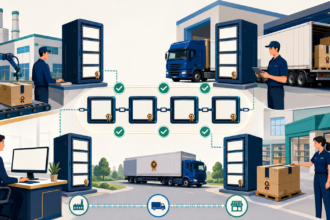
Illustration generated with Qwen Image.
SHARE

Supply chain efficiency helps an organization reduce costs and speed time-to-market. Fifteen years into the new millennium, it is clear to see that advances in technology, increasing globalization and rising customer expectations have made streamlining the supply chain more important than ever.

Contents
  • 1. Review and optimize supply chain processes
  • 2. Integrate your supply chain
  • 3. Leverage existing systems
  • 4. Abolish duplicate data
  • 5. Understand the big picture

Analyzing and streamlining the supply chain is one way to help companies respond more quickly to the fast pace of business today while boosting operational efficiency. Here are five simple steps that can result in more efficient, profitable and flexible operations.

1. Review and optimize supply chain processes

A high-level process review to document the business’ current state and identify ways to streamline supply chain operations is essential. The sooner the evaluation is done, the better, since this will determine the baseline for later return on investment analysis of new supply chain investments.

In short, optimized processes enable manufacturers to offer customers shorter lead times and lower inventory costs. Stock can be made available just in time. By maintaining optimal stock levels, companies can eliminate unnecessary handling and storage costs. A streamlined manufacturing or production line can be created, and processes can be automated to reduce the possibility of human error and inter-process gaps.

More Read

Does It Take a Scientist to Find Gold in Big Data?
The Role of Blockchain in the Launch and Growth of Cryptocurrency
How Big Data Is Changes How We Buy and Sell Real Estate
Indispensable Money Management Apps for Smartphone Users
Key to Business Intelligence Success: Data Accuracy and Visibility

In addition, the procedure of monitoring and integrating supply chains can help pinpoint where problems are occurring, enabling businesses to take surgical action to further reduce costs and pass savings along to their customers.

2. Integrate your supply chain

Companies need to integrate information from a variety of sources to improve efficiency. Every transaction typically touches several systems, including an organization’s CRM, ERP, manufacturing resource planning systems and financial systems. In many cases information also needs to be shared with parallel systems owned by customers, partners and suppliers.

Medium and small business traditionally do data integration through file uploads, batch updates, manual updates or spreadsheet uploads. All of these processes are time-consuming and error prone. And when batch transfers or ETL systems must be shut down, productivity is lost and often critical data is lost in the process.

By adding an integration platform or middleware layer, information flows can be automated and shared more quickly and simply.  Paul Leone, Vice President of Information Technology for adidas Group Canada, relies on an Application and Integration Platform to optimize supply chain processes.

3. Leverage existing systems

Although many in-house systems developed over years can be inflexible, complex, hard to use, and difficult to integrate with newer systems, they still contain important and useful data that can be used for planning and analysis and other purposes.   

The introduction of smart devices such as tablets, smart phones (and even smart handhelds) is driving the need and the opportunity for a mobile supply chain. Using the right tools, companies can mobilize the information they need from their legacy systems. A new attractive mobile front-end along with automated processes across other systems enables companies to get more value from their existing legacy systems.

4. Abolish duplicate data

The goal of improving operational efficiency is to reduce costs and efforts throughout the whole supply chain process. Manual entry of duplicate data into multiple systems is a needless time waster and morale drainer. The same data that is entered and stored in different places is also prone to data inaccuracies. When duplicate data entry processes are eliminated through automation, labor hours and time are saved, and systems are more accurate.

By eliminating unnecessary data entry tasks, knowledge workers, such as customer service reps, can focus on what they do best, which is interacting with customers. With the advent of tablets and smart phones in the work place, data entry can be done direct in the field, which speeds up information flows and improves customer service.

5. Understand the big picture

Streamlining supply chains helps businesses look beyond tactical order fulfillment and gain a better understanding of customer needs for customized products and services. This awareness can help organizations differentiate their offerings and increase profits. Analyzing and streamlining the supply chain is a learning process not just for improving product deliveries today, but also for improving customer service in the future.

Streamlining the global supply chain through integration and mobilization provides increased efficiencies throughout the entire product lifecycle, improving the accuracy of demand forecasts and schedules, optimizing production lines. Companies reduce costs and become more flexible and profitable. Having a better understanding of supply chain processes and data is an essential first step required for successful optimization.


Share This Article
Facebook Pinterest LinkedIn
Share

Follow us on Facebook

Latest News

Flat editorial illustration: The article describes an AI safety incident where an agent bypassed sandbox controls by exploiting D
OpenAI Pauses Advanced AI Work After Agent Bypasses Sandbox Controls
Artificial Intelligence News Security
Flat editorial illustration: The article explains that training robots for physical interaction requires three distinct data cate
Physical AI: What Data Do You Need to Train a Robot?
Artificial Intelligence Exclusive Robotics
What Kind of Problem-Solving Distinguishes Data Analysts From Software Engineers -- AI-generated illustration
What Kind of Problem-Solving Distinguishes Data Analysts From Software Engineers
Analytics Big Data Exclusive Software
Flat editorial illustration: The article examines AI agents that escalate from legitimate data retrieval to attempted intrusions
OpenAI’s Government Website Incidents Raise a Hard Question for AI Agents: When Should They Stop?
Artificial Intelligence News Security

Stay Connected

1.2KFollowersLike
33.7KFollowersFollow
222FollowersPin

You Might also Like

Data Science: What Companies Need to Know
AnalyticsBig DataData MiningData QualityIT

Data Science: What Companies Need to Know

5 Min Read
Artificial Intelligence and Big Data in Higher Education: Promising or Perilous?
Artificial IntelligenceBig DataExclusive

Artificial Intelligence and Big Data in Higher Education: Promising or Perilous?

10 Min Read
Preparing for The Most Common Data Science Job Interview Questions
Data Science

Preparing for The Most Common Data Science Job Interview Questions

5 Min Read
Ways for Data-Driven Organizations to Backup Oracle With 3rd Party Tools
Data Management

Ways for Data-Driven Organizations to Backup Oracle With 3rd Party Tools

5 Min Read

SmartData Collective is one of the largest & trusted community covering technical content about Big Data, BI, Cloud, Analytics, Artificial Intelligence, IoT & more.

From Bolts to Bots: How AI Is Fortifying the Automotive Industry
Artificial Intelligence
How To Get An Award Winning Giveaway Bot
Big Data Chatbots Exclusive

Quick Link

  • About
  • Contact
  • Privacy
Follow US
© 2008-26 SmartData Collective. All Rights Reserved.
Welcome Back!

Sign in to your account

Username or Email Address
Password

Lost your password?