The Cloud is one of the top priorities for most CIOs. They want to better understand the risk and the opportunities. This disruptive technology is forcing both technologists and business owners to think outside the box, to take real advantage of the “new way” of doing things.
Being Sparkling Logic, we have been thinking pretty hard about it for a couple of years. BPM has been an interesting case study for Decision Management on the Cloud, as it is a sister technology with a wider adoption in the Enterprise world, and, predictably, a wider mind-share in Cloud solutions. My objective here is to share some of the key benefits that the cloud certainly brings to Decision Management practitioners. This is a topic that I have seen popping up in some forums, and also the main theme this year for IntelliFest, the new name for the Rules Fest conference, to reflect its wider scope on Artificial Intelligence.
Why the Cloud?
Have you not heard it a thousand times already? I am pretty sure I am not saying anything new here:
- It’s easy to get started: Software-as-a-Service is all about having the infrastructure ready for your usage. You get a login and password and you’re all set. No more IT to work with for procuring the equipment and software. No more internal delays.
- Opex versus Capex: this is indeed a financial argument but it plays a role in your budgeting decision. Cloud subscription means that you can pay as you go, based on your needs. You can start small and then, over time, add usage as you need it. This is a business model change that is not tied to the technology evidently, but it is expected that you can do that with Software-as-a-Service. Given the current economic situation, it is only fair that organizations want to be more cautious about the rate of adoption. What used to be “one project then expand” is becoming “one seat then expand”.
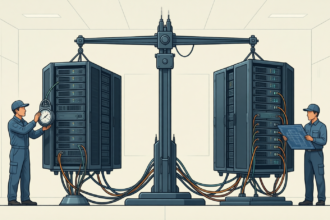
- Elasticity: it is the equivalent argument on the IT side. Many projects starts with a painful discussion on sizing… Sizing is hard because of the so-many unknowns. In the end, it often boils down to someone putting a stake in the ground and hoping for the best. Truth is usage is something that evolves through time, so having the flexibility to adjust to the added capacity by the click of a button, rather than IT having to upgrade equipment. That works for scaling up and down by the way.
- It is secure… yes, really! There has been tons of arguments about security in the Cloud. The reality is that the Cloud has to be secure. The media would make a mess for every instance of a security breach on those servers. In fact, it has been said that the Cloud was actually more secure than private facilities. For some reason, I believe I might get some push back on that one!
- It feeds off Big Data: Being on the Cloud, it is no surprise that Big Data is just a click away. SaaS products are so much more ready for harnessing Big Data.
What is driving the Cloud adoption for BPM?
As I see it, BPM mostly gained acceptance on the Cloud for its collaborative capabilities, albeit mostly for capture and modeling purposes. Being able to quickly get started with no IT intervention is highly valuable even with such a restriction.
In fact, many of the BPM vendors on the Cloud do not really focus on execution. The perceived value is on business process capture or authoring. Some refer to the “walk before you run” analogy.
Think about it, there are so many processes that are hardly documented. Visio only helps organizations so much in getting things well documented. Having the opportunity to collaborate with no or little set-up brings a bunch of value to the organization.
Running business processes on the Cloud is certainly doable technically but still limited to fewer projects. Why? My guess is that most businesses are either worried about outsourcing their operations on the Cloud, or simply are not ready to do so. It could also be because the data required to run on the cloud is not available there, for reasons ranging from practical to corporate policy-driven.
Why is Decision Management behind?
BPM has been much ahead of BRMS and Decision Management technologies. Though the arguments for BPM technically would equally apply to Decision Management, there is a key difference in the application of the technologies. I may not go as far as Boris in his BI-CRM comparison… I am actually very optimistic on the Cloud uptake for those technologies, but I think that he has a very good point, or maybe a couple.
First of all, and this is shared with BPM and other Enterprise tools technologies, there has been few efforts to create dedicated cloud-based Decision Management tools. Software-as-a-Service is much more complicated than putting “cloud” lipstick on a pig. Software that is not architectured to be horizontally scalable, elastic, multi-tenant, etc. can be thrown “out there”, but it won’t really work with the needs and expectations of those adopting the cloud. It’s not just administration and management that need to be made as simple as consumer applications. The awkward usability and necessary complex ”set up” that many quickly put together cloud solutions require are, in my opinion, much bigger issues.
Second, decision management requirements are still hard to formulate for prospective users, and availability of the technology on the cloud does not change that fact. Partially, this is because Decision Management is new to many industries; and partially because the needed interactions are still new to the industry, that has been feeding of the idea that IT would be there for a big deal of customization.
Those are some of the “excuses” for Decision Management being new to the Cloud. I don’t think that they represent barriers that will limit its adoption going forward though, as the stakes are significant enough to make those initiatives appealing to the traditional consumers of those technologies, but also eventually to a much wider audience.
I think that Decision Management is following a similar trajectory as BPM in terms of cloud adoption. Though some users are already jumping on the Cloud for the execution of their Decisions, a great deal of opportunities lies in simply capturing and refining collaboratively the business rules in a “business-ready” environment which is greatly simplified by the Cloud.
To learn more, join us at IntelliFest.
Carole-Ann will address this very topic in more details.
Want to know how strongly I feel about it? Check my video:
Powered By WizardRSS.com | Full Text RSS Feed | Amazon Script | Android Forums | WordPress Tutorials