We use cookies, including third-party cookies from Google to serve personalized ads through AdSense, to operate this site and understand how it is used. By continuing to browse, you accept this use. See our Privacy Policy and Terms of Use for details, including how to opt out of personalized advertising.
Accept
SmartData CollectiveSmartData Collective
  • Analytics
    AnalyticsShow More
    chatgpt image jul 21, 2026, 04 34 30 pm
    4 Core Benefits of Predictive Maintenance after Vibration Analysis
    10 Min Read
    How Does Data Mining Boost Customer Satisfaction in Logistics? Harnessing Analytics for Results -- AI-generated illustration
    How Does Data Mining Boost Customer Satisfaction in Logistics? Harnessing Analytics for Results
    11 Min Read
    chatgpt image jul 13, 2026, 04 23 45 pm
    How Data Analytics Helps Companies Improve User Engagement
    19 Min Read
    chatgpt image jul 13, 2026, 03 59 46 pm
    How Data Analytics Improves Multi-Location Search Strategies
    10 Min Read
    cybersecurity efforts
    How Behavioral Analytics and AI Are Redefining Cybersecurity for Boca Raton Businesses
    14 Min Read
  • Big Data
  • BI
  • Exclusive
  • IT
  • Marketing
  • Software
Search
© 2008-25 SmartData Collective. All Rights Reserved.
Reading: Why Culture Is the Biggest Barrier to SecDevOps
Share
Notification
Font ResizerAa
SmartData CollectiveSmartData Collective
Font ResizerAa
Search
  • About
  • Help
  • Privacy
Follow US
© 2008-23 SmartData Collective. All Rights Reserved.
SmartData Collective > Uncategorized > Why Culture Is the Biggest Barrier to SecDevOps
Uncategorized

Why Culture Is the Biggest Barrier to SecDevOps

CloudWedge
CloudWedge
4 Min Read
Why Culture Is the Biggest Barrier to SecDevOps
Illustration generated with FLUX.2 [klein 4B] via Cloudflare Workers AI.
SHARE

There’s a wind of change blowing through the technology industry, striking right at the heart of our information security teams, who are facing a dramatically different world than we’ve seen in the past two decades.

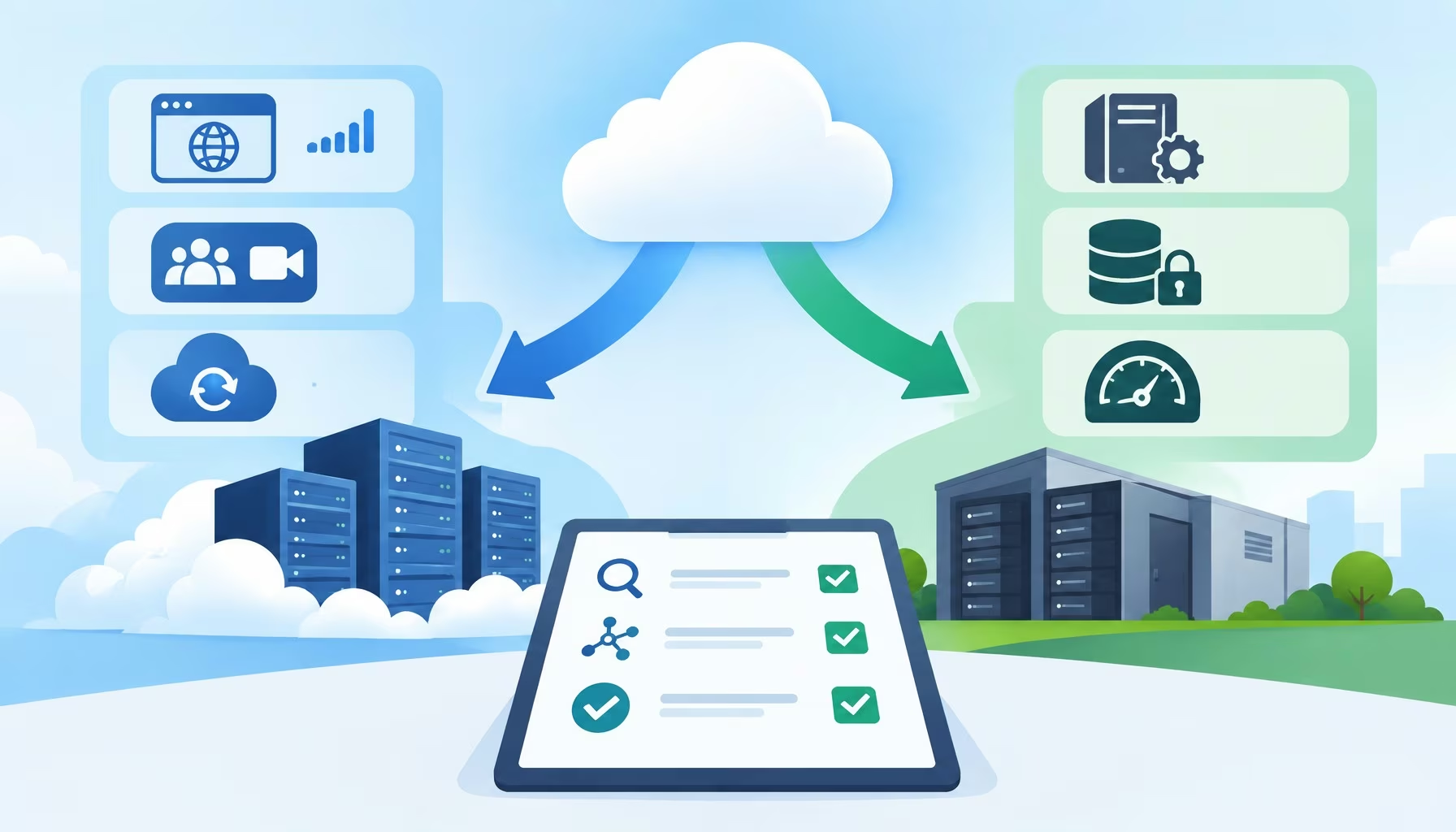
In the new world of IT, automation and business acceleration outweigh the traditional rigor and process used to control risk. This has left many security teams on the sidelines while their counterparts accelerate the delivery of software and services to the cloud. The cloud is to blame (and celebrate) for this evolution of our industry, as it is now possible to dream up products or services that can be called into existence minutes later through cloud providers like Amazon Web Services. We don’t have to wait months for big capital expenditures to materialize as we did in the era of data centers.

Thanks to the DevOps movement, we’re seeing a paradigm shift – from corporate technology silos to integrated teams closely aligning their efforts. Instead of friction between various teams’ differing responsibilities and motivations, we’re seeing greater transparency within organizations due to the strong metrics-driven approach core to DevOps.

However, the apparent success of DevOps transformations still doesn’t address the shortcomings that traditional security models bring to the equation, which is why the DevOps movement has largely been devoid of strong security leadership. The incumbent security technologies typically demand that operational and engineering motivations yield in favor of risk aversion and protective measures, which doesn’t happen as easily in a DevOps world. There is still some cultural resistance happening, where security teams hesitate to give up their veto power, while DevOps teams and the business insist on maintaining their newfound freedom to drive the business forward.

More Read

big data security 2017-18
Key Challenges Companies Face With Big Data Security
The Explosion of the Internet of Things [INFOGRAPHIC]
Scientist: Influencer Theory Is Bogus
5 Essential Cybersecurity Tips For Data Centric Businesses In 2021
The Delicate Art of Pushing Back

How can we create cultural change to bridge this gap between security and DevOps? It’s largely up to the security teams to take a fresh perspective on how they can integrate their work into the new opportunities of DevOps. Security professionals need to help catalyze the shift from an approver/submitter relationship to an integrated, always-on approach to security in the DevOps processes. Start at the tooling level by understanding and embracing the tools that agile teams use to be successful, and then use this as the foundation for new security opportunities. For example, with continuous integration and deployment, the security team can apply a continuous security philosophy to that model. Teams can deploy tens or hundreds of times a day, while maintaining live security analysis and alerting to avoid human errors or prevent an attack from slipping by within the noise of the changes.

It’s all about creating a “Culture of Yes” within security teams. Instead of seeing the negatives in everything, security teams can embrace SecDevOps concepts and find the way to enable product teams to achieve their goals while actually improving security operations. There’s significant power in saying yes, in a world where “no” has been the de facto standard for so long. Is your organization ready to say yes to SecDevOps?

Disclaimer: This article was written by a guest contributor in his/her personal capacity. The opinions expressed in this article are the author’s own and do not necessarily reflect those of CloudWedge.com.

The post Why Culture is the Biggest Barrier to SecDevOps appeared first on CloudWedge.
TAGGED:data security
Share This Article
Facebook Pinterest LinkedIn
Share

Follow us on Facebook

Latest News

Best VMware Alternatives in Thailand for Private Cloud and HCI Deployments -- AI-generated illustration
Best VMware Alternatives in Thailand for Private Cloud and HCI Deployments
Cloud Computing Exclusive IT
Using Safety Metrics and Incident Data to Reduce Construction Risk and Insurance Costs -- AI-generated illustration
Using Safety Metrics and Incident Data to Reduce Construction Risk and Insurance Costs
Big Data Exclusive
How Business Intelligence Can Help Small Businesses Build Better Decision Rules -- AI-generated illustration
How Business Intelligence Can Help Small Businesses Build Better Decision Rules
Business Intelligence Business Rules Exclusive
Stellar Repair for MS SQL Review: Can It Repair SQL Databases? -- AI-generated illustration
Stellar Repair for MS SQL Review: Can It Repair SQL Databases?
Exclusive Software SQL

Stay Connected

1.2KFollowersLike
33.7KFollowersFollow
222FollowersPin

You Might also Like

Don’t Rely on Luck: Why Small Businesses Need Disaster Recovery Plans
Uncategorized

Don’t Rely on Luck: Why Small Businesses Need Disaster Recovery Plans

4 Min Read
Technology in Physical Security: A Guide to Business Safety
ExclusiveITSecurity

Technology in Physical Security: A Guide to Business Safety

6 Min Read

Data Savvy Hackers Enhance Password Vulnerability In 2019

11 Min Read
data lineage tool
Big Data

7 Data Lineage Tool Tips For Preventing Human Error in Data Processing

6 Min Read

SmartData Collective is one of the largest & trusted community covering technical content about Big Data, BI, Cloud, Analytics, Artificial Intelligence, IoT & more.

AI chatbots
AI Chatbots Can Help Retailers Convert Live Broadcast Viewers into Sales!
Chatbots
How To Get An Award Winning Giveaway Bot
Big Data Chatbots Exclusive

Quick Link

  • About
  • Contact
  • Privacy
Follow US
© 2008-26 SmartData Collective. All Rights Reserved.
Welcome Back!

Sign in to your account

Username or Email Address
Password

Lost your password?