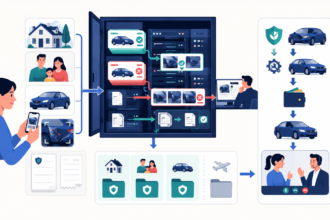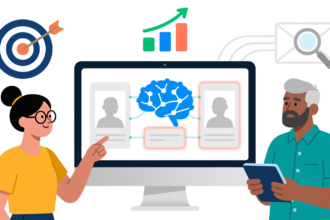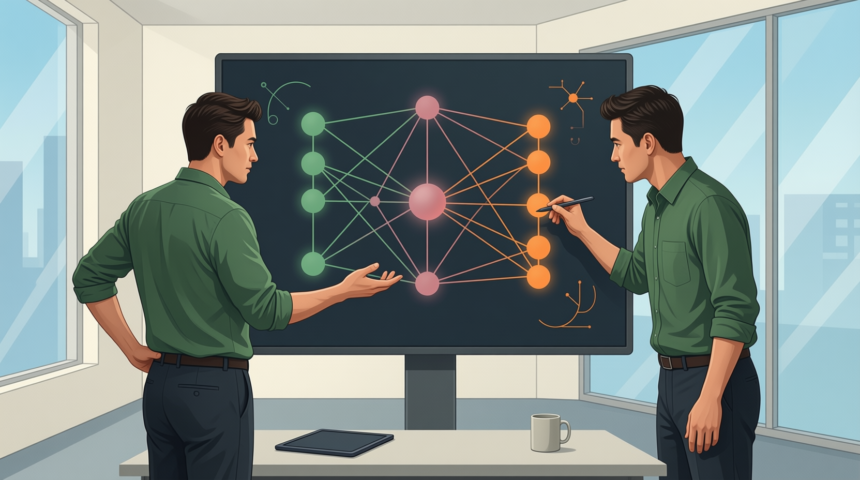
Companies can use a simple build-vs-buy filter to guide technology decisions. Capabilities tied to their unique systems and processes should be built internally, while common infrastructure needed across businesses should be bought.
There are a number of great applications of machine learning. One of the biggest benefits is testing processes for optimal effectiveness.
The main purpose of machine learning is to partially or completely replace manual testing. Machine learning makes it possible to fully automate the work of testers in carrying out complex analytical processes. Based on the changes it has created, most experts agree that the primary goal of Machine Learning in this context is to reproduce more accurate predictions. This will allow marketers, business owners, and IT-sphere employees to make the right decisions in developing and creating new products.
As a result of the activity of artificial intelligence, the machine learns, remembers, and reproduces the correct option. ML opens up new opportunities for computers to solve tasks previously performed by humans and trains the computer system to make accurate predictions when inputting data. One example is using machine learning tools like Selenium to test web development processes. It stimulates the growth of the potential of artificial intelligence, being its indispensable assistant and, in the view of many, even a synonym.
More Read

Machine learning is used in many industries. It allows for optimizing the work of banks, restaurants, factories, and even gas stations. It is also often found in Internet sales and the organization of chatbots. It applies to any workflow implemented in software – not only within the traditional business part of enterprises but also in research, production processes, and, increasingly, the products themselves. Machine learning can now compete with the precision of even surgeons. Instead of specifying what the software should look for, programmers “teach” the AI using a collection of applied images. Companies that work on machine learning for health care, like Google, create large groups of medical images selected by physicians. Machine learning algorithms use these sets of visual data to look for statistical patterns to identify which image features allow you to assume that it is worthy of a particular label or diagnosis.
“Does it involve our unique systems and processes? If yes, they build. If it’s generic infrastructure that every company needs, they buy.”
Matt Lyteson, CIO of Technology Transformation, IBM, in Mindset AI, 2026Hiring a machine learning development partner is a version of that same decision — you’re buying specialized execution instead of building an in-house team from scratch. Many other companies have shared even more interesting benefits of using machine learning in testing.
Top ML Companies
Data is called the new oil: by analyzing information, predicting key business parameters, and finding better solutions, you leave your competitors far behind. That’s why partnering with ML companies is a great solution to bring the latest innovative technology and solutions into the business so that organizations improve service, anticipate the future, automate processes, increase and drive sales, reduce costs in production and prevent risk. Here are the top 8 trusted partners:
1. Brights
Brights has 120+ specialists and 300+ successful projects for clients across 30+ countries. Founded in 2011, the company is about 15 years old in 2026 and continues growing. Brights’ machine learning experts can help you and your business explore new privileges and learn more. The company develops custom solutions for automating the processes of large companies and startups from scratch. Most often, these are turnkey projects: Brights independently design, conduct research, prototyping, and testing.
2. Dataiku
Dataiku is an AI software and machine learning company that offers AI services to democratize data. The company believes that business empowerment is possible through data services and collaboration. Dataiku provides various AI tools and software to help with customer churn, fraud detection, supply chain optimization, predictive maintenance, and more. Everyday AI is a core concept of Dataiku, where the systematic use of data for everyday operations makes businesses competent to succeed in competitive markets. Dataiku helps its customers at every stage, from data preparation to analytics applications, to implement a data-driven model and make better decisions. Dataiku has been named a Leader in the Gartner Magic Quadrant for AI Platforms for Data Science and Machine Learning for five consecutive years through 2026. The company has also expanded beyond its original data-democratization focus into agentic AI tooling, including products for AI agent governance and AI-assisted agent building.
3. Fractal Analytics
Founded in 2000, Fractal Analytics is a machine learning and AI consultancy with roughly 5,000 employees serving enterprise clients in consumer packaged goods, retail, healthcare and life sciences, financial services, insurance, and technology, media and telecom. The firm’s account depth is visible in its numbers: as of early 2026 it counted 58 clients each contributing more than $1 million in annual revenue, up from 54 a year earlier. Alongside consulting work, Fractal has built out a product portfolio that includes Crux Intelligence for AI-driven business intelligence, Asper.ai for revenue growth management, and Senseforth.ai for conversational sales and customer service. Its PiEvolve tool placed second on OpenAI’s MLE-Bench, a benchmark measuring autonomous AI agents on machine learning tasks.
4. IBM
IBM is primarily known for its own artificial intelligence engine used in research and commercial products. It offers AI for decision-making, language processing, and intelligent task automation. Watson was initially designed to compete with humans in games such as Jeopardy. Today, their technology can be integrated into virtually any workflow, from human resources to finance to supply chain management.
5. DataToBiz
DataToBiz analyzes AI and big data and helps organizations manage their data resources and find the best ways to extract information from data so they can make data-driven decisions. DataToBiz offers comprehensive solutions to help businesses succeed with advanced technologies such as machine learning, artificial intelligence, and data science. The team has grown to more than 70 AI specialists, data engineers, and analysts, with over 120 projects delivered across North America, Europe, the Middle East, APAC, Australia, and South Africa. The company is a certified partner of Google Cloud, Microsoft Azure, and AWS. It helps enterprises overcome challenges by implementing data-driven models.
6. Indium Software
Indium Software is a provider of digital engineering solutions with deep expertise in application development, cloud engineering, data and analytics, DevOps, Digital Assurance, and gamification. Now in its 26th year, the company has scaled to roughly 3,500 employees and around $630 million in annual revenue. Indium’s key differentiators are its specialization in low-code development, AI text analytics, and partnerships with technology companies such as Mendix, AWS, Denodo, and Striim. The company works with clients from around the world. Indium Software provides AI & ML services to develop self-learning algorithms, learn from data and draw conclusions without human intervention. Industry influencers such as Forbes, Dun & Bradstreet, and Clutch have recognized Indium as a trusted digital engineering partner for innovative startups and promising enterprises.
7. Altoros
Altoros is an experienced IT service provider that helps enterprises improve operational efficiency and accelerate product innovation by reducing time-to-market. Altoros clients gain a sustainable competitive advantage by using the power of cloud automation, microservices, AI/ML, and industry expertise. Altoros AI solutions help companies handle routine tasks. Altoros has five global offices. The company has more than two decades of experience and has completed hundreds of enterprise projects. It is headquartered in Silicon Valley.
8. Digica
Digica researches, implements, and commercializes intelligent software across the AI spectrum, focusing on deep learning in computer vision and “AI at the edge.” Digica’s strength is the combination of its expertise in AI with world-class software development. The company works with large companies and innovative startups in many industries, including automotive, defense, medical, technology, and telecommunications. Digica has now completed over 260 edge AI and computer vision projects, with more than half in healthcare applications like diagnostics and medical imaging. Digica is committed to advancing AI and is fueled by the rapid growth of smart devices at the network’s edge – smartphones, smartwatches, and sensors installed on machines and infrastructure.
How These 8 Compare
| Company | Scale | Specialization | Best Fit For |
|---|---|---|---|
| Brights | 120+ specialists, 30+ countries | Custom ML automation, turnkey projects | Startups to large enterprises wanting end-to-end builds |
| Dataiku | Gartner MQ Leader, 5 years running | Data democratization, agentic AI platform | Enterprises standardizing AI/ML across teams |
| Fractal Analytics | ~5,000 employees, 58 seven-figure clients | AI consulting, agentic ML tooling (PiEvolve) | Large enterprises wanting deep account partnerships |
| IBM | Global enterprise scale | Watson AI, decision-making, task automation | Regulated, complex enterprise workflows |
| DataToBiz | 70+ specialists, 120+ projects | Big data and AI-driven decision-making | Mid-sized businesses needing data-driven models |
| Indium Software | ~3,500 employees, $630M revenue | Digital engineering, low-code, AI/ML | Enterprises needing engineering at scale |
| Altoros | 5 global offices, 20+ years | Cloud automation, microservices, AI/ML | Enterprises modernizing legacy infrastructure |
| Digica | 260+ edge AI/vision projects | Computer vision, AI at the edge | Manufacturing, medical, and defense edge deployments |
Before You Sign Anything
Lists like this one go stale fast, and not always for the obvious reason. Veda, a healthcare data company that appeared on earlier versions of this list, was acquired in 2025 and no longer operates as an independent vendor — a reminder to verify a company’s current standing directly before signing anything, not just its reputation at the time a list like this was published.
Beyond that, the build-vs-buy filter from earlier in this piece is worth revisiting once you have a shortlist: the right partner depends less on company size and more on whether their specialization actually matches the part of the problem you’ve decided not to build yourself.