Cookies help us display personalized product recommendations and ensure you have great shopping experience.

By using this site, you agree to the Privacy Policy and Terms of Use.
Accept
SmartData CollectiveSmartData Collective
  • Analytics
    AnalyticsShow More
    New Data Analytics Breakthroughs Give eCommerce Startups a Fighting Chance
    New Data Analytics Breakthroughs Give eCommerce Startups a Fighting Chance
    6 Min Read
    How Data Analytics Is Reshaping Patient Financing Decisions
    How Data Analytics Is Reshaping Patient Financing Decisions
    13 Min Read
    business using business intelligence
    How to Use a Competitive Intelligence Dashboard to Turn Market Data Into Smarter Marketing Decisions 
    9 Min Read
    unusual trading activity
    Signal Or Noise? A Decision Tree For Evaluating Unusual Trading Activity
    3 Min Read
    software developer using ai
    How Data Analytics Helps Developers Deliver Better Tech Services
    8 Min Read
  • Big Data
  • BI
  • Exclusive
  • IT
  • Marketing
  • Software
Search
© 2008-25 SmartData Collective. All Rights Reserved.
Reading: Rent vs. Buy? The Cloud Conundrum
Share
Notification
Font ResizerAa
SmartData CollectiveSmartData Collective
Font ResizerAa
Search
  • About
  • Help
  • Privacy
Follow US
© 2008-23 SmartData Collective. All Rights Reserved.
SmartData Collective > IT > Cloud Computing > Rent vs. Buy? The Cloud Conundrum
AnalyticsCloud ComputingCommentaryExclusive

Rent vs. Buy? The Cloud Conundrum

paulbarsch
paulbarsch
5 Min Read
Image
SHARE

Image


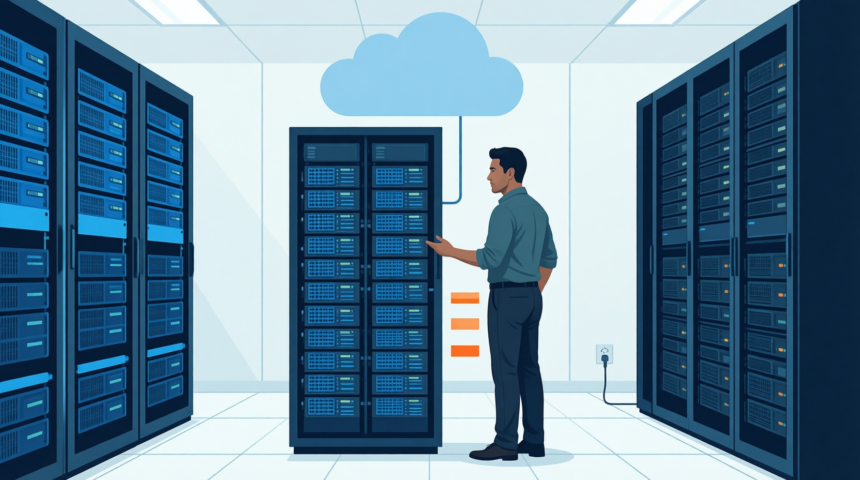
Over the long-run, is cloud computing a waste of money? Some startups and other “asset lite” businesses seem to think so. However, cloud computing for specific use cases, makes a lot of sense—even over the long haul.

More Read

predictive analytics
Predictive Analytics Experts Expect Bitcoin to Fall Below $1,000
Big Data Makes Smart Buildings the Norm in the 21st Century
Amazing Ways AI is Changing the Marketing Landscape
How AI Can Elevate Your Customer Service
Data Shortcuts So You Can Spend More Time Managing Your Business

Image


Over the long-run, is cloud computing a waste of money? Some startups and other “asset lite” businesses seem to think so. However, cloud computing for specific use cases, makes a lot of sense—even over the long haul.

A Wired Magazine article emphasizes how some Silicon Valley startups are migrating from public clouds to on-premises deployments. Yes, read that again. Cash poor startups are saying “no” to the public cloud.

On the whole this trend seems counter intuitive. That’s because it’s easy to see how capital disadvantaged startups would be enchanted with public cloud computing: little to no startup costs, no IT equipment to buy, no data centers to build, and no software licensing costs. Thus for startups, public cloud computing makes sense for all sorts of applications and it’s easy to see why entrepreneurs would start—and then stick with public clouds for the foreseeable future.

However, after an initial “kick the tires” experience, various venture capital sponsored firms are migrating away from public clouds.

The Wired article cites how some start-ups are leaving the public cloud for their own “fleet of good old fashioned computers they could actually put their hands on.”  That’s because, over the long run, it’s generally more expensive to rent vs. buy computer resources. The article mentions how one tech start up “did the math” and came up with internal annual costs of $120K for the servers they needed, vs. $320K in public cloud costs.

For another data point, Forbes contributor Gene Marks cites how six of his clients analyzed the costs of public cloud vs. an on-premises installation, monitored and managed by a company’s own IT professionals. The conclusion? Overall, it was “just too expensive” for these companies to operate their workloads in the public cloud as opposed to capitalizing new servers and operating them on a monthly basis.

Now to be fair, we need to make sure we’re comparing apples to apples. For an on-premises installation, hardware server costs may be significantly less over the long run, but it’s also important to include costs such as power, floor space, cooling, and employee costs of monitoring, maintaining and upgrading equipment and software. In addition there are sometimes “hidden” costs of employees spending cycles procuring IT equipment, efforts for capacity sizing, and hassles of going through endless internal capitalization loops with the Finance group.

Thus, cloud computing still makes a lot of financial sense, especially when capacity planning cycles aren’t linear, when there is need for “burst capacity”, or even when there is unplanned demand (as there often is with fickle customers). And don’t forget about use cases such as test and development, proof of concept, data laboratory environments and disaster recovery.

Another consideration is resource utilization.  As I have stated before, if you plan on using IT resources for a brief period of time, cloud computing makes a lot of sense. Conversely, if you plan on operating IT resources at 90-100% utilization levels, on a continual and annual basis, it probably makes sense to acquire and capitalize IT assets instead of choosing “pay per use” cloud computing models.

Ultimately, the cloud rent vs. buy decision comes down to more than just the price of servers. Enterprises should be careful to understand their use cases for cloud vs. on premises IT. In addition, watch for hidden costs in your TCO calculation that underestimate how much time and effort it really takes to get an IT environment up, running and performing.




TAGGED:CAPEX vs. OPEXcloud computingcloud TCOprivate cloudpublic cloudrent vs. buyresource utilizationrisky business
Share This Article
Facebook Pinterest LinkedIn
Share

Follow us on Facebook

Latest News

New Data Analytics Breakthroughs Give eCommerce Startups a Fighting Chance
Analytics Big Data Exclusive
data driven businesses
How Data-Driven Businesses Choose Storage That Reduces Risk and Drag
Big Data Exclusive
Operational Data Becomes Business Value in the Age of AIoT
Big Data Exclusive Internet of Things
growth guide
Growing Smarter: The Role Of Strategic Partnerships From Startup To Scale
Infographic News

Stay Connected

1.2KFollowersLike
33.7KFollowersFollow
222FollowersPin

You Might also Like

cloud-centric companies using network relocation
Cloud Computing

Cloud-Centric Companies Discover Benefits & Pitfalls of Network Relocation

5 Min Read
Hybrid Cloud
Cloud Computing

The Benefits Of The Hybrid Cloud For Entrepreneurs

8 Min Read

Splunk: Big Data Machine for Operational Intelligence

10 Min Read
Image
Best PracticesCloud ComputingCommentaryExclusiveITMarketing

The Rule of Three Works for IT

4 Min Read

SmartData Collective is one of the largest & trusted community covering technical content about Big Data, BI, Cloud, Analytics, Artificial Intelligence, IoT & more.

ai is improving the safety of cars
From Bolts to Bots: How AI Is Fortifying the Automotive Industry
Artificial Intelligence
ai in ecommerce
Artificial Intelligence for eCommerce: A Closer Look
Artificial Intelligence

Quick Link

  • About
  • Contact
  • Privacy
Follow US
© 2008-25 SmartData Collective. All Rights Reserved.
Welcome Back!

Sign in to your account

Username or Email Address
Password

Lost your password?