Cookies help us display personalized product recommendations and ensure you have great shopping experience.

By using this site, you agree to the Privacy Policy and Terms of Use.
Accept
SmartData CollectiveSmartData Collective
  • Analytics
    AnalyticsShow More
    How Data Analytics Is Reshaping Patient Financing Decisions
    How Data Analytics Is Reshaping Patient Financing Decisions
    13 Min Read
    business using business intelligence
    How to Use a Competitive Intelligence Dashboard to Turn Market Data Into Smarter Marketing Decisions 
    9 Min Read
    unusual trading activity
    Signal Or Noise? A Decision Tree For Evaluating Unusual Trading Activity
    3 Min Read
    software developer using ai
    How Data Analytics Helps Developers Deliver Better Tech Services
    8 Min Read
    ai for stock trading
    Can Data Analytics Help Investors Outperform Warren Buffett
    9 Min Read
  • Big Data
  • BI
  • Exclusive
  • IT
  • Marketing
  • Software
Search
© 2008-25 SmartData Collective. All Rights Reserved.
Reading: Data Management and the Navy: The Navy Virtualizes
Share
Notification
Font ResizerAa
SmartData CollectiveSmartData Collective
Font ResizerAa
Search
  • About
  • Help
  • Privacy
Follow US
© 2008-23 SmartData Collective. All Rights Reserved.
SmartData Collective > Big Data > Data Quality > Data Management and the Navy: The Navy Virtualizes
Data QualityData Visualization

Data Management and the Navy: The Navy Virtualizes

BobGourley
BobGourley
3 Min Read
SHARE


If you thought data management was difficult in business, imagine the nightmare it becomes in the Navy. The Navy faces monumental and unique challenges with its shipboard networks as, just like everywhere else, data flows continue to increase. The systems aboard US ships tend to be outdated since they can only be upgraded while the ship is in port, and incompatible with each other because they tend to run unique software on custom-made hardware, which also drives up the price.

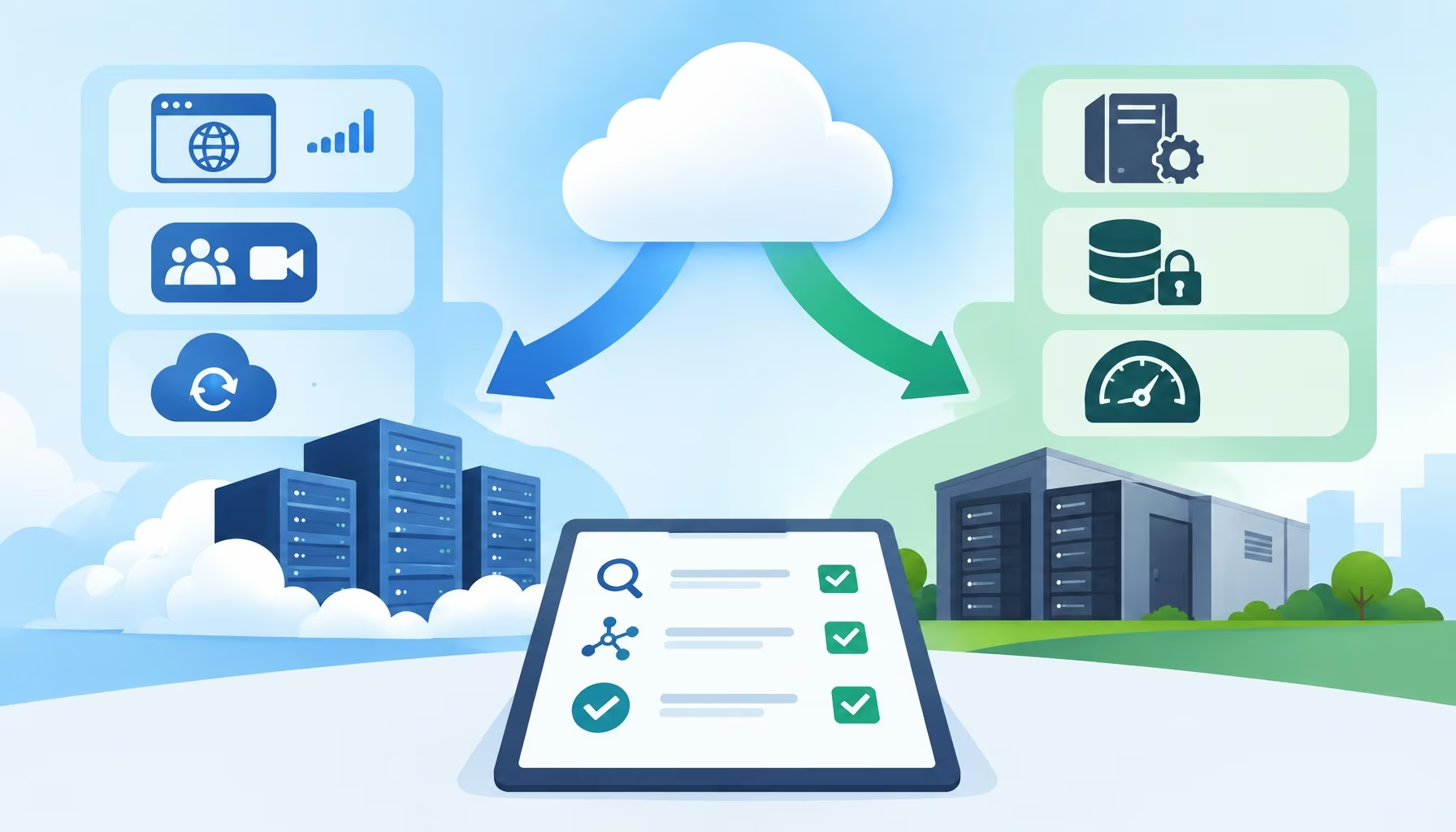
Though the challenges are unique, the solution comes from more common enterprise approaches. The Navy intends to virtualize its hardware so that it can run its command, control,communications, computers, intelligence, surveillance and reconnaissance applications (known by the acronym C4IRS) with common software on often off-the-shelf platforms.  This initiative is known as the Consolidated Afloat Networks and Enterprise Services, or CANES, program, which would transfer systems to powerful services that would then be accessed like the internet by shipboard thin clients. This would overcome massive inefficiencies as all systems would become interoperable, networks would be far easier to manage, hardware would become cheaper and easier to upgrade,  redundant data now stored on multiple computers would be deduplicated to save space, and there will be less technology lock-in when more systems become compatible, which will make the acquisition process more open and competitive.

While virtualizing Navy hardware and applications would solve these problems, it would also pose a new one. CANES will probably result in more sensitive defense information being transferred wirelessly much more often, increasing vulnerability. Here the military can once again borrow solutions from enterprise approaches. Savvy enterprises have been implementing virtualization techniques to enhance security. Virtualization can  improve security. Products such as Invincea can wrap parts of an environment in virtual lock boxes, detect threats to a virtual environment, close it, and start a new one in seconds to pick up where the compromised environment left off. Instead of the hardware or software, the only element risking infection is the disposable virtual environment. By virtualizing its systems, the Navy may actually make them more resilient.

Last month, the CANES program entered the engineering and manufacturing development phase where Lockheed Martin Mission Systems & Sensors and Northrop Grumman Space and Mission Systems will produce prototypes to be tested in operational environments to see which company will get the billion dollar contract. Hopefully both those firms are checking out virtualization concepts now to see how they will fit in this approach.

Share This Article
Facebook Pinterest LinkedIn
Share

Follow us on Facebook

Latest News

Operational Data Becomes Business Value in the Age of AIoT
Big Data Exclusive Internet of Things
ai for social media
How AI Helps Businesses Get More From Social Media
Artificial Intelligence Exclusive
How Data Analytics Is Reshaping Patient Financing Decisions
Analytics Big Data Exclusive
AI driven big data company
How AI-Driven Workflows Are Changing the Way Companies Think About Data Risk
Artificial Intelligence Data Management Exclusive Risk Management

Stay Connected

1.2KFollowersLike
33.7KFollowersFollow
222FollowersPin

You Might also Like

Garbage in the Lockers and Gold on the Streets

4 Min Read
Image
AnalyticsBig DataCloud ComputingData MiningData VisualizationExclusive

Practice Fusion’s Partnership with Merck Shows the Future of Medical Data

4 Min Read

Who I Want at the Business Intelligence Table

10 Min Read

Is Big Data Winning or Losing?

5 Min Read

SmartData Collective is one of the largest & trusted community covering technical content about Big Data, BI, Cloud, Analytics, Artificial Intelligence, IoT & more.

data-driven web design
5 Great Tips for Using Data Analytics for Website UX
Big Data
ai chatbot
The Art of Conversation: Enhancing Chatbots with Advanced AI Prompts
Chatbots

Quick Link

  • About
  • Contact
  • Privacy
Follow US
© 2008-25 SmartData Collective. All Rights Reserved.
Welcome Back!

Sign in to your account

Username or Email Address
Password

Lost your password?